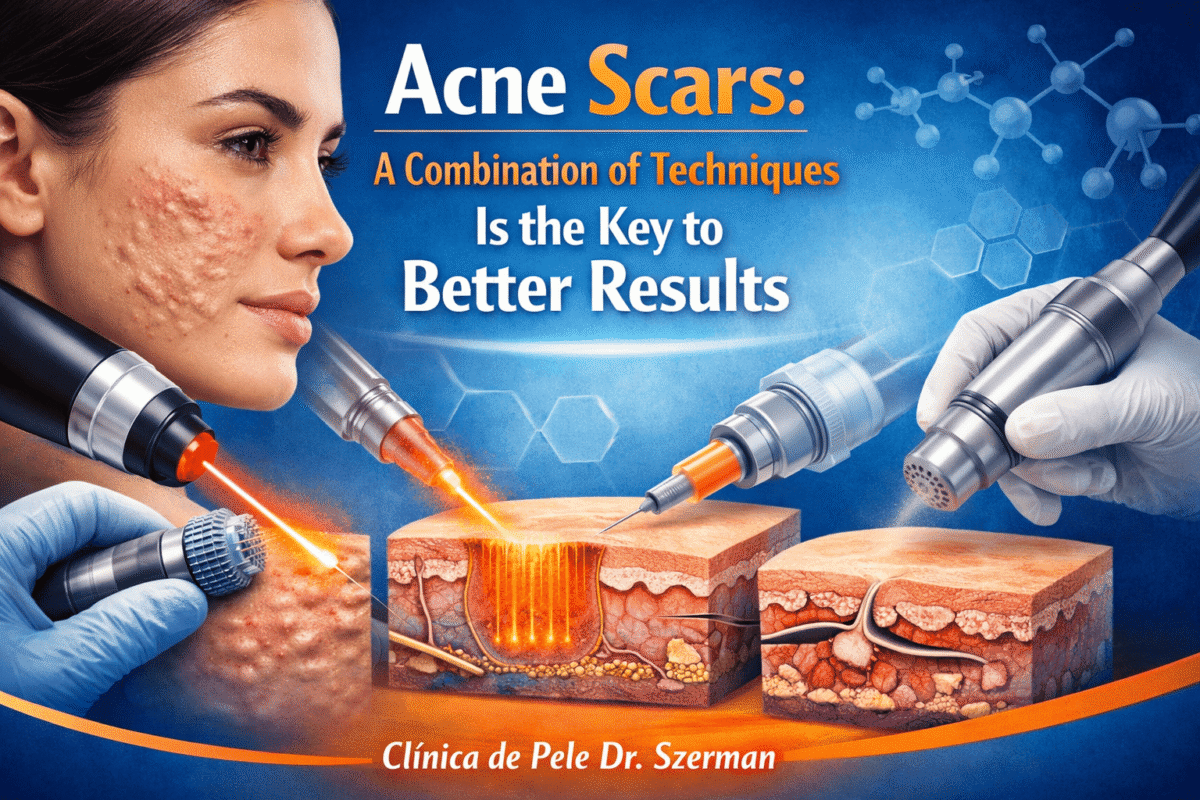
Did you know that up to 85% of people between the ages of 12 and 30 experience facial acne at some point in their lives? Even more concerning, about 1 in 5 can develop permanent scars if acne is not treated properly. Recent studies show that acne affects up to 85% of people between the ages of 12 and 24, making it one of the most common skin conditions worldwide.
When not treated properly, inflammatory acne can significantly increase the risk of long-term scarring, which affects nearly 1 in 5 patients. Understanding early treatment options—such as topical retinoids, controlled-use acids, and professional dermatological procedures—plays a crucial role in reducing active breakouts and preventing permanent marks.
That’s why early and proper acne treatment is essential to prevent marks and maintain healthy skin. I’m Dr. Ronaldo Szerman, and in this article, we’ll explain what really works for treating facial acne, what to avoid, and how to prevent new breakouts. Keep reading to discover the best ways to take care of your skin.
What not to do when pimples appear
First and foremost: do not pick or squeeze pimples. This only worsens inflammation, pushes bacteria deeper into the skin, and makes it take longer to heal.
Also, avoid home remedies like toothpaste or zinc paste. These have no proven benefits and can even worsen inflammation.
What really works to dry out pimples?
There are specific acne products that help pimples heal faster and control inflammation. These often contain salicylic acid or retinoids, which help unclog pores and reduce skin oiliness.
The role of benzoyl peroxide
Among the most effective ingredients, benzoyl peroxide stands out. It can be applied directly on the pimple, accelerating healing and reducing swelling. There are also a variety of dermatological products for acne control, which is why it’s important to consult a doctor — treatments are individualized.
Additionally, acne treatment can be enhanced with medical peels, performed by dermatologists using concentrated acids that stimulate cell renewal and improve skin appearance.
How to use benzoyl peroxide safely
- Apply a thin layer directly on the pimple every night until it completely dries.
- Always use products recommended by a dermatologist, especially if you have sensitive skin.
- Allow the product to dry completely before lying down, as it can stain clothes and pillowcases.
- Avoid using it without medical guidance, as side effects like irritation and dryness can occur.
Are there other medications for treating facial acne?

Yes. There are several medications for acne treatment. The choice depends on individual factors determined during a dermatology consultation.
Commonly used treatments include retinoic acid, salicylic acid, and other active ingredients that control sebum production and promote skin renewal.








Medical peels are also excellent allies, enhancing results and effectively treating acne scars safely.
How to prevent new pimples
Acne requires continuous and regular treatment. Even if you treat a sudden breakout, it’s essential to consult a dermatologist to create a long-term treatment plan.
This helps control blackheads, pimples, and oily skin, preventing new breakouts. Early treatment also reduces the risk of permanent acne scars, which can affect patients for life.
Final tips
Treating facial acne requires patience, medical guidance, and proper products. Avoid home remedies, maintain a daily skincare routine, and follow up with a dermatologist to ensure healthier, clearer skin.
Did you find these tips helpful? Share this article with someone who struggles with acne and help more people take care of their skin!
Contact:
Clínica de Pele has specialized in dermatological treatments in Rio de Janeiro for over 60 years, since 1969.
Dr. Szerman has more than 20 years of experience and also teaches other physicians.