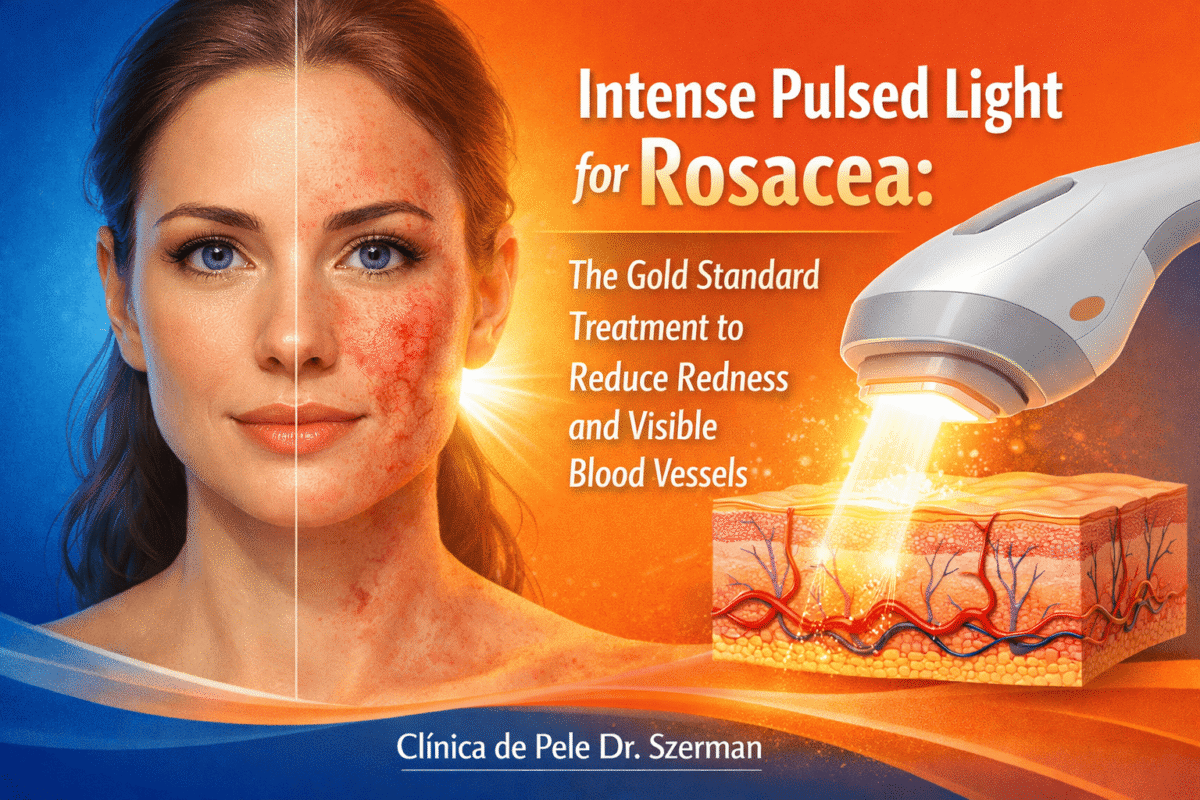

I am Dr. Szerman, and today we are going to talk about how to treat rosacea on the face. Rosacea is a chronic and inflammatory dermatological condition that mainly affects the face, causing persistent redness, dilated blood vessels, skin sensitivity, and, in some cases, acne-like lesions.
Não perca a dica do Dr. Szerman ao final do artigo!
Although it is more common in fair-skinned women between the ages of 30 and 50, it can affect anyone. Keep reading to learn more about the causes and how to treat rosacea on the face.
What causes rosacea?
The exact causes of rosacea are not fully understood yet, but genetic, immunological, and environmental factors are known to play a role. Triggers such as sun exposure, heat, stress, alcohol, and spicy foods can worsen symptoms.
Even though rosacea has no cure, it can be treated. With proper dermatological care, laser treatment, and healthy habits, it is possible to control the condition. Avoiding triggers, using specific dermocosmetics, and undergoing treatments such as intense pulsed light (IPL) or laser therapy often help reduce symptoms, improve skin appearance, and restore self-esteem.
Living with rosacea can be challenging, especially due to its aesthetic and emotional impact, but with the right treatment, it is possible to maintain healthier skin, reduce flare-ups, and improve daily well-being. Seeking professional guidance is the first step toward safe and effective control.
How to treat rosacea on the face?
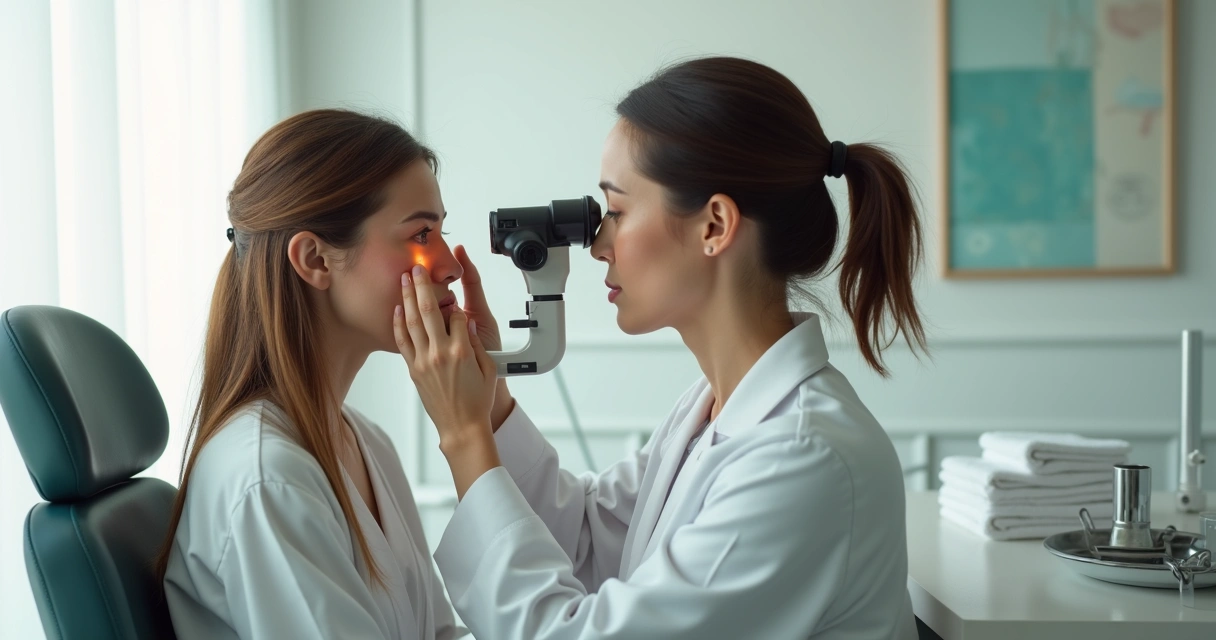
Rosacea treatment involves both clinical dermatology and intense pulsed light therapy. Rosacea usually presents with small dilated vessels, mainly on the face, but it may also affect the chest and other areas—though it is more common on the cheeks.
To effectively treat rosacea and reduce skin sensitivity and redness, it is necessary to target and eliminate these vessels. Intense pulsed light is considered the gold standard for rosacea treatment.
In some cases, patients may have slightly larger vessels, in which case we use another applicator called ND:YAG to destroy these vessels as well.
IPL for rosacea: How many sessions are needed?
We usually recommend five IPL sessions, spaced one month apart. Patients should avoid sun exposure and tanning during the treatment, and sunscreen is a must.
The procedure is generally very well tolerated—patients describe it as a warm sensation, since IPL is a strong light. To reduce discomfort, we apply a topical anesthetic about an hour before the session. Results are often visible from the very first session, and we gradually increase the intensity as treatment progresses, leading to even better results.




Does laser treatment for rosacea work?

Yes, it is possible to treat rosacea on the face with laser therapy and achieve excellent results. While we cannot promise a 100% improvement, patients usually notice a significant reduction in redness and skin sensitivity.
Maintenance sessions are generally not scheduled, but if symptoms worsen in the future, patients may undergo additional treatments to maintain results.
It is important to emphasize that IPL is a powerful treatment that must be performed carefully. At our clinic, we use the Harmony platform, which is globally recognized. We have been treating rosacea with IPL for over 20 years with this technology.
When performed by an experienced professional, it is a very safe procedure. Patients usually leave the session with mild redness, which typically subsides the same day. However, if handled incorrectly, the equipment may cause burns or blisters—so choosing a qualified dermatologist is essential.
Contact
Clínica de Pele has specialized in dermatological treatments in Rio de Janeiro for over 60 years, since 1969. Dr. Szerman has more than 20 years of experience and also teaches other physicians.