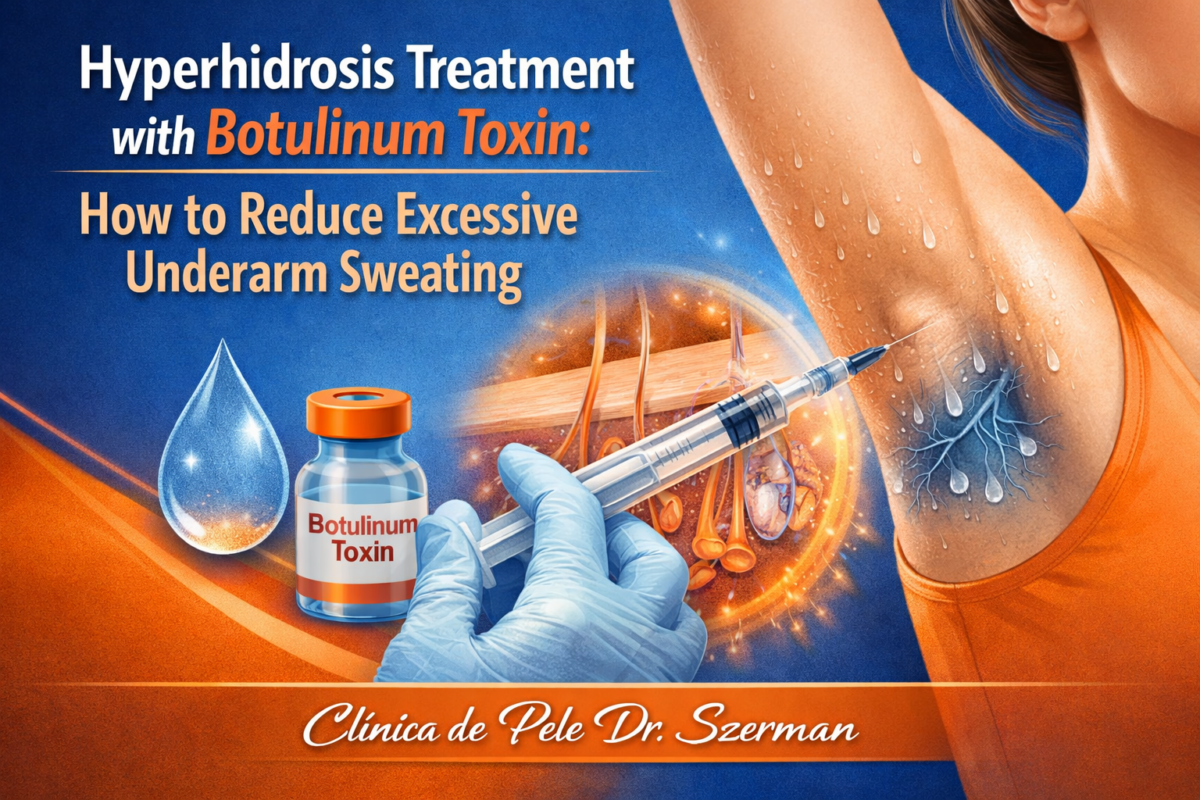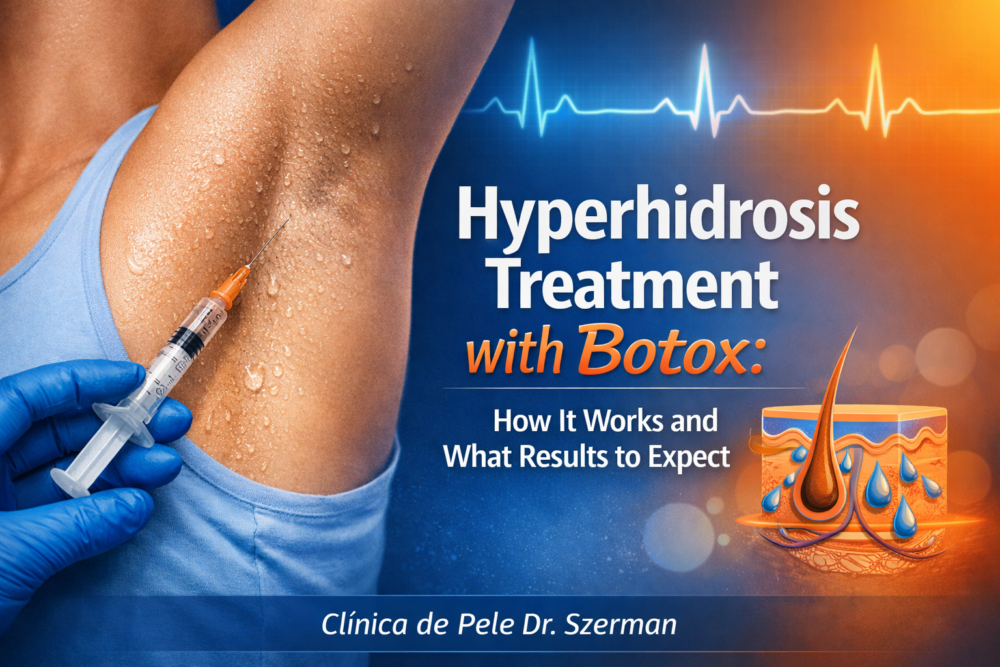

Releasing sweat is a natural process of the body that helps regulate your temperature. However, when sweating occurs excessively, many people wonder whether this condition is Hyperhidrosis or Sweating.
Não perca a dica do Dr. Szerman ao final do artigo!
Although sweating and hyperhidrosis are terms often confused, they represent distinct conditions in the human body.
Understanding the difference is essential to determine whether sweating is simply a natural response to heat or a disorder that can affect not only physical health but also emotional and social well-being, directly impacting quality of life.
With this in mind, we have prepared this article to explain the main differences between hyperhidrosis or sweating, how to identify each condition, and available hyperhidrosis treatments to manage excessive sweating, including plantar hyperhidrosis.
Hyperhidrosis or Sweating – What’s the Difference?

To understand the difference and identify whether a condition is hyperhidrosis or normal sweating, it is important to know the characteristics of each.
Sweating
Sweating is a natural bodily response to various triggers, whether external, such as heat or physical activity, or internal, like stress or fever.
When exposed to these triggers, the body produces sweat to regulate body temperature and allow vital functions to continue properly. Without this temperature regulation, the body risks heat-related complications. Therefore, sweating is a natural and essential process for health and well-being.
The technical term for sweating is hidrosis, referring to the production and release of sweat through the sweat glands. When sweating occurs excessively, it is called hyperhidrosis, a condition that can affect quality of life and requires medical evaluation for proper diagnosis and treatment.
Hyperhidrosis
Hyperhidrosis is a disorder characterized by excessive sweating without an apparent cause, which can occur in any part of the body. It commonly affects areas such as the armpits, palms, feet, and under the breasts.
Excessive sweating is not only uncomfortable but can significantly affect physical and emotional well-being, potentially reducing quality of life.




Causes of Hyperhidrosis
Hyperhidrosis involves excessive sweat production even without triggers like heat or physical activity. It can be classified as primary or secondary, with causes varying by type.
- Primary hyperhidrosis is the most common and usually begins in childhood or adolescence. It is linked to the sympathetic nervous system, which overstimulates sweat glands in areas like the armpits, hands, feet, and face. Although the exact cause is unknown, there may be a genetic predisposition.
- Secondary hyperhidrosis is associated with other health conditions, such as hormonal disorders (hyperthyroidism, menopause), obesity, diabetes, infections, certain medications, or neurological disorders. In these cases, sweating may occur over the entire body and often begins in adulthood.
Identifying the type and cause of hyperhidrosis is essential to determine the ideal treatment, which may include antiperspirants, medications, botulinum toxin (Botox), or even surgery.
How to Identify Hyperhidrosis vs. Normal Sweating
You now know how to differentiate hyperhidrosis from normal sweating. It is also important to recognize common signs of hyperhidrosis for early diagnosis and effective treatment.
Common indicators include:
- Excessive sweating that soaks clothing, especially in the armpits
- Avoiding handshakes due to constantly sweaty hands
- Excessive sweating even at rest
- Difficulty wearing shoes because of frequently sweaty feet
These situations are common for people with hyperhidrosis. Although they may seem minor, they often cause embarrassment and lead to social isolation, dermatitis, anxiety, and negative impacts in work and personal relationships.
Understanding whether sweating is hyperhidrosis or normal, and seeking specialized help, is crucial for a positive prognosis.
Is There a Treatment for Hyperhidrosis?
While hyperhidrosis has no definitive cure, it can be treated and managed. One of the most effective options is Botox treatment, which significantly reduces excessive sweating.
In general, the effects of Botox for hyperhidrosis last 6 to 12 months, varying by individual. After this period, patients need a follow-up appointment for reassessment and maintenance treatment.
Contact
Clínica de Pele has specialized in dermatological treatments in Rio de Janeiro for over 60 years, since 1969. Dr. Szerman has more than 20 years of experience and also teaches other physicians.