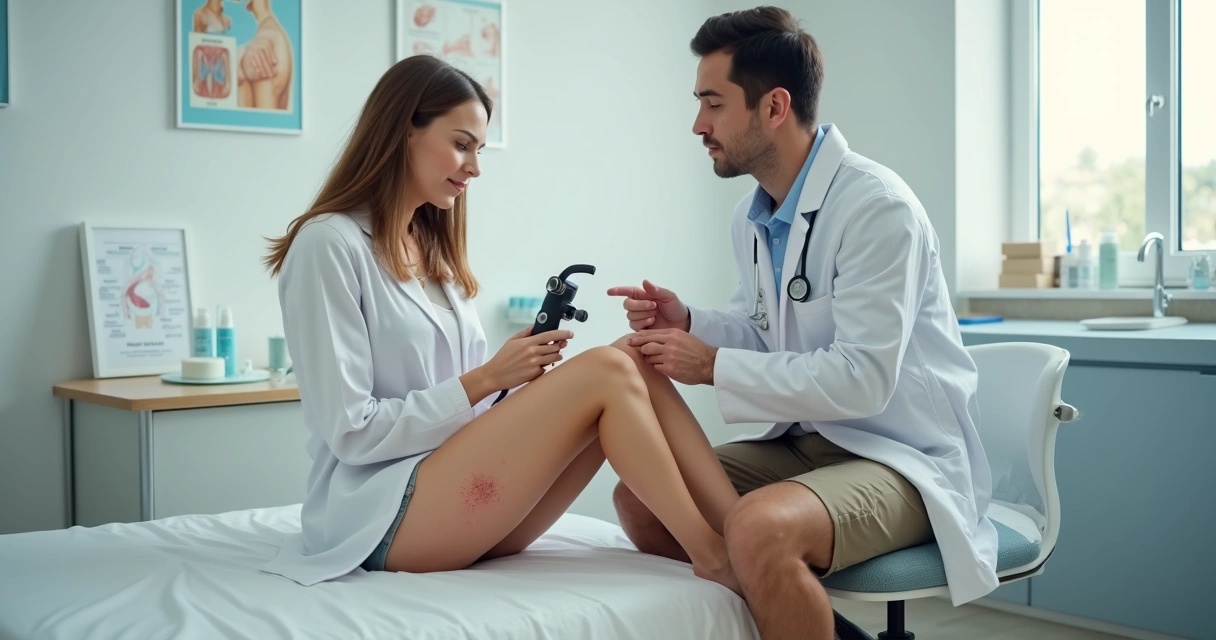

Folliculitis bothers many patients. At our clinic, we frequently receive patients who have already tried several types of treatment for folliculitis without achieving good results.
The fact is that treating folliculitis with medication alone usually doesn’t offer a definitive solution to the problem. It’s very common for patients to report periods of improvement followed by recurrence of folliculitis.
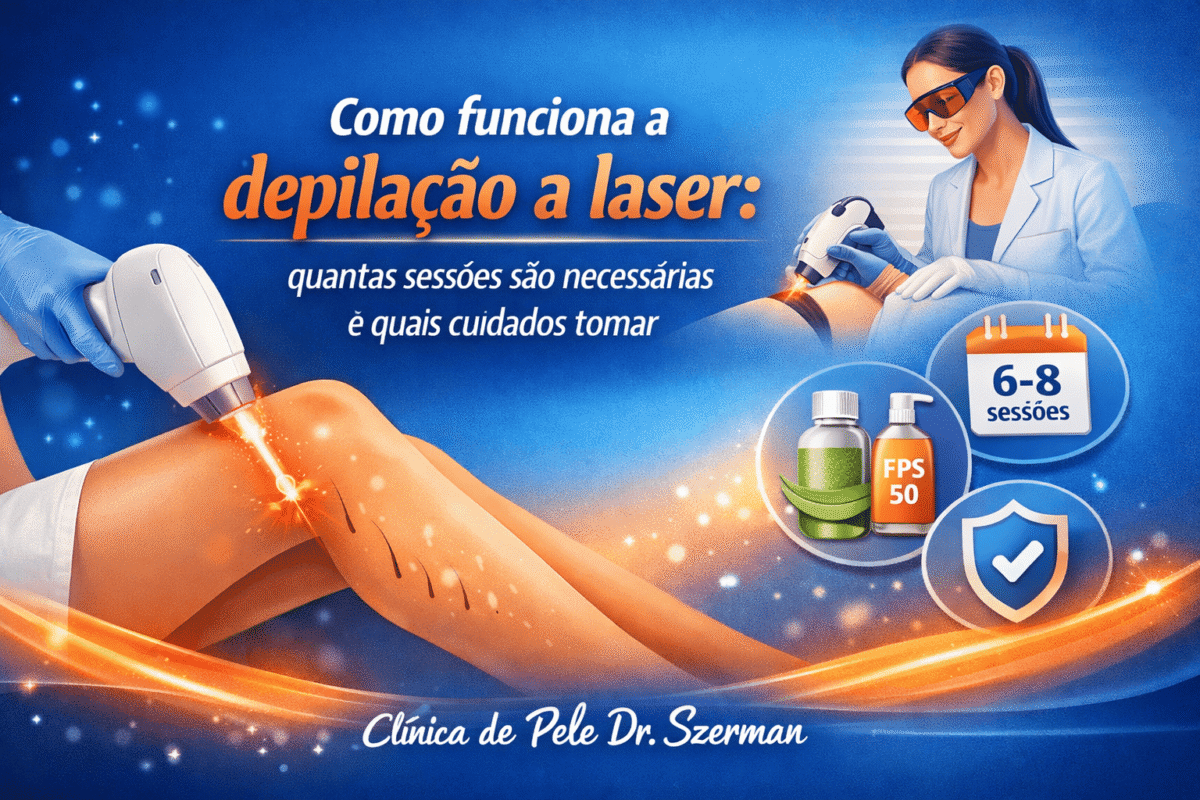
However, laser hair removal has significantly changed this scenario. It has been used in the United States for over 30 years and in Brazil for more than 20. At our office, we have been offering this treatment since 2004, and patients are usually extremely satisfied with the results.
Laser Treatment for Folliculitis
Laser hair removal is approved by the American Health Board as a clinical treatment for folliculitis. It’s not just cosmetic—it’s a clinical treatment that effectively resolves the vast majority of cases.
Even after the first session, patients report significant improvement. After 3 or 4 sessions, spaced one month apart, many patients experience an almost complete resolution of their folliculitis.
However, the recommendation is to complete 8 to 10 sessions, with one-month intervals, to ensure a more lasting and secure result.
Laser Treatment for Folliculitis: Main Care Guidelines and Recommendations
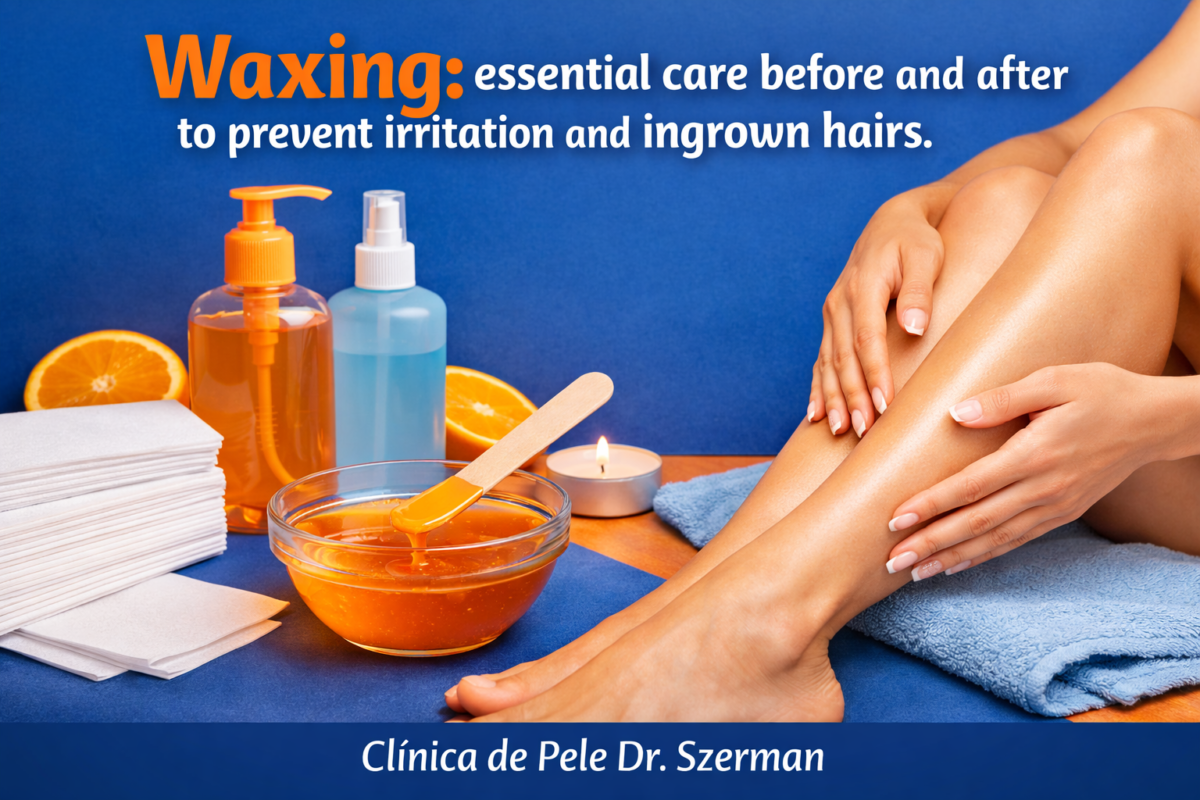
During laser hair removal treatment, patients must not pluck their hair—neither with tweezers nor wax. That’s because the laser travels along the hair shaft to reach and destroy or weaken the root.
If the hair is pulled out, the laser can’t follow its natural path. During treatment, it’s fine to cut, shave, use depilatory creams, or bleach the hair. The only restriction is on any hair removal method that pulls hair from the root.
Regarding sun exposure, at Clínica de Pele we use the LightSheer diode laser, with a 400-millisecond pulse duration—considered one of the safest lasers for this type of treatment.
This means patients are not forbidden from light sun exposure during treatment. What they must avoid is intense tanning, since the laser needs to pass through the skin to reach the root of the hair.


When passing through tanned skin, the laser may cause small scabs or injuries. Therefore, we recommend avoiding excessive sun exposure during the treatment period.
What to Expect from Folliculitis Treatment
As mentioned earlier, laser hair removal leads to significant improvement in the early sessions. Patients who aim for intense hair reduction and complete the 8 to 10 sessions usually report high satisfaction with permanent hair reduction.
No surprise—after all, the FDA estimates up to a 90% reduction in hair growth by the end of treatment.
Does Laser Treatment for Folliculitis Hurt?
Patients may experience slight discomfort during sessions. That’s why we prescribe a topical anesthetic to be applied one hour before the session, which helps minimize any discomfort. We also recommend that patients shave the treatment area beforehand.
How Long Do the Results of Folliculitis Treatment Last?

The treatment offers long-lasting results. Most patients do not need yearly touch-ups. However, it’s possible that new hair may grow over time due to genetic or hormonal factors.
If no new hair is produced, the treatment is considered permanent. However, it’s crucial to understand that such results are only possible with a well-calibrated laser device, approved for medical use, and an experienced doctor who knows how to properly set the equipment to deliver enough energy to destroy the hair root.
If the laser energy is not strong enough, only temporary hair removal will occur, and the hair will return in a few months. Therefore, choosing a reliable and qualified clinic is essential for successful treatment.
Are There Side Effects?
Regarding laser reactions, it’s very important to use a skin lightening cream throughout the treatment. These usually contain hydroquinone, although each doctor may prescribe a different formulation.
This is part of an international laser treatment protocol: the lighter the skin, the deeper the laser can penetrate and more effectively destroy the hair root.
Contact:
Clínica de Pele specializes in dermatological treatments in Rio de Janeiro and has been operating for over 60 years, since 1969. Dr. Ronaldo Szerman has over 20 years of experience and also teaches other physicians.