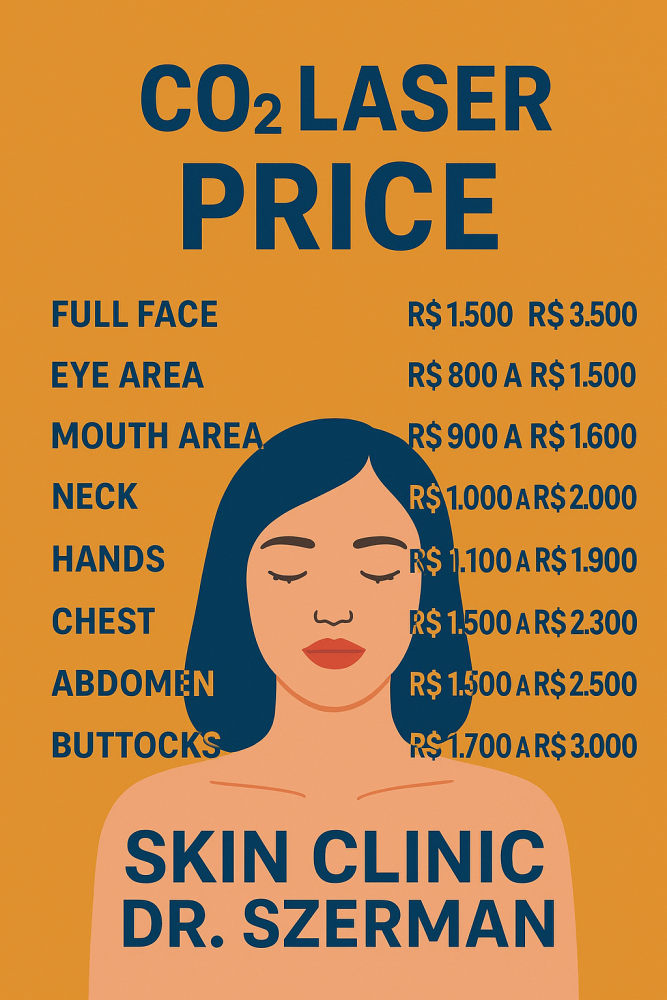

What are the risks of CO2 laser and how to prevent them? Hello, I am Dr. Ronaldo Szerman from Clínica de Pele, and on behalf of our clinic, which has more than 60 years of tradition in dermatology here in Rio de Janeiro, I want to address a very important topic that raises many questions: CO2 laser.
Studies show that up to 40% of patients may experience temporary redness or swelling after CO₂ laser treatment, making these the most common short-term side effects. More serious complications, such as hyperpigmentation, occur in approximately 10–20% of cases, especially in individuals with darker skin tones. Fortunately, most risks can be significantly reduced by following proper pre- and post-treatment care, including sun protection, using dermatologist-recommended products, and choosing a qualified, experienced provider.
Did you know that CO2 laser is one of the most sought-after aesthetic procedures, but at the same time, complications resulting from its use are also increasing?
It is estimated that a growing percentage of patients undergoing this type of procedure, without proper guidance and expertise, may experience more significant adverse effects. These adverse effects range from mild irritations to permanent scars. It is exactly about these risks, and more importantly, how to avoid them, that we will talk about today.
What is CO2 Laser and What Is It Used For?
Fractional CO2 laser is a technology that uses a beam of light to vaporize layers of the skin, stimulating collagen production and promoting cellular renewal.
Main indications:
- Facial rejuvenation;
- Acne scar treatment;
- Stretch marks;
- Skin spots and texture irregularities.
The results are impressive when the procedure is performed by a qualified professional.
What Are the Main Risks of CO2 Laser?
Even though it is considered safe, CO2 laser can cause complications if not properly indicated or performed by experienced professionals.
1. Post-inflammatory hyperpigmentation
Appearance of dark spots after the procedure;
More common in higher phototypes (darker skin tones).
How to prevent: prior dermatological evaluation, use of skin-lightening creams before the laser, and strict sun protection.
2. Skin Infections
The laser temporarily compromises the skin barrier, increasing the risk of bacterial or viral infections, such as herpes.
Prevention: antiviral use and aseptic care as recommended by the doctor.
3. Atrophic or Hypertrophic Scars
May occur due to high laser intensity, poor healing, or inadequate technique.
Prevention: choosing an experienced professional and using parameters adjusted to the skin type.
4. Persistent Erythema (prolonged redness)
In some cases, redness may last for weeks or months, especially in patients with rosacea or sensitive skin.
How to relieve: cold compresses, soothing creams, and sun protection.
How to Prevent CO2 Laser Complications?

Choosing a qualified professional
- The doctor must have proven experience with CO2 laser;
- Deep knowledge of the technology and skin biology.
Comprehensive pre-evaluation
- Medical history;
- Skin type and patient expectations;
- Correct treatment indication.
Proper post-treatment care
- Clean environment for recovery;
- Use of healing agents and photoprotection;
- Continuous medical follow-up.
Why is Clínica de Pele a Reference in CO2 Laser?
With more than 60 years of tradition in dermatology and 15 years of experience with CO2 laser in Rio de Janeiro, Clínica de Pele stands out for its safety, excellence, and use of cutting-edge technology.
Fractional CO2 laser is considered the gold standard for deep skin treatments — as long as it is performed by trained professionals in a trusted environment.
With proper evaluation, correct technique, and post-procedure care, risks are minimized and results are natural and safe.
If you want to take care of your skin with safety and confidence, schedule an appointment with our specialists.
Contact:
Clínica de Pele has specialized in dermatological treatments in Rio de Janeiro for over 60 years, since 1969. Dr. Szerman has more than 20 years of experience and also teaches other physicians.