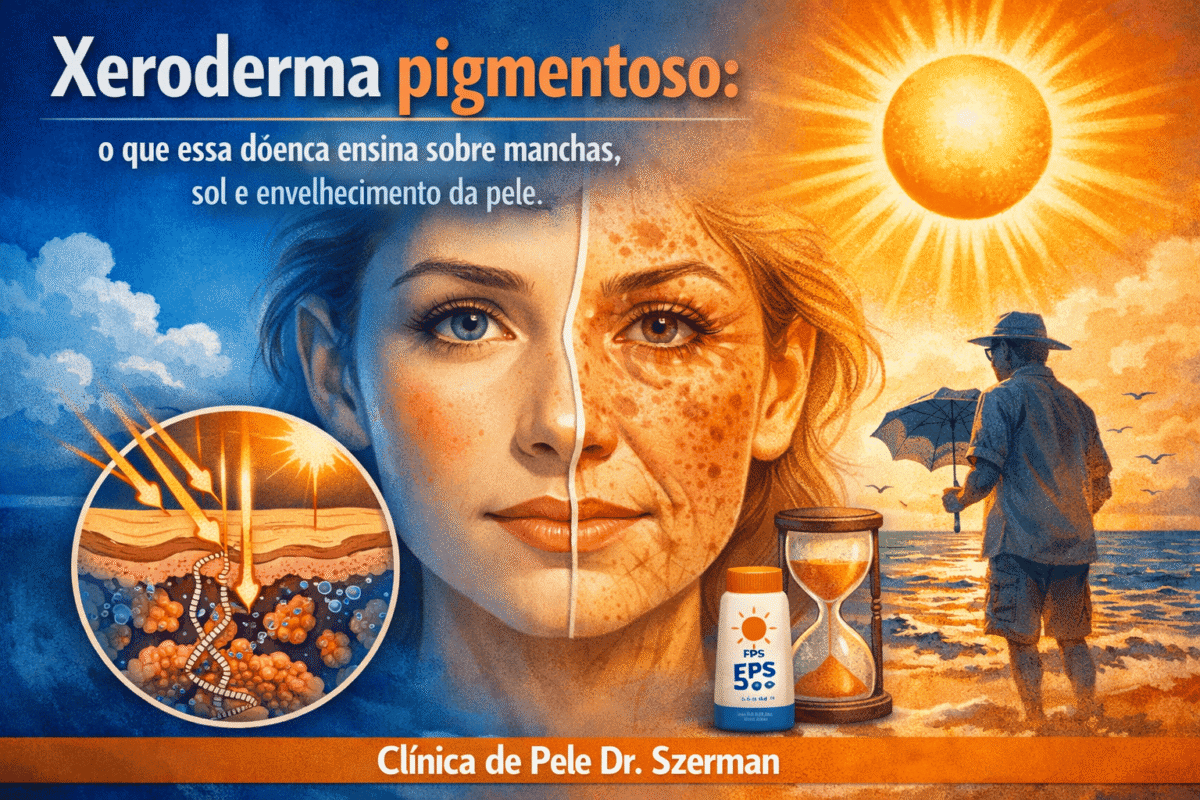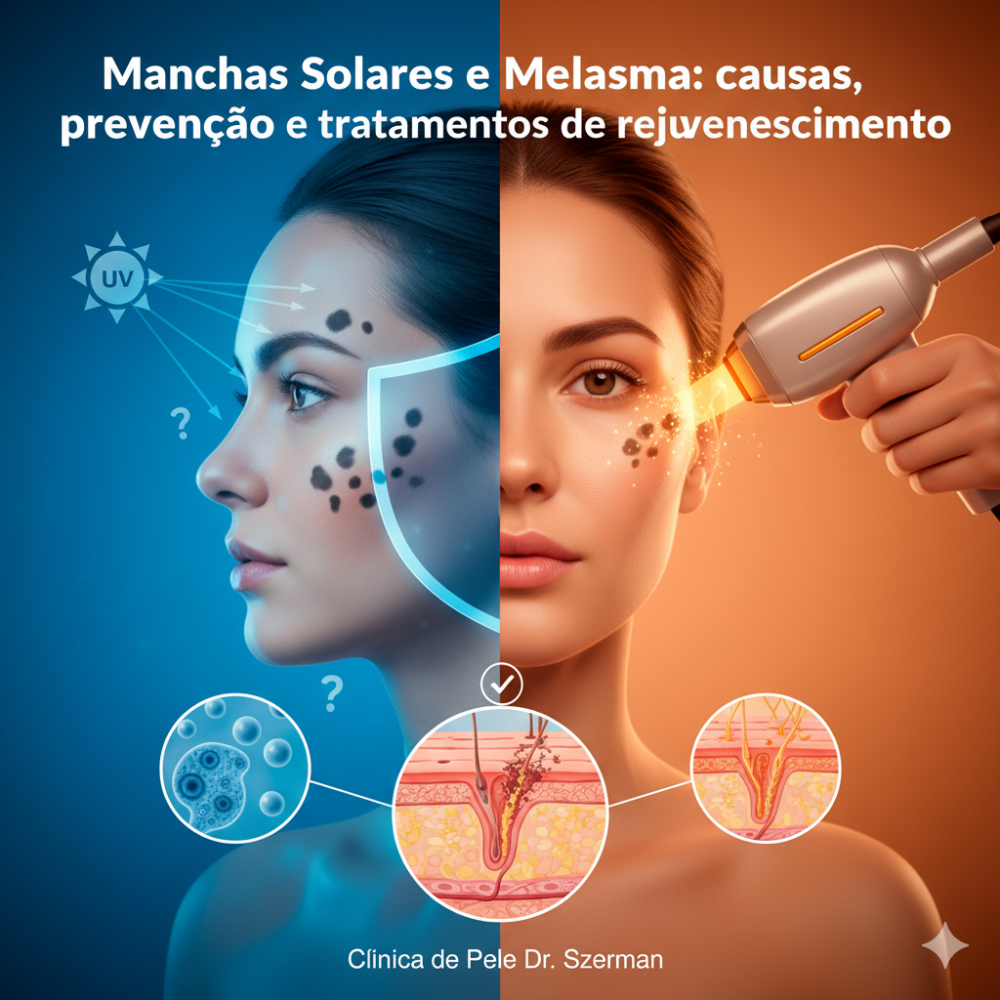
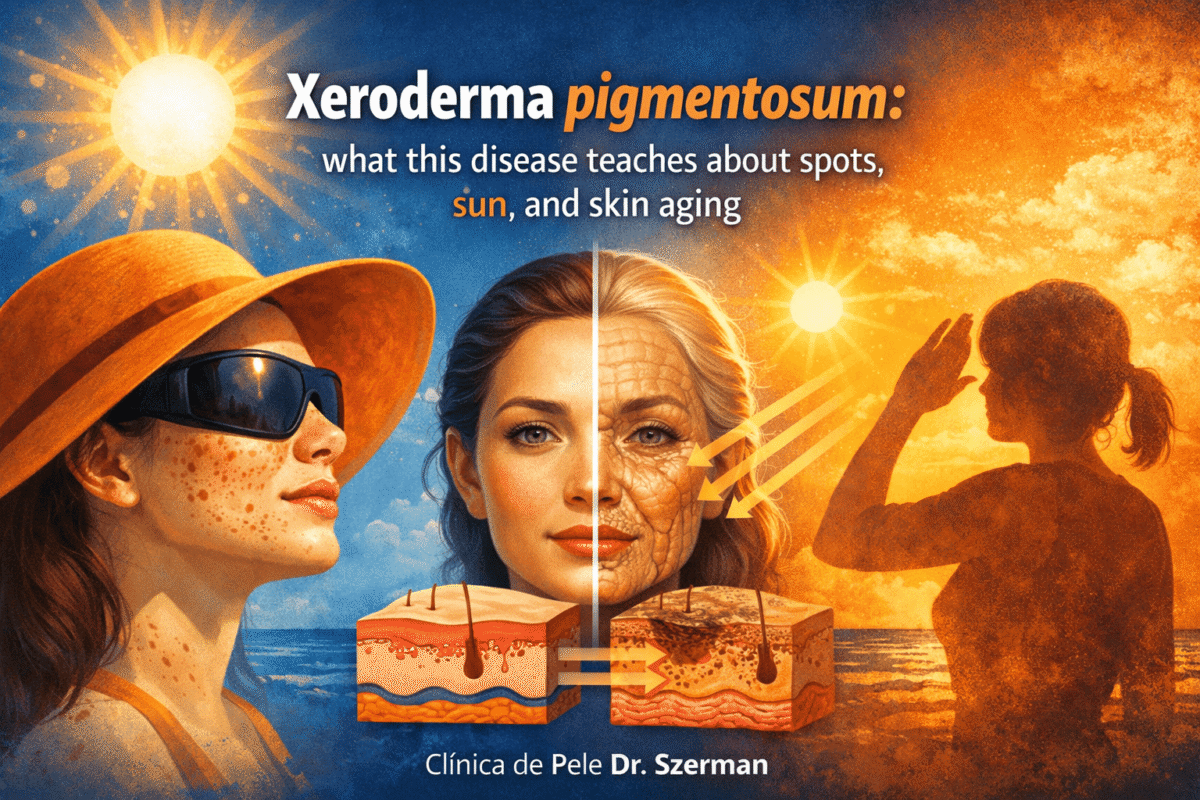
Skin spots that appear over the course of life do not appear “out of nowhere.” Many of them are the result of accumulated sun damage since childhood. An extreme — and very illustrative — example of this is xeroderma pigmentosum, a rare genetic disease that helps us understand how the sun affects our DNA and skin health over the years.
What is xeroderma pigmentosum?
Xeroderma pigmentosum is a genetic dermatological disease characterized by an error in the DNA. This error prevents the body from properly repairing the damage caused by ultraviolet (UV) radiation.
DNA repair failure and the effects of the sun
In people with xeroderma pigmentosum, the skin cannot correct the damage caused by sun exposure. As a result, from early childhood these patients may develop:
- Early skin spots
- Accelerated skin aging
- An extremely high risk of skin cancer
This condition clearly demonstrates the fundamental role that DNA plays in protecting us against the harmful effects of the sun.
Why do skin spots usually appear after the age of 30?
It is very common to hear comments such as: “Doctor, I spent the weekend in the sun and suddenly a spot appeared.”
In reality, these spots did not appear suddenly. During childhood and adolescence, the body has a remarkable ability to repair damage caused by UV rays. The organism constantly works to correct these aggressions to the DNA.
That is why many people do not develop spots when they are young — even when they are exposed to the sun without protection. The problem is that these damages do not disappear; they accumulate over time.
Sun damage is cumulative
The sun exposure you had at age 5, 10, or 20 remains “recorded” in your DNA.
Why do spots appear later?
After decades of sun exposure without proper protection, there comes a moment when the body can no longer repair the damage efficiently. This usually occurs after the age of 30 or 40, when:
- DNA damage has accumulated significantly
- The natural aging process reduces repair capacity
- Skin spots begin to appear gradually
- The risk of skin cancer increases
Even if a person starts avoiding the sun later in life, the damage has already been done.






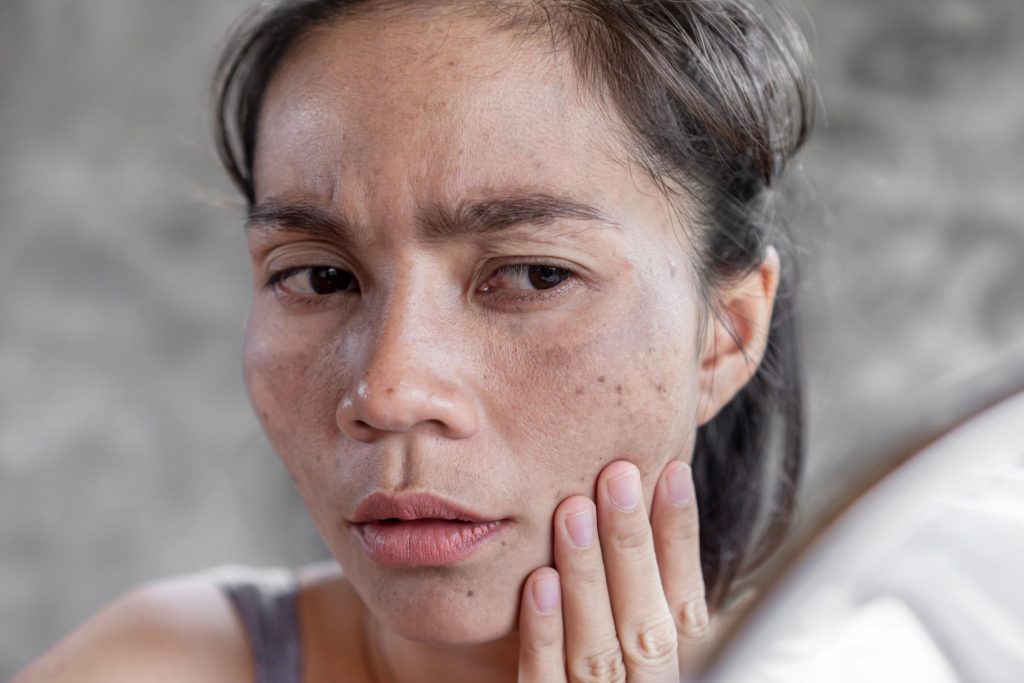
The importance of sunscreen from childhood
Using sunscreen from childhood is one of the most effective ways to prevent skin spots, premature aging, and skin cancer.
Why is starting later not enough?
Starting to use sunscreen only after the age of 30 or 40 can still help, but it does not erase the damage accumulated throughout life. The purpose of sunscreen is to prevent DNA damage from accumulating from an early age.
Is tanning protection or a warning?
The human body is extremely intelligent. When you get a tan, your body is producing melanin, which acts as a natural protection against the sun.
Melanin as a defense mechanism
Melanin works like a protective “shield” or “paint.” It is the body saying:
“Please, do not overexpose yourself to the sun.”
For this reason, tanning should not be seen as something harmless, but rather as a warning sign.
Is sunlight good for you? Yes — but in moderation
Sunlight has important benefits, such as stimulating vitamin D production. However, everything depends on the way and duration of exposure.
Conscious use of sunscreen
- Sunscreen should be used mainly during direct sun exposure
- The face deserves special attention, as it is the most exposed area
- It is not necessary to use sunscreen all day in every situation
- A small amount of controlled sun exposure can be beneficial for health
In Brazil, unlike many European countries, sunlight is abundant. That is why balance is essential.
Differences between darker and lighter skin
Darker skin has greater natural protection, equivalent to a sun protection factor (SPF) of around 15.
Lighter skin, on the other hand, is much more sensitive to sun exposure and is more prone to:
- Sun spots
- Early wrinkles
- Skin laxity
- Skin cancer
For this reason, people with lighter skin should take even greater care when exposed to sunlight.
Sunscreen and prevention of skin aging
Today, it is widely proven that sunscreen is one of the most effective measures to prevent skin aging.
It helps reduce:
- Skin spots
- Wrinkles
- Skin laxity
- DNA damage
- Risk of skin cancer
What does xeroderma pigmentosum teach us?
Images and cases of xeroderma pigmentosum clearly demonstrate how much the human body works to protect us from the sun. However, over the years, this protective capacity decreases.
Eventually, the body becomes overwhelmed, and the effects of sun exposure begin to appear more intensely.
Sun protection is a lifelong habit
Using sunscreen consciously is not only an aesthetic concern but also a matter of health and prevention. The earlier this habit begins, the smaller the cumulative damage throughout life.
Skin spots, premature aging, and skin cancer are rarely isolated events — they are often the result of choices made many years earlier.
If you have questions about skin spots, melasma, or dermatological treatments, always consult a qualified specialist.
Contact
Clínica de Pele specializes in acne scar treatment in Rio de Janeiro, with over 20 years of experience. Dr. Szerman has performed more than 5,000 CO₂ laser sessions.