Even people who exercise regularly and maintain a balanced diet may notice those uneven dimples on the skin, especially on the thighs and buttocks.
Não perca a dica do Dr. Szerman ao final do artigo!
It is estimated that about 90% of women have some degree of cellulite, which shows that this condition is extremely common. Even so, many people look for alternatives to improve the appearance of their skin and regain confidence in their bodies.
In recent years, advances in aesthetic dermatology have introduced new technologies capable of reducing skin irregularities more effectively. Among these solutions are treatments that use radiofrequency and controlled heat, stimulating the skin and helping to smooth the appearance of cellulite.
In this article, you will understand what cellulite is, why it appears, and which modern treatments can help reduce its appearance.
What is cellulite
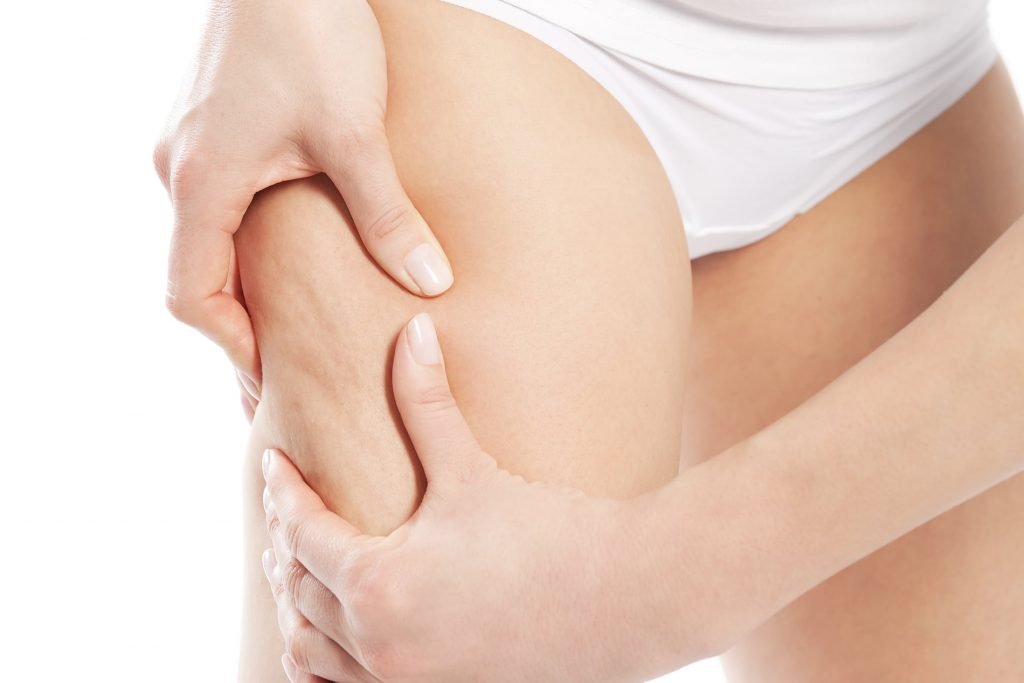
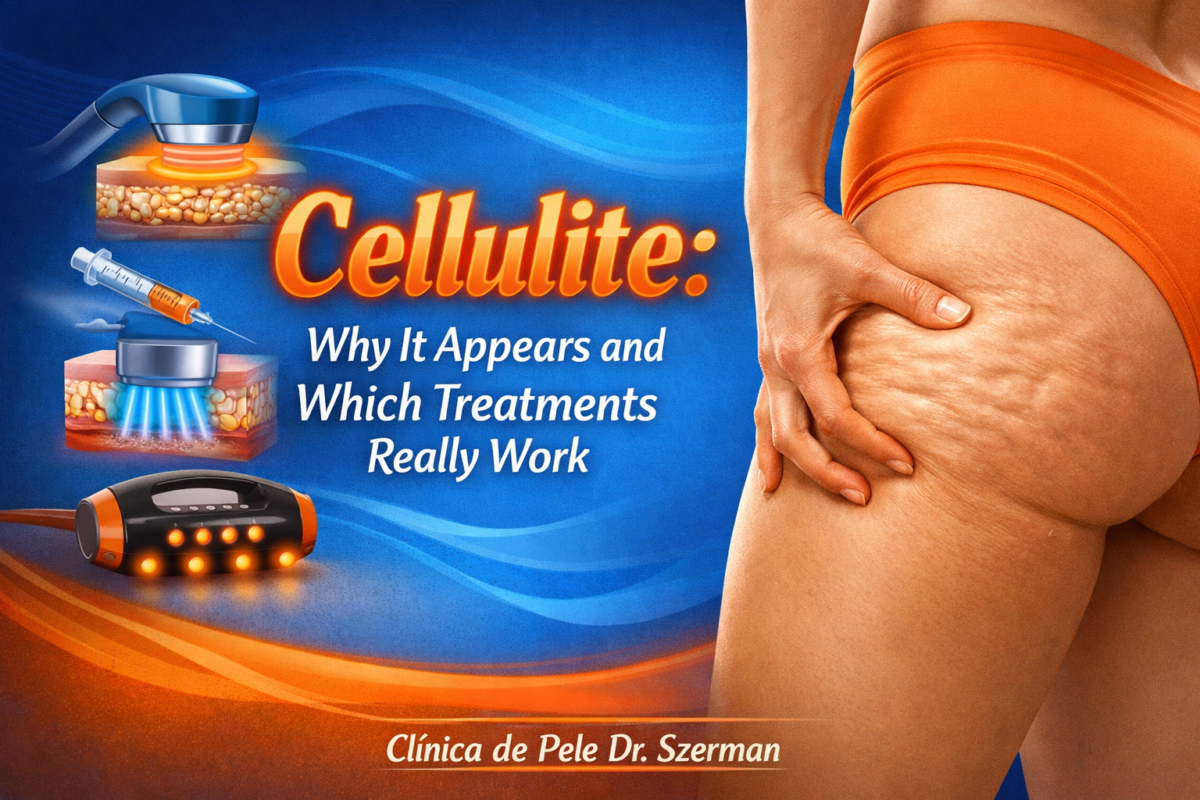
Cellulite is an aesthetic condition that causes an uneven texture on the skin, often compared to an “orange peel” appearance. This effect occurs when fat deposits beneath the skin push against the surface tissue, creating small depressions or dimples.
It is much more common in women due to hormonal factors and the structure of female skin. After puberty, hormonal changes and the way the body distributes fat make the appearance of these irregularities more likely.
It is important to highlight that cellulite is not necessarily related to excess weight. Even thin women can experience this condition.
How cellulite forms in the skin
To understand how cellulite forms, it is necessary to look at what happens in the deeper layers of the skin.
Below the surface, fat cells are organized into compartments. Under ideal conditions, these cells remain evenly distributed, keeping the skin looking smooth.
However, when the connective tissue that links the skin to deeper layers tightens or pushes between these fat cells, uneven pressure occurs. This process causes part of the fat to push the skin upward while the tightened tissue pulls it downward, creating small depressions.
This movement is what produces the characteristic dimpled appearance of cellulite.
Where cellulite appears most often
Although it can appear in different areas of the body, cellulite is usually more visible in regions with a higher concentration of subcutaneous fat.
The most affected areas are thighs, buttocks, hips, and the back of the legs. In these regions, the dimpling becomes more noticeable when a person is standing or when the skin is compressed.
Modern treatments to reduce cellulite
For decades, various solutions have been proposed to reduce cellulite, including creams, massages, and specific exercises. Although some of these methods may help improve circulation and skin appearance, results are often limited.
With the advancement of aesthetic technology, more effective treatments have emerged that work directly on the deeper layers of the skin.
Radiofrequency in cellulite treatment
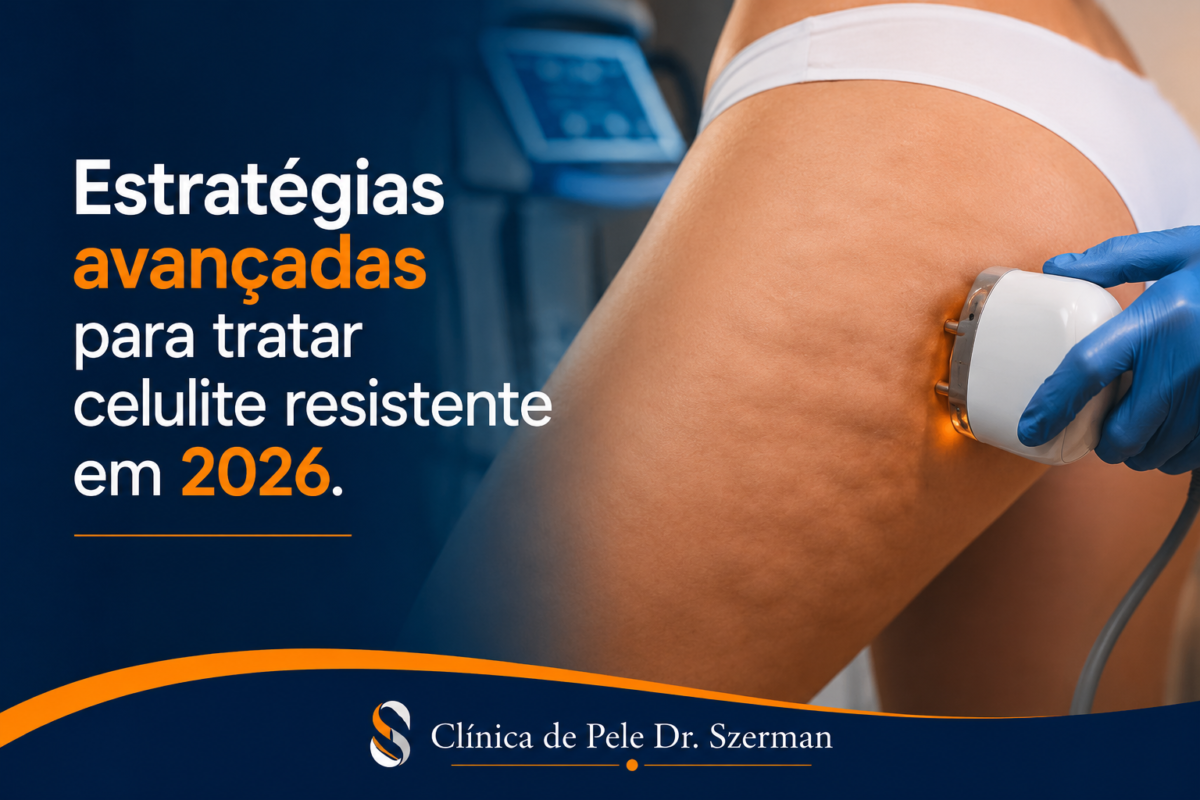
One of the most commonly used methods today is radiofrequency treatment, which uses thermal energy to heat the skin layers in a controlled way.
This heating produces important effects in the treated area. The heat stimulates blood circulation, encourages the production of collagen and elastin, and helps remodel fat cells. As a result, the skin tends to become firmer and more even.
Additionally, the treatment can reduce the tension of the connective tissue that contributes to the formation of dimples.
How the procedure works
During the procedure, a gel is applied to the skin to help the applicator glide smoothly. The professional then moves the device over the treatment area while the radiofrequency technology generates heat in the deeper layers of the skin.
This process stimulates collagen reorganization and helps smooth the skin’s texture. Over the course of several sessions, the treated area may develop a smoother and more uniform appearance.
Results of cellulite treatment
Many people seek aesthetic treatments after trying different alternatives without seeing significant improvements. In many cases, results obtained with technologies such as radiofrequency become visible when comparing before-and-after images of the procedure.
After the sessions, it is common to notice a reduction in dimpling and improved skin firmness, contributing to a more even appearance.
Are the results permanent?
Although the results can be long-lasting, cellulite is influenced by several factors such as genetics, hormonal changes, and lifestyle. For this reason, in some cases maintenance sessions may be necessary over time.
Combining aesthetic treatments with healthy habits, such as regular physical activity and balanced nutrition, usually helps maintain the results for longer.
How much does cellulite treatment cost?
The cost of cellulite treatment can vary depending on the technology used, the clinic chosen, and the number of sessions required.
Procedures that use high-tech equipment may have higher costs. In some cases, the price can reach around US$2,500 per session, especially when advanced devices and personalized treatments are involved.
Conclusion
Cellulite is an extremely common condition and part of the reality for most women. Although it is not a health problem, many people seek ways to improve the appearance of their skin and feel more confident.
With advances in dermatological aesthetics, there are now more modern and effective treatments that help reduce dimpling and improve skin texture. Evaluating each case with a qualified professional is essential to choosing the most appropriate procedure and achieving safe and satisfying results.
Contact
Clínica de Pele has specialized in dermatological treatments in Rio de Janeiro for more than 60 years, since 1969. Dr. Szerman has more than 20 years of experience and also teaches other physicians.