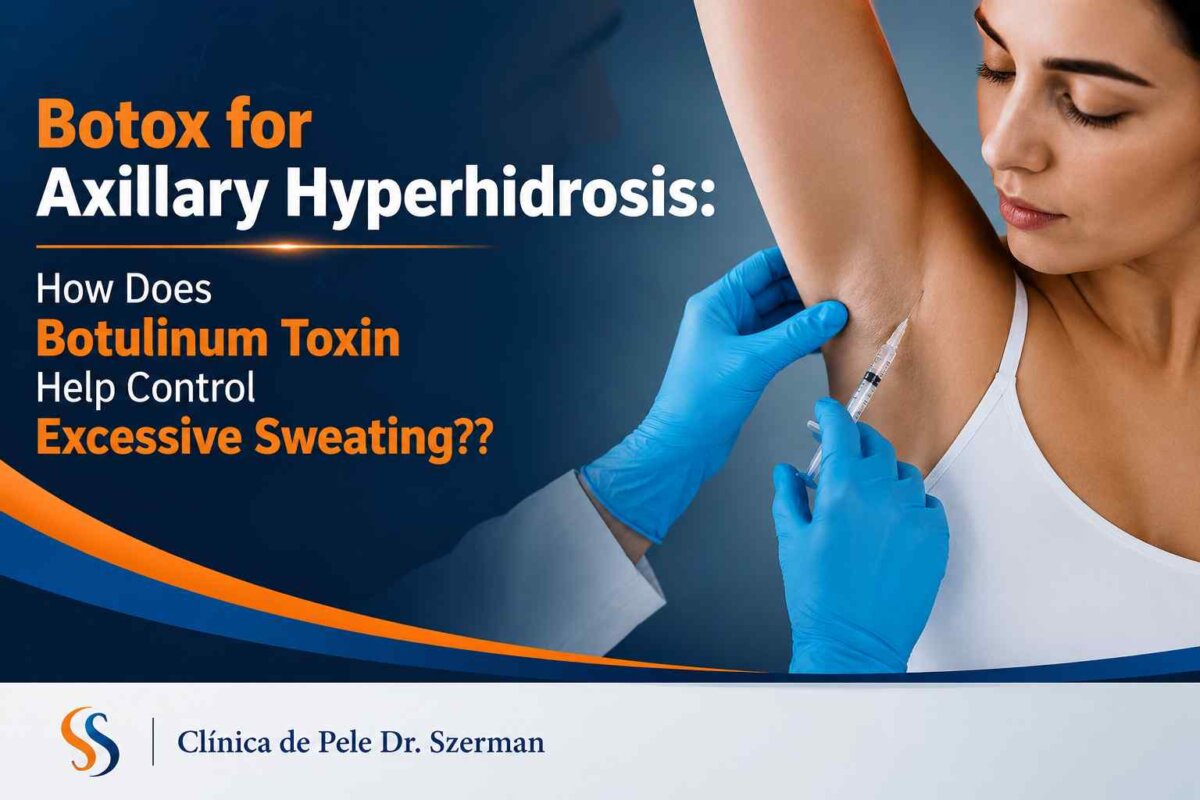
Hyperhidrosis is a condition that affects thousands of people and is characterized by excessive sweating, even in the absence of intense heat or physical activity. The condition can cause discomfort, social embarrassment, and significantly impact quality of life. While many people associate Botox primarily with cosmetic treatments for wrinkles and expression lines, botulinum toxin is also widely used for therapeutic purposes. One of its most effective applications is the treatment botox for axillary hyperhidrosis, particularly in the underarm area.
Não perca a dica do Dr. Szerman ao final do artigo!
In this article, you’ll learn how Botox for hyperhidrosis works, its benefits, how long the results last, and why it has become a safe and effective option for people struggling with excessive sweating.
What Is Hyperhidrosis?
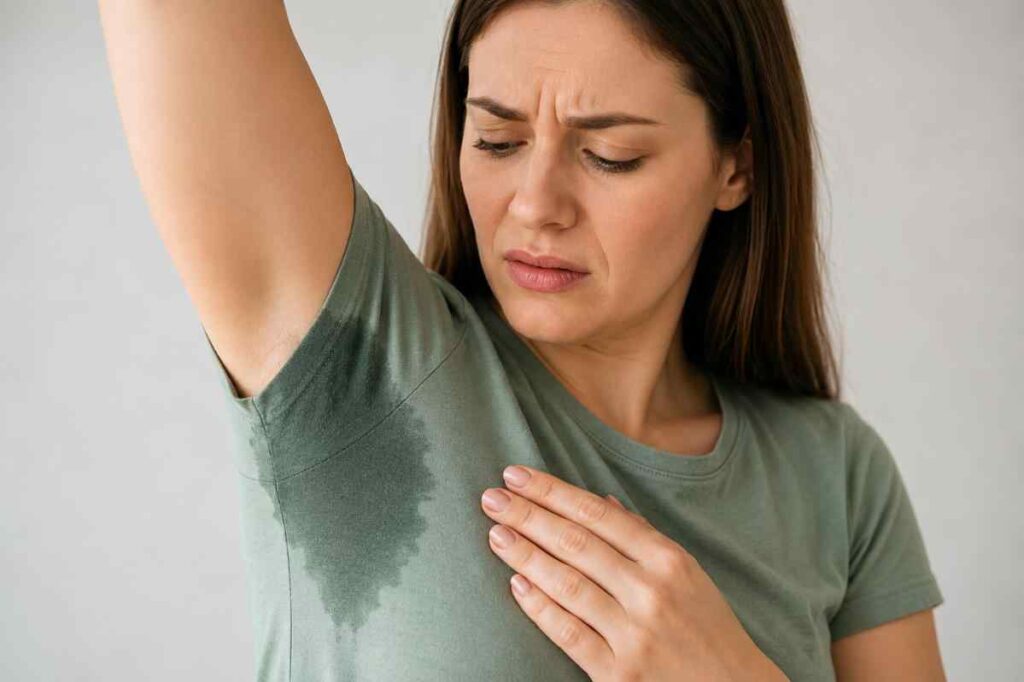
Hyperhidrosis is a medical condition characterized by excessive sweat production beyond what is necessary to regulate body temperature.
The condition can affect different areas of the body, including:
- Underarms;
- Hands;
- Feet;
- Face;
- Scalp.
In many cases, hyperhidrosis interferes with daily activities, making simple tasks such as shaking hands, wearing certain clothes, or participating in social and professional events more challenging.
What Is Botulinum Toxin?
Botulinum toxin, commonly known as Botox, is a substance widely used in both aesthetic and therapeutic medicine.
In facial aesthetics, its primary purpose is to relax specific muscles to soften wrinkles and expression lines. However, when used to treat hyperhidrosis, its function is different: it works directly to control sweat production.
How Does Botox for Axillary Hyperhidrosis Work?
Blocking Sweat Gland Activity
In the treatment of axillary hyperhidrosis, botulinum toxin is injected into a specific layer of the skin, typically in the underarm area.
Its action consists of blocking the nerve signals responsible for stimulating the sweat glands. As a result, these glands no longer receive the command to produce excessive amounts of sweat.
This significantly reduces perspiration, providing patients with greater comfort and confidence.
A Targeted and Effective Treatment
One of the major advantages of Botox for hyperhidrosis is that it works directly in the affected area, controlling excessive sweating without interfering with other bodily functions.
This targeted approach delivers highly effective results and a high level of patient satisfaction.
How Many Units of Botulinum Toxin Are Used?
The amount of product required depends on the severity of hyperhidrosis and the treatment area.
Treatment for Axillary Hyperhidrosis
In cases of underarm hyperhidrosis, approximately 100 to 200 units of botulinum toxin are typically used.
This amount is roughly double what is commonly required for cosmetic facial treatments and may correspond to one or two vials of the medication.
The ideal dosage should be determined during a medical consultation based on each patient’s individual needs.
Is the Procedure Painful?
A common concern among patients is whether the injections are painful.
Quick and Well-Tolerated Procedure
In general, the treatment is considered minimally painful. Some patients may experience mild discomfort during the injections, but the sensation is usually well tolerated.
Additionally, the procedure is quick and performed on an outpatient basis, requiring no hospitalization or interruption of normal daily activities.
How Long Does the Procedure Take?
The treatment typically takes about 30 minutes to complete.
After the injections, patients can usually return to their normal routine while following any specific instructions provided by their healthcare professional.
How Long Do the Effects of Botox for Axillary Hyperhidrosis Last?
One of the main advantages of the treatment is its long-lasting effectiveness.
Extended Results
The effects of botulinum toxin for hyperhidrosis control generally last between 8 and 15 months.
In practice, most patients enjoy approximately one year of significant reduction in excessive sweating.
Once the effects gradually diminish, the treatment can be repeated to maintain the results.
Botox or Surgery: Which Is the Better Option?
There are several treatment options available for hyperhidrosis, including surgical procedures. However, botulinum toxin offers several important advantages.
Lower Risk of Compensatory Sweating
One of the main benefits of Botox compared to surgery is that it does not typically cause compensatory sweating.
Compensatory sweating occurs when the body begins producing excessive sweat in other areas after surgical correction of the originally affected region.
Because botulinum toxin acts only at the injection site, this risk is significantly reduced.
Safe and Minimally Invasive Procedure
Another advantage is that the treatment does not require incisions, general anesthesia, or an extended recovery period.
This makes Botox a safe, practical, and minimally invasive option for individuals seeking effective control of hyperhidrosis.
Who Is a Candidate for Botox Treatment for Axillary Hyperhidrosis?
The procedure is recommended for individuals who experience excessive sweating and have not achieved satisfactory results with conventional treatments, such as clinical-strength antiperspirants.
A medical evaluation is essential to confirm the diagnosis and determine the most appropriate treatment strategy for each patient.
Conclusion
Botox for hyperhidrosis is a modern, safe, and effective solution for people struggling with excessive sweating, especially in the underarm area. By blocking the activity of the sweat glands, botulinum toxin significantly reduces perspiration, with results that can last from 8 to 15 months.
Contact
Clínica de Pele has specialized in dermatological treatments in Rio de Janeiro for more than 60 years, since 1969. Dr. Szerman has over 20 years of experience and also teaches and trains other physicians.