
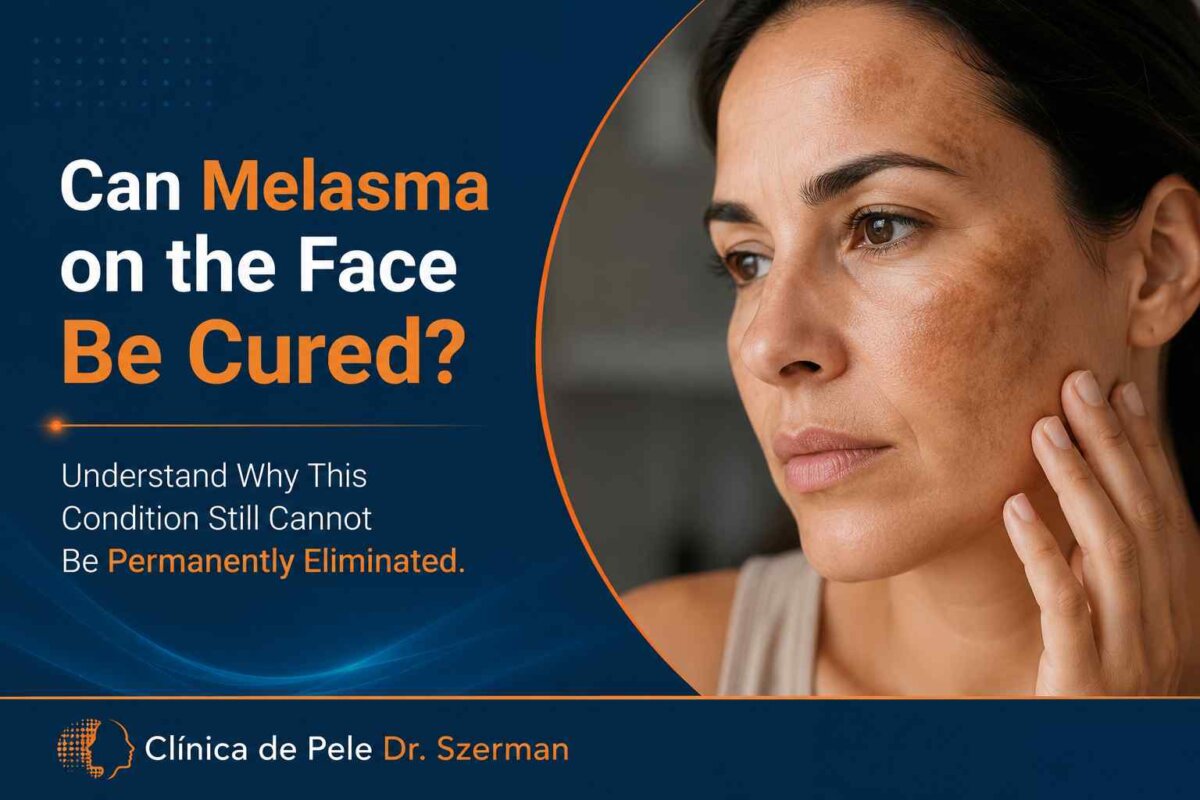
Melasma is a dermatological condition that affects millions of people worldwide, particularly women. Characterized by the appearance of dark patches on the skin, especially on the face, melasma can significantly impact self-esteem and quality of life. One of the most common questions asked in dermatology clinics is: Can melasma on the face be cured?
Não perca a dica do Dr. Szerman ao final do artigo!
Although advances in dermatology and aesthetic medicine have led to increasingly effective treatments, the answer remains no. Melasma does not have a definitive cure, but it can be successfully managed with proper medical care and ongoing maintenance. Understanding the causes and factors that contribute to the development of melasma is essential for achieving the best possible treatment outcomes.
What Is Melasma?
Melasma is a pigmentation disorder that causes brown or grayish-brown patches to develop on the skin. These patches most commonly appear on the face, particularly on the cheeks, forehead, nose, and upper lip. In some cases, melasma may also affect sun-exposed areas such as the neck and arms.
The condition occurs due to increased production of melanin, the pigment responsible for skin color. Although melasma is harmless from a medical standpoint, it is often persistent and requires ongoing care to prevent worsening discoloration.
Why Can’t Facial Melasma Be Permanently Cured?
Individual Predisposition Plays a Major Role
One of the main reasons melasma does not have a permanent cure is the individual’s natural predisposition to develop the condition. Currently, medicine does not fully understand all the mechanisms involved in melasma formation.
However, it is known that some people have a greater tendency to develop melasma due to genetic, hormonal, and environmental factors. These predispositions make certain individuals more susceptible to skin discoloration.
Because these underlying characteristics cannot be completely eliminated, treatment focuses on controlling the condition and reducing the appearance of dark patches.
Melasma Is a Chronic Condition
Like many chronic dermatological conditions, melasma requires ongoing management. Even after successful treatment, pigmentation may return if triggering factors are not properly controlled.
For this reason, dermatologists often compare melasma to other chronic conditions that cannot be cured but can be effectively managed with the right care and lifestyle adjustments.
What Factors Can Worsen Melasma?
Sun Exposure
Ultraviolet (UV) radiation is considered one of the primary triggers for both the development and worsening of melasma. Sun exposure stimulates melanin production, causing existing patches to darken and new pigmentation to develop.








For this reason, daily sunscreen use is essential for anyone seeking to manage melasma.
Excessive Heat
Many people believe that only sunlight worsens melasma. However, heat itself can also play a significant role.
Hot environments, ovens, stoves, saunas, and even certain aesthetic procedures may stimulate melanocytes—the cells responsible for producing melanin—leading to increased pigmentation.
Hormonal Changes
Hormonal fluctuations are frequently associated with the onset of melasma. Pregnancy, oral contraceptives, and hormone therapies can all contribute to the development of dark patches.
This explains why melasma is more common in women, particularly during pregnancy, when it is often referred to as the “mask of pregnancy.”
Visible Light and Electronic Device Radiation
In addition to ultraviolet radiation, recent studies suggest that visible light emitted by screens, lamps, and electronic devices may contribute to darkening of melasma in some individuals.
For this reason, many dermatologists recommend tinted sunscreens, which provide an additional layer of protection against visible light exposure.
How Is Melasma Treated?
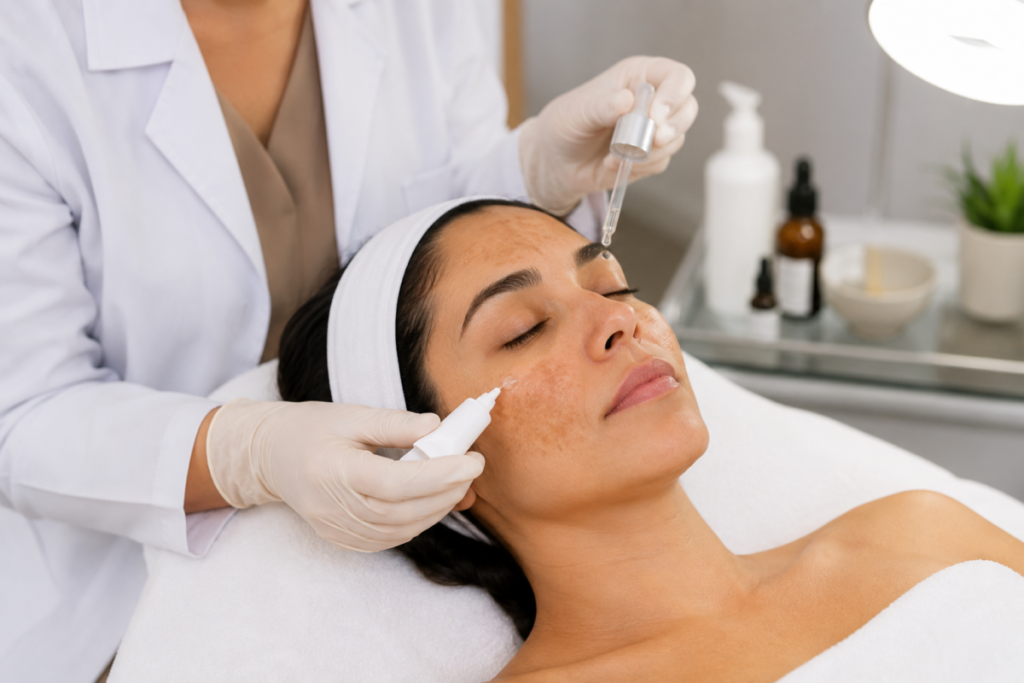
Lightening Existing Pigmentation
The primary goal of melasma treatment is to gradually lighten dark patches and create a more even skin tone. Depending on the patient’s needs, treatment options may include:
- Prescription skin-lightening creams;
- Specialized exfoliating acids;
- Chemical peels;
- Microneedling;
- Laser treatments and advanced technologies;
- Oral medications in selected cases.
The most appropriate treatment plan depends on the patient’s skin type and the depth of pigmentation.
Long-Term Management
Achieving lighter skin is only part of the process. Maintaining results is equally important.
Successful melasma management requires a consistent skincare routine that includes rigorous sun protection, proper skin hydration, and regular follow-up visits with a dermatologist.
When patients understand that melasma is a condition requiring continuous care, they are more likely to achieve long-lasting and satisfactory results.
The Importance of Sun Protection in Melasma Management
Sunscreen Is Essential
If there is one non-negotiable step in melasma care, it is daily sunscreen use. Sunscreen should be applied every day, even on cloudy days or when spending most of the time indoors.
It is also important to reapply sunscreen throughout the day, especially after sweating, swimming, or prolonged exposure to natural light.
Physical Protection Also Helps
Wide-brimmed hats, caps, sunglasses, and UV-protective clothing can complement sunscreen and provide additional protection against the factors that contribute to melasma worsening.
Conclusion
Although melasma does not have a permanent cure, this does not mean patients must live with severe discoloration forever. Today, various treatment options can significantly lighten the skin and improve the quality of life of those affected by this condition.
The key to successful melasma management lies in combining professional medical treatment with strict sun protection and ongoing skincare habits. With consistency and specialized guidance, it is possible to keep melasma under control and significantly reduce its impact on daily life and self-confidence.
Contact
Clínica de Pele has specialized in dermatological treatments in Rio de Janeiro for more than 60 years, since 1969. Dr. Szerman has more than 20 years of experience and also teaches and trains other physicians.