
Understanding how laser hair removal works is a common question among people considering this procedure, which is one of the most popular aesthetic treatments in the world. The reason is simple: it is a modern, safe, and effective method for long-lasting hair reduction, offering greater convenience and comfort in daily life.
Não perca a dica do Dr. Szerman ao final do artigo!
Unlike traditional methods such as shaving or waxing, laser technology works directly on the hair root, weakening the hair follicle and progressively reducing hair growth. With the appropriate number of sessions, it is possible to achieve a significant reduction of hair in the treated area.
Although it is a very popular procedure, many people still have questions about how laser hair removal works, how many sessions are necessary, whether the treatment is permanent, and what precautions should be taken during the process.
In this article, you will better understand how the treatment works, the expected results, and the essential precautions to ensure safety and effectiveness.
What is laser hair removal?

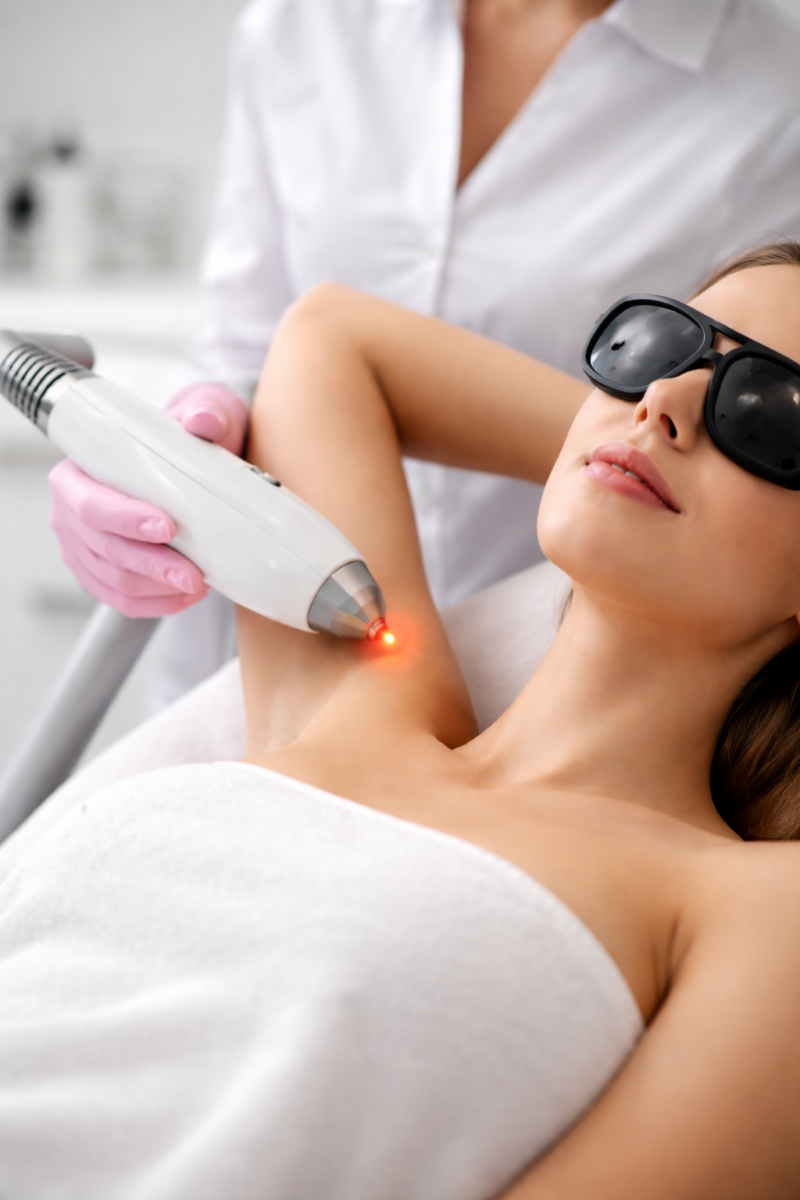
Laser hair removal is a procedure that uses concentrated beams of light to target the pigment present in the hair, called melanin. This light energy is converted into heat and travels through the hair shaft until it reaches the hair follicle, where the root is weakened or destroyed.
This process prevents or significantly reduces hair growth over time. For this reason, the method is considered one of the most efficient ways to achieve long-lasting hair reduction.
How laser hair removal works
During the session, the device emits pulses of light that target the hairs present on the skin. The energy generated travels through the hair shaft until it reaches the root, where thermal damage occurs, weakening the hair follicle.
However, the laser can only act on hairs that are in the growth phase, known as the anagen phase. Since not all hairs on the body are in this phase at the same time, the treatment must be performed in multiple sessions to target different growth cycles.
With repeated sessions, there is a gradual and progressive reduction of hair in the treated area.
How many laser hair removal sessions are needed?
In general, 7 to 8 laser hair removal sessions are required to achieve satisfactory results. This is an average used in most treatments, but the exact number may vary according to each patient’s individual characteristics.






Factors such as skin type, hair thickness and color, treated body area, and the body’s response directly influence the progress of the treatment. For this reason, the ideal treatment plan should always be defined after a medical evaluation.
Interval between sessions
The interval between sessions is usually about 30 days, although it may vary between three and five weeks. This time allows new hairs to enter the growth phase so they can be targeted by the laser in the next session.
Respecting this interval is important to ensure treatment effectiveness and achieve better results over time.
Expected results of laser hair removal
Hair reduction occurs progressively. With each session, approximately 15% to 20% of the hairs present in the treated area are eliminated. As the treatment progresses, patients begin to notice increasingly larger gaps in hair growth.
At the end of the recommended sessions, hair reduction can reach 80% to 90%. The hairs that may remain are usually thinner, lighter, and similar to fine peach fuzz, which generally does not cause aesthetic discomfort.
Is laser hair removal permanent?
In addition to understanding how laser hair removal works, another common question is whether the treatment is permanent. In general, laser hair removal is considered a permanent hair reduction method. This means that the hairs eliminated during the treatment do not grow back.
However, hormonal changes throughout life may stimulate the appearance of new hairs in certain areas of the body. Even in these cases, the amount tends to be much smaller than before the treatment, and maintenance sessions can be performed if necessary.
Important precautions during treatment
During the treatment, some simple precautions help ensure better results and avoid possible skin reactions.
One of the main recommendations is not to remove hair with wax or tweezers. The laser needs the hair shaft to conduct the energy to the root, and when the hair is removed from the root, the device loses this reference. External methods such as shaving with a razor, trimming, or using depilatory cream can be used without affecting the treatment.
Another important precaution is to avoid excessive sun exposure. Very tanned skin can increase the risk of skin reactions. For this reason, the use of sunscreen and, in some cases, lightening creams may be recommended to keep the skin protected during treatment.
Does laser hair removal hurt?
The sensation during the procedure is usually mild and tolerable. Many patients describe the discomfort as similar to the sensation of plucking a hair with tweezers.
To make the procedure more comfortable, a topical anesthetic may be applied to the area before the session. The intensity of the sensation can also vary according to individual sensitivity and the treated area.
How laser hair removal helps treat folliculitis
In addition to aesthetic hair reduction, laser hair removal is also very effective in the treatment of folliculitis, a common condition characterized by ingrown hairs and skin inflammation.
Because the procedure acts directly on the hair root, it reduces the occurrence of ingrown hairs. In many cases, patients already notice significant improvement in the first sessions, which brings great relief for those who suffer from this condition.
Possible reactions after the procedure
Since the laser generates heat when it reaches the hair, it is normal for the skin to show some temporary reactions after the session. The most common ones include mild redness, sensitivity in the treated area, or small superficial crusts.
These reactions usually disappear naturally within a few days. When the procedure is performed with appropriate equipment and by qualified professionals, the treatment is considered safe and adverse effects are minimal.
Why seek a specialized professional
Undergoing laser hair removal with a qualified professional is essential to ensure safety and good results. A medical evaluation allows the identification of skin type, hair characteristics, and possible contraindications.
In addition, a specialist will be able to define the most appropriate protocol for each patient, adjusting the equipment parameters and the ideal number of sessions.
With professional supervision and proper technology, laser hair removal can provide long-lasting results, greater comfort, and smoother skin with fewer hairs over time.
Contact
Clínica de Pele has specialized in dermatological treatments in Rio de Janeiro for more than 60 years, since 1969. Dr. Szerman has more than 20 years of experience and also teaches other physicians.