Laser hair removal has become one of the most popular methods for long-term hair reduction. Despite being considered safe, many people still have questions about possible laser hair removal reactions. In recent years, the number of patients reporting adverse effects has increased — many of which could be avoided with proper guidance.
In this article, you will learn about the most common reactions after laser hair removal, what is considered normal, and how to reduce the risk of complications.
Reactions after laser hair removal sessions
After laser application, the skin may present some expected responses. These reactions are usually mild and temporary.
Redness
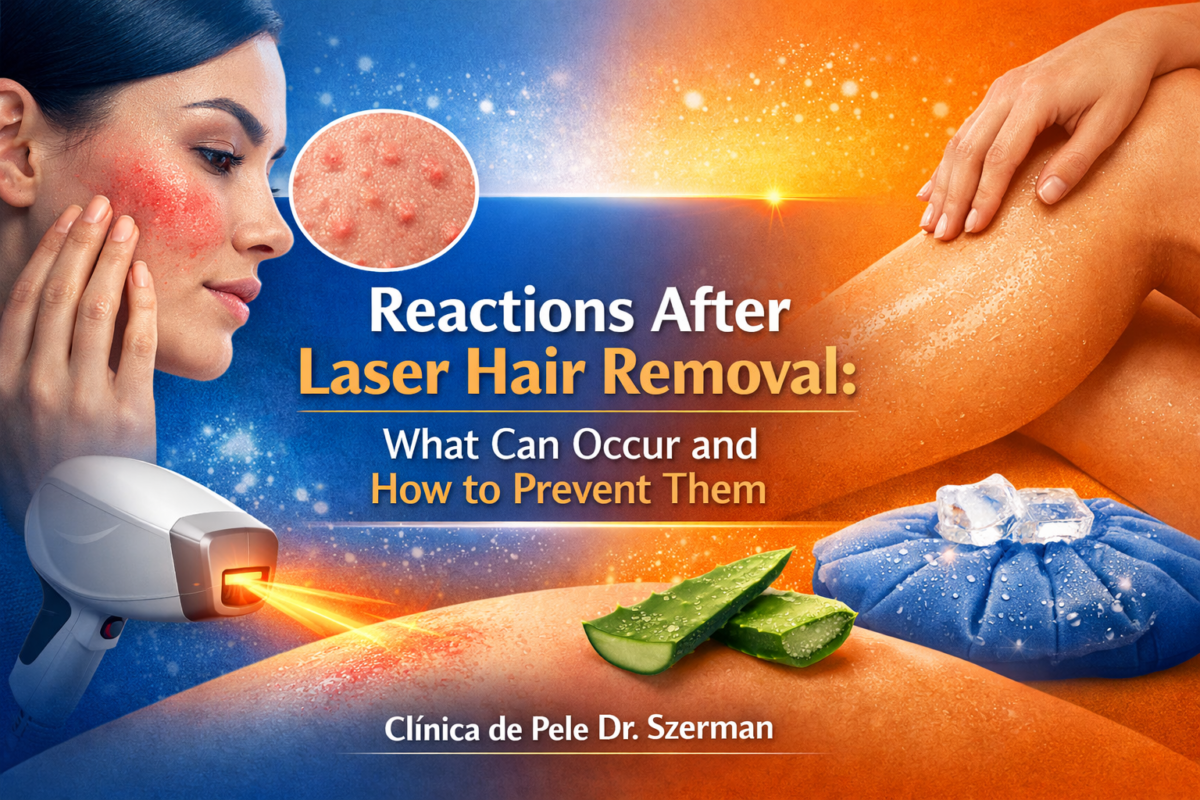
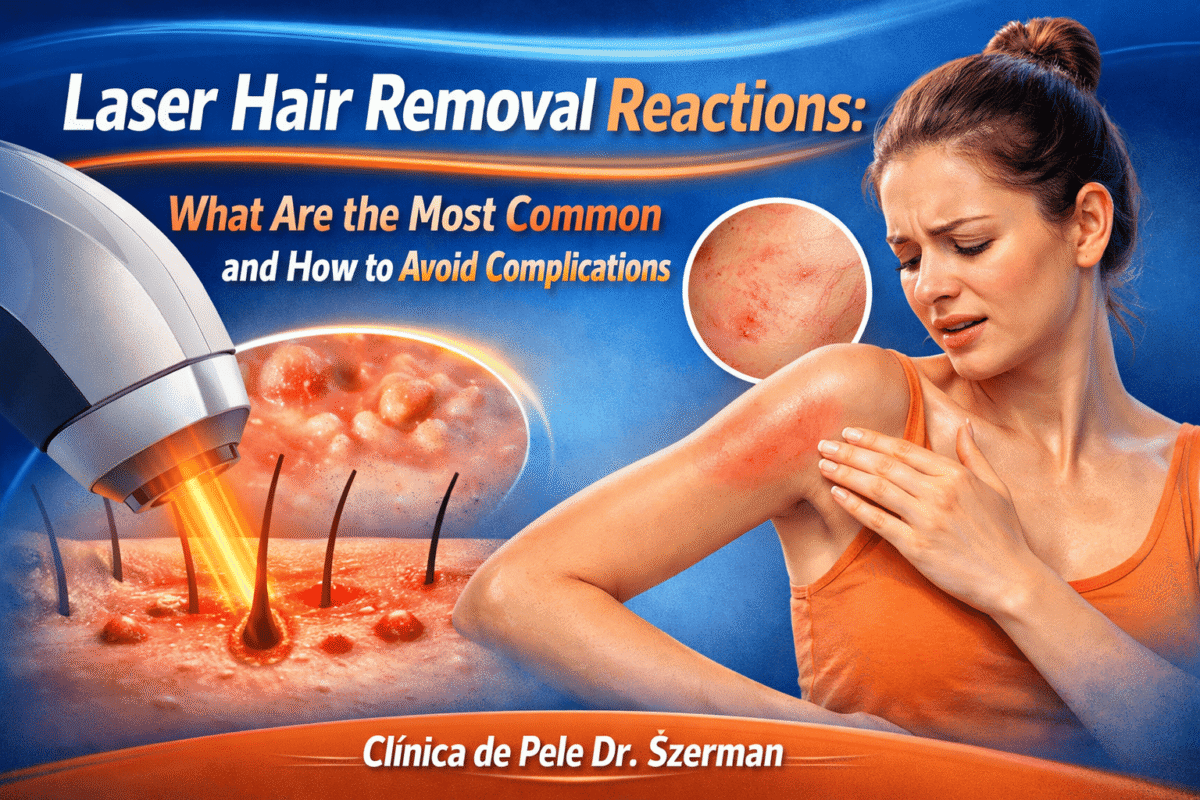
Redness is the most common reaction. The heat emitted by the laser targets the hair follicle and causes a mild, controlled inflammation in the treated area. In most cases, redness disappears within a few hours, although it may last up to 48 hours in more sensitive skin types.
Perifollicular edema
Another common sign is perifollicular edema, which consists of slight swelling around the hair follicle. This reaction is actually positive, as it indicates that the laser has effectively reached the hair root.
Hair carbonization
In some cases, it is possible to observe slightly carbonized hairs. This effect also indicates proper absorption of the laser energy, contributing to the overall effectiveness of the treatment.
Laser hair removal reactions: the most undesirable ones
Although most patients experience only mild reactions, some complications deserve attention.
Burns
Burns are the most common adverse effect associated with laser hair removal. They occur more frequently in patients with darker skin phototypes or in individuals who are tanned at the time of the session. However, burns can also occur in lighter skin.
The main factors that contribute to this complication include inappropriate equipment, poorly adjusted laser parameters, lack of professional experience, and the absence of prior medical evaluation. In addition, performing the procedure while wearing makeup or with product residues on the skin can increase the risk.
When burns occur, medical follow-up is essential to prevent dark spots and scarring.






Other possible reactions to laser hair removal
Some skin responses may vary depending on the patient’s individual characteristics.
Folliculitis
Folliculitis may appear especially in areas with a higher concentration of hair or in individuals who are more prone to skin inflammation. In most cases, it is a treatable condition with proper guidance.
Prolonged redness
In certain situations, redness may persist for several days. Although it can cause discomfort, it usually resolves with appropriate skin care.
Laser hair removal reactions: The importance of medical evaluation
An important concern is that many clinics perform laser hair removal without medical supervision. The presence of a physician is essential to evaluate the skin type, select the most appropriate device, adjust parameters safely, and properly guide the patient regarding preparation and post-treatment care.
Professional supervision significantly reduces the risk of hyperpigmentation, dark spots, and scarring.
How to make laser hair removal safer
Some simple measures help ensure a safe and effective treatment. It is essential to undergo a medical evaluation before starting sessions, avoid sun exposure or tanning in the days leading up to the procedure, and arrive at the clinic with clean skin, free of makeup or creams.
It is also crucial to follow all post-treatment instructions, especially regarding the use of sunscreen and soothing products recommended by the professional.
Conclusion
Laser hair removal is a safe procedure when performed with proper technology, trained professionals, and medical supervision. Mild reactions such as redness and swelling around the hair follicle are normal and may even indicate that the treatment is working.
More serious complications, such as burns, are usually related to poor preparation or choosing an inadequate clinic. Therefore, before starting your treatment, prioritize safety, experience, and specialized medical guidance.
Contact
Clínica de Pele has specialized in dermatological treatments in Rio de Janeiro for more than 60 years, since 1969. Dr. Szerman has over 20 years of experience and also teaches other physicians.