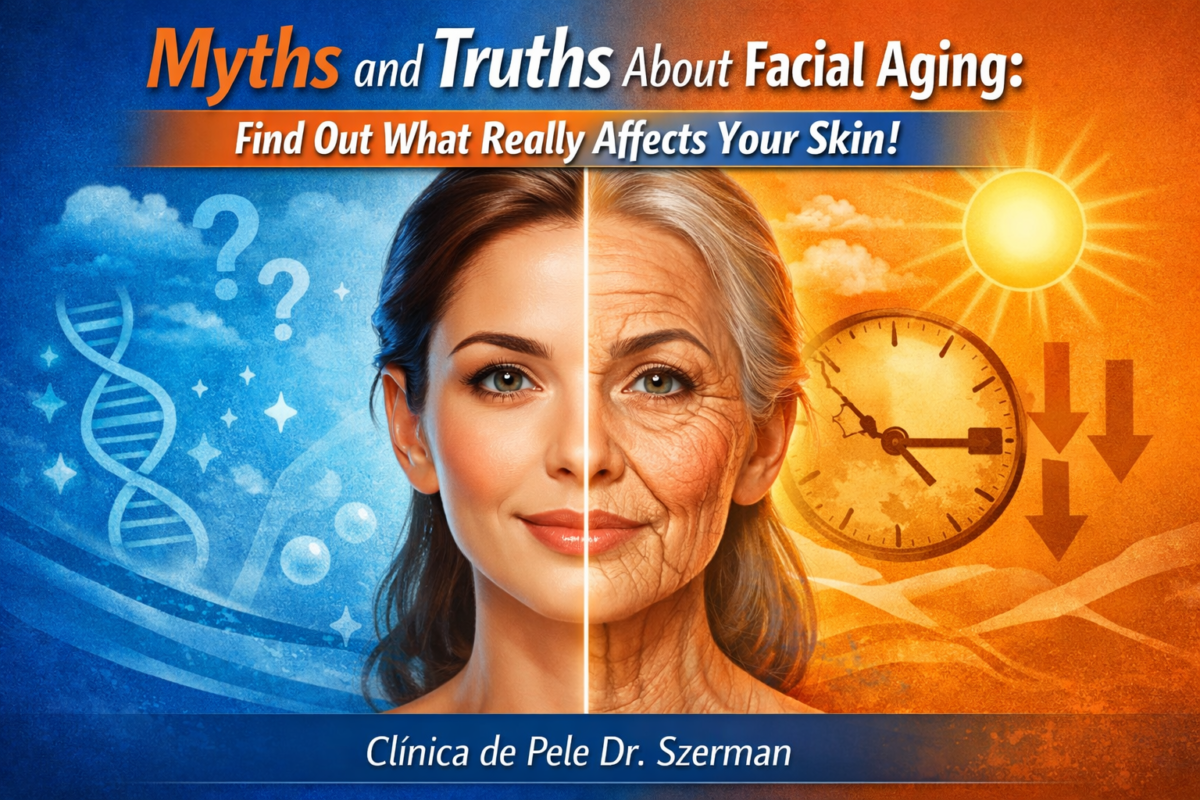
Facial aging is a natural process that occurs progressively and involves several changes in the skin and in the structures that support the face. Even so, many people still have doubts about what is a myth and what is true when it comes to facial aging and aesthetic treatments.
Não perca a dica do Dr. Szerman ao final do artigo!
In this article, we will clarify the main points on the subject, explaining how aging happens and which procedures really help maintain a younger and healthier appearance.
Facial aging: what does it mean?

Facial aging happens due to multiple factors that directly affect the layers of the skin as well as deeper tissues such as fat, muscles, and bone structures.
At first, it appears through fine lines and the loss of the skin’s natural glow. Over time, deeper wrinkles, sagging, volume loss, and changes in facial contour develop, giving the face a more tired and less defined appearance.
These changes are part of the body’s natural process, but they can be influenced by both internal and external factors.
Is facial aging only genetic?
True. Genetics plays an important role in facial aging, as it determines characteristics such as skin type, collagen production, and the tendency toward sagging. However, it is not the only responsible factor.
External factors have a strong influence on how fast aging occurs and can significantly accelerate the appearance of skin aging signs.
Does sun exposure not affect facial aging?
Myth. Sun exposure is one of the main causes of facial aging. Ultraviolet radiation damages collagen and elastin fibers, promotes the appearance of dark spots, increases sagging, and contributes to the formation of deeper wrinkles.
For this reason, daily use of sunscreen is one of the most important habits for preserving skin health and youthfulness.
Do lifestyle habits influence skin aging?
True. In addition to genetics and sun exposure, lifestyle has a direct impact on the appearance of the skin. Poor nutrition, chronic stress, excessive alcohol consumption, drug use, and even certain medications can accelerate facial aging.
These factors compromise cell renewal, increase inflammation in the body, and impair collagen production, making the skin duller, looser, and more aged.
Is the loss of facial contour part of aging?
True. Aging does not affect only the surface of the skin. It also impacts the tissues that support the face. Over the years, there is a loss of facial volume, reduction of fat, and structural changes that directly affect facial contour.
This loss of support disrupts facial harmony and favors the appearance of expression lines and sagging, giving the face a more aged look.
Is facial filling important in the aging process?
True. Facial fillers are essential treatments to restore lost volume and provide support to the skin. They help rebuild facial contours, improve facial harmony, and contribute to a more youthful and balanced appearance.
When properly indicated and correctly performed, fillers provide natural and safe results.
Is filler a simple technique that anyone can perform?
Myth. Facial filling is a medical procedure that requires deep knowledge of facial anatomy, proper technique, and high-quality products. To ensure safety and good results, it must be performed exclusively by experienced professionals.
This reduces risks, prevents complications, and guarantees a natural and harmonious final result.
Can forehead wrinkles be treated with Botox?
True. Botulinum toxin, known as Botox, is the treatment of choice for forehead wrinkles. It works by relaxing the muscles responsible for expression lines, softening existing wrinkles and preventing new ones from forming.
The effect lasts on average from four to six months, and the procedure can be repeated after this period to maintain the results.
Is CO₂ laser indicated to treat aged skin?
True. Fractional CO₂ laser is one of the most effective treatments for skin rejuvenation. It strongly stimulates collagen production, improves sagging, softens wrinkles, lightens spots, enhances skin glow and tone, and also helps reduce scars.
Modern technologies make the procedure safer and more efficient, providing progressive and long-lasting results.
How many CO₂ laser sessions are necessary?
On average, four to five sessions are recommended, always performed by experienced physicians. The exact number may vary depending on the degree of skin aging and each patient’s individual goals.
Conclusion
Facial aging is a natural process, but it can be influenced by several factors such as genetics, sun exposure, and lifestyle habits. Understanding the myths and truths about this topic is essential to make more conscious choices and invest in truly effective treatments.
With proper professional guidance and preventive care, it is possible to age in a healthier way, maintaining facial harmony, skin quality, and self-esteem.
Contact:
A Clínica de Pele has specialized in dermatological treatments in Rio de Janeiro for over 60 years, since 1969.
Dr. Szerman has more than 20 years of experience and also teaches other physicians.