
Do you know the difference between CO₂ Laser, Dermal Fillers, and Botulinum Toxin—and their main indications? If not, read this article in full to understand how to distinguish each of these facial rejuvenation procedures.
Não perca a dica do Dr. Szerman ao final do artigo!
What is CO₂ laser and what is it used for?
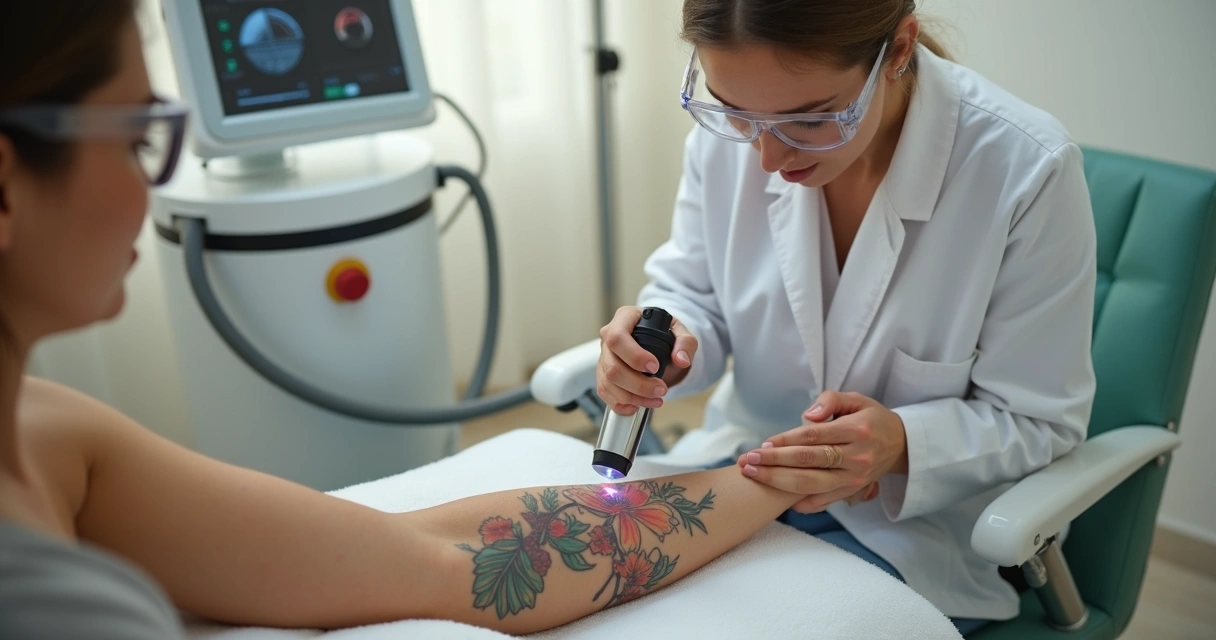
CO₂ laser is a technology used in various aesthetic and dermatological procedures, recognized for its effectiveness in skin treatment. It works by emitting a carbon dioxide (CO₂) light beam that heats the layers of the skin in a controlled manner. This process stimulates collagen production, promotes cell renewal, and improves skin texture and firmness.
One of the main advantages of CO₂ laser is its ability to treat both the surface and deeper layers of the skin, making it highly versatile. It is widely used to soften wrinkles, fine lines, acne scars, blemishes, sagging skin, and even to remove small skin lesions. Additionally, it helps tighten pores and provides a more even, rejuvenated appearance.
Despite its many benefits, CO₂ laser treatment requires specific post-procedure care, as the skin becomes sensitive and vulnerable. Professional supervision is essential to ensure safety and optimal results.
In summary, CO₂ laser is used to rejuvenate, revitalize, and treat skin imperfections, making it one of the most effective techniques for those seeking noticeable improvements in appearance.
CO₂ Laser, Dermal Fillers, and Botulinum Toxin: Is there a difference?
Yes. When it comes to facial rejuvenation—especially in the upper third of the face—the most common recommendation is the use of botulinum toxin as a therapeutic approach.
For example, when a patient frowns, raises their eyebrows, or makes strong facial expressions, muscle contractions create expression lines. The only treatment that effectively softens these dynamic wrinkles is botulinum toxin.




Botulinum toxin works by temporarily blocking these muscles, reducing their strength so they don’t contract as intensely, preventing the formation of deeper lines over time. If the toxin is not used, these lines can become permanent, requiring different treatments later—such as laser.
That’s why botulinum toxin may be indicated even for younger patients who are beginning to notice marked expression lines.
A common confusion among patients is understanding when CO₂ laser, dermal fillers, or botulinum toxin should be used.
Why are these treatments indicated differently?
When we talk about skin laxity and collagen loss, CO₂ laser is considered the gold standard for rejuvenation—not fillers, as many people believe.
A simple way to identify this is by observing your skin: if, when gently moving your face downward, you notice sagging, CO₂ laser is usually the most appropriate treatment. It improves firmness and skin quality overall.
It’s common to see patients who were advised to use fillers in the upper face to correct sagging in the lower face—which is often not the ideal indication. Excess filler in the upper face can create an unnatural, overfilled look while failing to address the real issue.
Each treatment must be correctly indicated to achieve a harmonious, natural result.
When are dermal fillers indicated?

Fillers are recommended when there is volume loss in the face. From around the age of 30, it is common to experience loss of bone, muscle, and fat, especially in the malar (cheek) and zygomatic regions.
This leads to a hollowed appearance. A simple test is to look at your profile in the mirror—if you notice flattening or sinking in this area, fillers may be suitable.
The main goal of fillers is to restore volume and provide structural support. Small amounts can also be used in the upper face to subtly lift the skin, always aiming for a natural result.
In some cases, fillers may also be applied to the jawline to enhance definition, which is often associated with a more youthful appearance.
Where can fillers be applied?
Fillers can be used in several areas of the face, such as the chin and nasolabial folds. However, the approach has evolved over time.
Previously, fillers were commonly applied directly to lines like the nasolabial fold. Today, the focus is more on restoring structure in the midface (malar region), often using techniques like MD Codes for better support and lifting.
A common mistake is using fillers to treat sagging skin. Attempting to correct laxity solely with fillers can lead to disproportionate and artificial results.
Combining treatments for better results
In clinical practice, combining CO₂ laser, dermal fillers, and botulinum toxin often provides the best outcomes.
- CO₂ laser improves skin quality and firmness
- Fillers restore volume and structural support
- Botulinum toxin reduces muscle activity and expression lines
This combined approach enhances overall skin quality and delivers more balanced, natural-looking rejuvenation.
Contact
Clínica de Pele has specialized in dermatological treatments in Rio de Janeiro for over 60 years, since 1969. Dr. Szerman has more than 20 years of experience and also teaches other physicians.