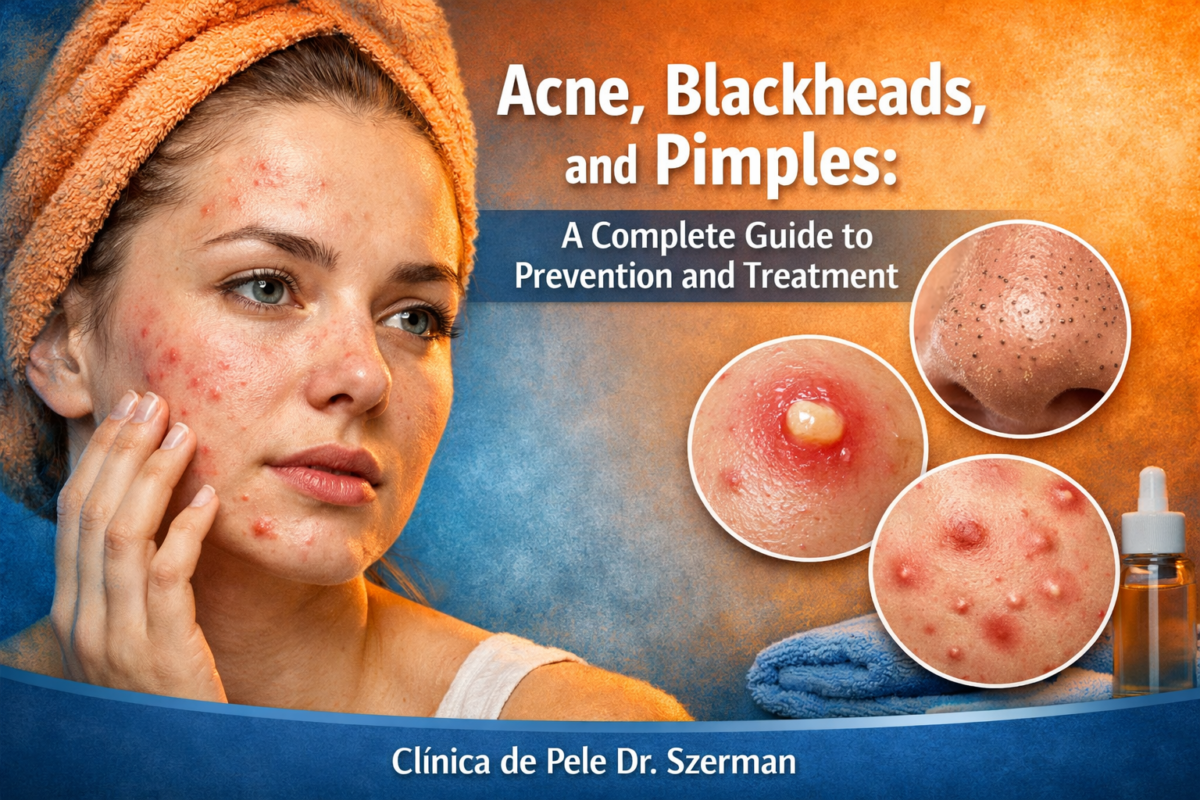
Acne, blackheads and pimples are among the most prevalent skin conditions in the population, affecting the vast majority of adolescents and a portion of adults—especially women.
Não perca a dica do Dr. Szerman ao final do artigo!
Acne is a serious issue that not only compromises skin health but also significantly impacts well-being and self-esteem in people of all ages, particularly teenagers. When it leaves marks, it can affect quality of life in the long term.
For those dealing with active acne, having access to prevention and treatment options is essential. Treatments for active acne, blackheads, and pimples usually involve methods and technologies designed to:
- Prevent the appearance of new acne lesions
- Improve the patient’s facial aesthetics
- Prevent the formation of acne scars
- Restore self-esteem and confidence
These procedures can be performed on individuals of different ages, always respecting their natural development to ensure results that meet expectations without compromising natural features.
Through dermatological treatments, it is possible to both prevent and treat acne at different stages. It’s no surprise that these procedures are among the most sought-after in clinics worldwide.
To help you better understand the condition, as well as ways to prevent and treat it, we’ve prepared this complete guide on the topic. Follow along and discover everything you need to know about acne, blackheads, and pimples.
What is active acne?

According to the Brazilian Society of Dermatology (SBD), acne is defined as the result of an inflammatory process affecting the sebaceous glands and hair follicles, often accompanied by increased bacterial colonization.
In other words, acne is a skin inflammation caused by excess sebum production from the sebaceous glands. This leads to blockage of hair follicles due to oil buildup, dead skin cells, and increased keratin on the skin’s surface—resulting in the formation of pimples.
What causes active acne?
The process by which acne develops is related to the hormonal changes that adolescents experience. The receptors in the sebaceous glands become more active during this phase, leading to increased sebum production.
At the same time, there is also an increase in keratin production—a protein present in the skin—which leads to blockage of hair follicles. This situation promotes the proliferation of bacteria (Cutibacterium acnes), intensifying the inflammatory and infectious process.








This condition varies from person to person and results in increased skin oiliness and the appearance of blackheads and pimples at different levels of severity. Cases can range from mild and superficial to more severe forms that affect deeper layers of the skin, potentially leading to significant scarring.
Types of active acne
Acne can present itself in different forms:
Mild acne: these are the common pimples or blackheads that most people have experienced at some point in life.
Moderate acne: this type may cause red, inflamed pimples (called papules) and red pimples with white centers (called pustules).
Severe acne: this type leads to cysts or painful, pus-filled lumps (called nodules) beneath the skin.
The best approach is to start treatment as soon as acne appears to prevent progression to more severe forms and reduce the risk of scarring. If nodules develop, it is important to consult a doctor or dermatologist for proper treatment.
In most cases, the reddish or brownish marks left after pimples fade will disappear on their own without treatment. However, squeezing pimples can increase the risk of permanent scarring.
Risk factors for active acne
Acne is a multifactorial condition, meaning it develops from the combination of several factors.
Genetic predisposition is an important contributor. In addition, some factors are known to worsen acne:
- Menstrual cycle
- Hormonal imbalances
- Stress
- Excessive sun exposure
- Diet high in fats and sugar
- Use of certain medications and supplements
Another important factor is the habit of touching the face or squeezing pimples, which can aggravate the condition.
Are acne, blackheads, and pimples the same thing?

Acne is the term used to describe blackheads and pimples that arise due to an inflammatory process affecting the sebaceous glands and hair follicles.
In other words, blackheads and pimples are types of acne lesions that commonly appear on the face—especially on the forehead, nose, and chin. They present as small black or white spots on the skin. Although they are very common during adolescence, they can occur at any stage of life.
In general, blackheads and pimples are asymptomatic and mainly cause concern due to their appearance. However, depending on the type or if not properly treated, they can progress into more severe acne, causing pain and sensitivity in the affected area.
What are whiteheads and blackheads?
Just as important as knowing what blackheads are is understanding that there isn’t just one type. In fact, blackheads can be classified as follows:
Whiteheads:
This type of blackhead is harder to remove and forms beneath the skin, in pores covered by keratin produced by the body. Because they are not exposed to air, they do not oxidize, which is why they maintain a whitish color.
Blackheads:
These appear as darker spots and form in pores that are not covered by skin, only by sebum. Their dark appearance is due to oxidation, which occurs when the material accumulated in the pores (dead skin cells, keratin, or sebum) comes into contact with air. It’s important to note that other substances, such as makeup residue, can also contribute to this coloration and worsen the condition.
What is the difference between a blackhead and a comedone?
Many people wonder whether there is a difference between blackheads and comedones. In fact, comedones are the small dark or white spots on the skin commonly known as blackheads. They form due to increased sebum production, which leads to clogged pores.
Why do blackheads appear?
In general, blackheads form due to clogged pores. When oil or other substances accumulate and come into contact with air, they oxidize, forming the dark spots we recognize as blackheads.
When this oil buildup is combined with bacterial proliferation—feeding on the sebum—whiteheads may form, which can later develop into pimples.
Therefore, blackheads often arise from excess oil production in the skin. This issue can be prevented with proper treatment under professional guidance.
What happens if blackheads and pimples are not treated?
Many people believe that blackheads and pimples are natural and will disappear on their own. However, this is not always the case.
Blackheads are a type of acne, and if not treated, they can damage the surrounding skin. Depending on severity, they may progress and lead to scarring, which can be difficult to treat.
Important: Avoid squeezing blackheads or pimples, as this can worsen the condition instead of improving it.
The best approach is to consult a dermatologist, who can evaluate your case, determine the severity, and recommend the safest and most effective treatment.
How to prevent blackheads and pimples?

There are some practical measures that can help prevent blackheads and pimples:
- Wash your face with suitable products, without overdoing it to avoid irritation
- Avoid touching your face or squeezing existing lesions
- Shave carefully and ensure your razor is clean and sharp
- Limit sun exposure to prevent skin irritation
- Wash your hair regularly, especially if it is oily, to prevent oil from transferring to your skin
How to prevent active acne?
As mentioned earlier, acne can worsen due to several factors—so controlling them is key.
Patients should:
- Avoid touching the face or squeezing pimples
- Avoid excessive sun exposure
- Avoid over-washing the face
- Be mindful of certain foods
- Avoid unsuitable cosmetics for their skin type
- Avoid certain supplements
In cases of acne, it is essential to seek medical guidance as early as possible. Early treatment can significantly reduce the risk of acne scars.
How to treat acne, blackheads, and pimples?

Treatment should always be individualized, based on each patient’s specific characteristics.
Dermatological treatment may include prescribed medications combined with procedures such as chemical peels. This combination is often recommended because it provides faster and more effective results.
Retinoic acid peels like Melanesse (national) and Acnelan (imported) are modern treatments used to control acne and skin oiliness. They can also be combined with other techniques, such as crystal peeling, salicylic acid, and Jessner peel, to enhance results.
How does peeling work?
Basically, peels are divided into two main types:
Crystal peel:
This is a physical peel that cleanses and exfoliates the skin. It promotes cell renewal and prepares the skin to receive a chemical peel. When combined, these treatments provide faster and more effective results.
Chemical peel:
This type acts like a medication on the skin, and there are different formulations available. Retinoic acid, Cimel, and salicylic acid peels are among the most recommended treatments for acne.
Their effects help control sebum production, oiliness, and keratin buildup, unclogging pores and treating acne from within.
When are dermatological treatments for acne, blackheads, and pimples necessary?
In general, whenever you notice any changes in your skin, it’s important to consult a dermatologist. When it comes to acne, blackheads, and pimples, this is no different.
At the first signs of these conditions, seeking professional help is the best approach. A specialist can provide an accurate diagnosis and recommend the most appropriate treatment to improve both skin health and appearance.
Main benefits of treatments
Dermatological treatments for acne, blackheads, and pimples offer several benefits. Depending on the severity, some procedures can reduce acne by up to 80% in certain cases.
Additionally, when treated early, acne has a higher chance of clearing completely in fewer sessions. Patients who begin treatment at the early stages can control the condition and prevent new breakouts, avoiding worsening of the skin and difficult-to-treat scars.
Investing in early treatment not only improves facial aesthetics but also promotes healthier, more balanced skin.
What results should I expect from acne treatment?
Since acne has a complex pathophysiology involving multiple factors—including genetics—the main goal of any treatment is to control the condition and prevent long-term damage.
Daily dermatological care focuses on gradually controlling oil production and reducing the occurrence of acne, blackheads, and pimples.
Peels, on the other hand, offer a more concentrated action, delivering faster and more effective results. They also improve overall skin quality and help reduce superficial marks.
Acne treatment: Before and after
Below are examples of before-and-after results from patients who underwent acne treatment at Clínica de Pele in Rio de Janeiro.


Myths and facts about acne, blackheads, and pimples
Here are some of the most common myths and facts to help clarify doubts:
1. Acne only affects teenagers
Myth. While it is more common in adolescents, about 15% of adults also experience acne. Studies indicate that around 41% of adult women are affected.
2. Squeezing pimples is part of the treatment
Myth. This practice is harmful, as it worsens inflammation and introduces more bacteria into the skin, increasing the risk of scarring.
3. Foods like chocolate and dairy can worsen acne
Fact. Some individuals are sensitive to certain foods, especially fatty or dairy-based products, which may aggravate acne.
4. The more you wash your face, the better
Myth. Excessive washing can trigger a rebound effect, increasing oil production and worsening acne.
5. Acne improves over time, so treatment isn’t necessary
Myth. Delaying treatment can prolong the condition and increase the risk of permanent scars.
6. Sun exposure helps improve acne
Myth. Sun exposure can increase oil production and significantly raise the risk of post-inflammatory hyperpigmentation.
7. Any acne treatment is effective
Myth. Treatment must be individualized and guided by a medical professional, as acne varies in type and severity.
8. Oily hair can worsen acne
Fact. Oil from the scalp can transfer to the face, increasing oiliness and worsening breakouts.
9. Acne is the most common cause of facial scars
Fact. The inflammatory process damages skin tissue, often leading to scars and marks that affect self-esteem and quality of life.
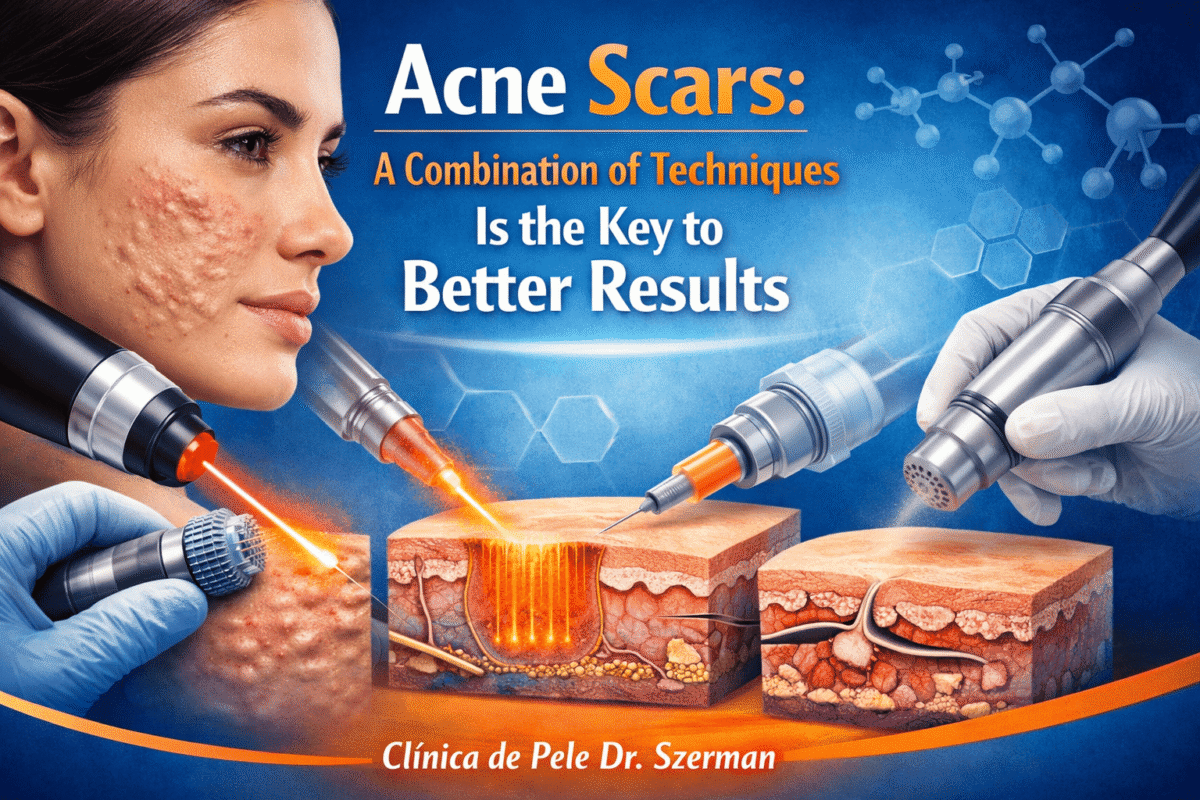
10. Acne scars can be treated
Fact. Although challenging, treatments such as CO₂ laser and subcision can significantly improve the appearance of acne scars.
If you’re dealing with acne or its consequences, seeking professional evaluation is the first step toward healthier, clearer skin.