Learn about the main types of acne scar treatment, the benefits of treatment, and the technologies currently used to address this skin concern safely and effectively.
Não perca a dica do Dr. Szerman ao final do artigo!
Did you know that more than 95% of people with moderate to severe acne develop scars?
Acne scars are among the most common dermatological concerns for people who have experienced inflammatory acne. Studies show that more than 95% of individuals with moderate to severe acne develop some form of permanent skin marking.
Pitted scars, uneven skin texture, red marks, and dark spots may remain even after active acne has cleared, directly affecting self-esteem and the overall appearance of the skin. As a result, the demand for effective treatments that can reduce acne scars and improve skin texture continues to grow.
According to dermatologist Ronaldo Schermer from Clínica de Pele, technological advancements over the last few years have led to increasingly effective and safer options for treating acne scars.
However, it is important to set realistic expectations: there is no miracle treatment capable of restoring the skin 100% to its original condition. The goal of modern dermatology is to minimize scars as much as possible, making them progressively less noticeable through a combination of personalized techniques and treatment sessions.
What Are the Main Types of Acne Scars?
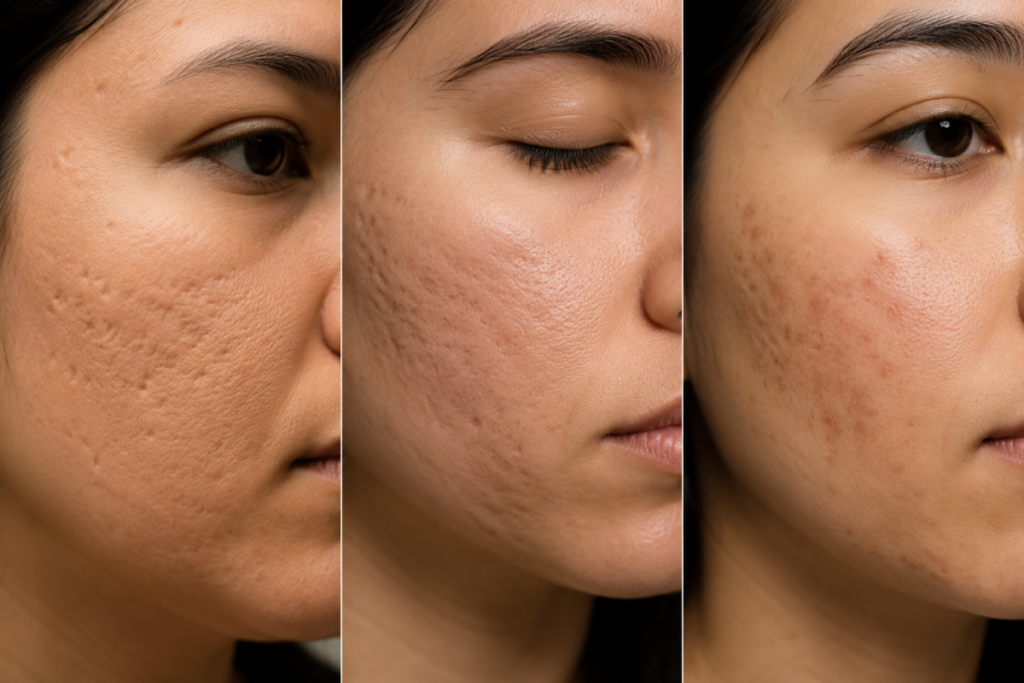
Before determining the most appropriate treatment, it is important to understand that there are different types of acne scars. In general, they can be divided into two main categories:
Scars That Affect Skin Texture
These are the well-known pitted scars and depressions that leave the skin surface uneven. Such scars typically require treatments that stimulate collagen production and promote skin renewal.
Scars Associated with Discoloration
In these cases, acne leaves behind red or brown marks after the inflammation subsides. The focus of treatment is to even out skin tone and reduce residual pigmentation.
Acne Scar Treatments for Improving Pitted Scars and Skin Texture
Treatments for atrophic acne scars range from more aggressive surgical procedures to modern technologies that offer faster recovery times.
Dermabrasion
Dermabrasion is an older procedure that uses a sterilized abrasive device to create deep exfoliation of the skin.
Acne Scar Treatment: How Does It Work?
The goal is to remove the superficial layers of the skin to smooth the surface and reduce irregularities.
Benefits
- Can provide significant improvement in skin texture;
- Effective for deeper scars;
- Promotes intensive skin renewal.
Drawbacks
- Long recovery period, typically lasting one to two weeks;
- May limit social and professional activities during healing;
- Higher risk of complications;
- Less commonly used today due to the availability of more advanced technologies.
Surgical Scar Excision
Surgical excision is recommended for small, deep, and highly localized scars.
Acne Scar Treatment: When Is It Recommended?
This procedure is generally indicated when a scar remains noticeable even after resurfacing treatments or collagen-stimulating procedures.
Acne Scar Treatment: How Is It Performed?
The dermatologist surgically removes the scar and closes the area with stitches, improving the appearance of that specific mark.
Deep Phenol Peel
Deep phenol peels have regained attention in recent years because of their ability to promote extensive skin renewal.
Benefits of Deep Phenol Peels
- Deep skin resurfacing;
- Significant improvement in skin texture;
- Strong stimulation of collagen production.
What Are the Risks?
Despite its effectiveness, this procedure is highly aggressive. In individuals with medium to darker skin tones, which are very common in Brazil, there is a greater risk of permanent lightening of the treated area, resulting in noticeable color differences compared to the surrounding skin.
For this reason, deep phenol peels are generally recommended only for very fair skin types and carefully selected cases.
Surgical Microneedling
Surgical microneedling is a more modern technique that promotes deep collagen stimulation.
How Does It Work?
The procedure uses needles that penetrate the deeper layers of the skin, creating controlled micro-injuries that trigger tissue regeneration and collagen production.
Recovery and Aftercare
- Requires local infiltrative anesthesia;
- May cause pain and swelling;
- Average recovery time ranges from 7 to 10 days;
- Requires a strategic and personalized treatment approach.
According to specialists, microneedling should not be performed randomly. The success of the treatment depends on proper technique, accurate assessment of the scar type, and customization according to each patient’s skin characteristics.
Modern Technologies for Acne Scar Treatment
The demand for treatments with shorter recovery times has driven the development of advanced technologies for acne scar management.
Microneedling Radiofrequency
Microneedling radiofrequency combines traditional microneedling with the delivery of radiofrequency energy into the skin.
Key Benefits
- Intense collagen stimulation;
- Improved skin texture;
- Reduction in scar depth;
- Faster recovery compared to more aggressive procedures.
Recovery time generally ranges from 5 to 14 days, depending on the treatment intensity.
Fractional CO₂ Laser
The CO₂ laser has been considered one of the most effective treatments for acne scars for more than 30 years.
Why Is CO₂ Laser So Effective?
This technology creates controlled micro-injuries in the skin, stimulating intense cellular renewal and collagen production.
As a result, it helps:
- Improve skin texture;
- Reduce scar depth;
- Tighten the skin;
- Minimize enlarged pores;
- Treat fine lines and mild skin laxity.
Modern Technologies Provide Faster Recovery
The latest generation of fractional laser devices, including advanced pulsed technologies, has made treatments more precise, effective, and comfortable.
Today, many patients are able to return to their normal activities within approximately 4 to 5 days after treatment.
Is There a Permanent Treatment for Acne Scars?
This is one of the most frequently asked questions in dermatology clinics.
The answer is no—there is currently no treatment capable of completely eliminating all acne scars. However, advances in dermatology have made it possible to achieve significant improvements in the skin’s appearance.
The key lies in selecting the right combination of treatments based on:
- The type of scar;
- The patient’s skin type;
- The presence of pigmentation issues;
- Lifestyle and daily routine;
- Availability for post-procedure recovery.
Each case requires an individualized strategy to achieve natural and progressive results.
Why a Dermatological Evaluation Makes All the Difference
Before starting any treatment, it is essential to undergo a thorough evaluation with an experienced dermatologist.
The specialist will assess several factors, including:
Type of Scar
Not all acne scars respond the same way to treatment.
Skin Phototype
Lighter and darker skin tones have different risks and responses to various procedures.
Recovery Time Availability
Some treatments require temporary downtime from social and professional activities.
Combination of Techniques
In many cases, the best outcomes are achieved through a combination of laser treatments, microneedling, and other procedures.
Conclusion
Acne scar treatments have evolved significantly over the past few years and now offer increasingly effective and safe results. Procedures such as fractional CO₂ laser, microneedling radiofrequency, and surgical microneedling can significantly improve skin texture and reduce deep scars.
However, realistic expectations remain essential. The goal is to soften the appearance of scars and restore greater skin uniformity—not to completely erase every mark.
With a proper evaluation and a personalized treatment plan, patients can achieve meaningful improvements in their skin’s appearance and regain confidence in their reflection.
Contact
Clínica de Pele has specialized in dermatological treatments in Rio de Janeiro for more than 60 years, since 1969. Dr. Szerman has over 20 years of experience in dermatology and also teaches and trains other physicians in advanced aesthetic and dermatological procedures.