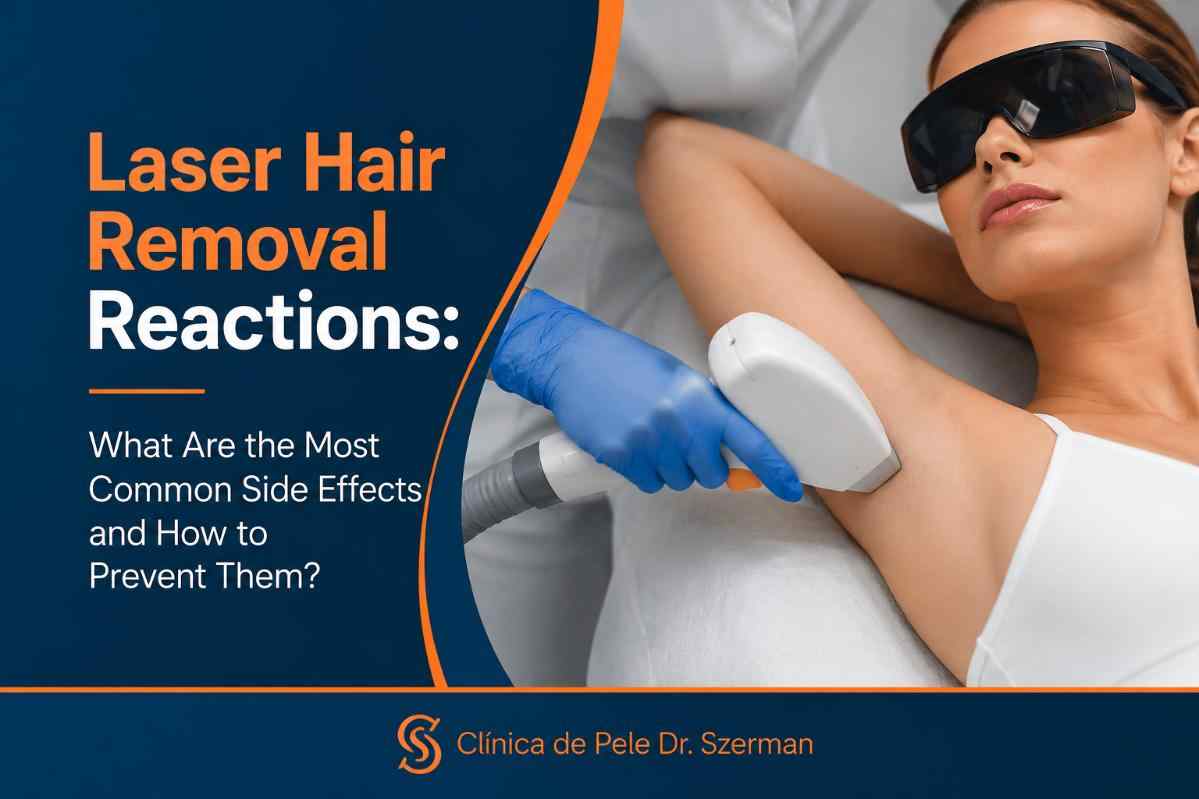
Laser hair removal has become one of the most sought-after aesthetic treatments for people who want long-lasting and convenient hair reduction. However, although the procedure is considered safe, some skin Laser Hair Removal Reactions may occur after treatment sessions. Understanding the most common side effects and how to prevent them is essential for ensuring a safe and effective experience.
Não perca a dica do Dr. Szerman ao final do artigo!
In this article, you’ll learn about the main reactions associated with laser hair removal, when they are considered normal, and what precautions can help prevent complications such as burns and skin discoloration.
What Are the Most Common Laser Hair Removal Reactions?
After a laser hair removal session, it is normal for the skin to show temporary reactions. These responses often indicate that the treatment is effectively targeting the hair follicles.
Skin Redness
Redness is one of the most common side effects after laser treatment. It occurs because the heat emitted by the device reaches the hair follicle, causing mild local inflammation.
In most cases, the redness disappears within a few hours or a few days, depending on the patient’s skin sensitivity.
Perifollicular Edema
Another common reaction is perifollicular edema, characterized by small swollen bumps around the treated hair follicles.
This reaction is generally considered a positive sign, as it indicates that the laser has effectively targeted the hair root, increasing the treatment’s effectiveness.
Hair Carbonization
In some cases, carbonization of the hair shaft may occur when the laser burns the hair.
This effect can also indicate a successful treatment, particularly when high-performance laser systems are used.
Which Laser Is Considered the Gold Standard for Hair Removal?
Among the most recognized devices on the market is the LightSheer laser, which is often considered the gold standard in laser hair removal.






This system stands out for its precision, effectiveness, and safety, especially for patients seeking long-term hair reduction.
In addition to the technology used, treatment outcomes depend heavily on the experience of the practitioner and a thorough skin evaluation before treatment begins.
What Are the Undesirable Reactions of Laser Hair Removal?
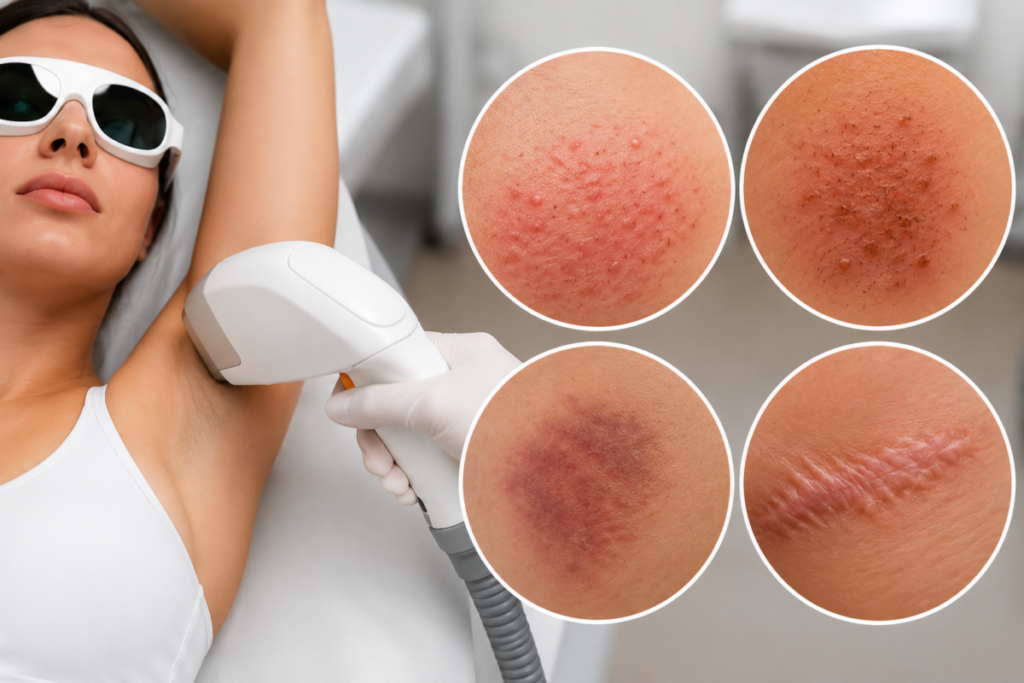
Burns
Burns are among the most concerning complications associated with laser hair removal.
They are more likely to occur in:
- Individuals with tanned skin;
- Patients with darker skin phototypes;
- Cases where the laser is not appropriate for the patient’s skin type;
- Treatments performed by inexperienced practitioners.
However, even individuals with fair skin may experience burns under certain circumstances.
Hyperpigmentation and Scarring
If a burn is not treated properly, there is a risk of developing dark spots (post-inflammatory hyperpigmentation) or even permanent scarring.
For this reason, medical supervision is essential to ensure appropriate guidance and treatment if complications arise.
What Can Cause Complications During Laser Hair Removal?
Several factors can increase the likelihood of adverse reactions during treatment.
Use of Inappropriate Equipment
Not all laser devices offer the same level of safety and effectiveness. Low-quality equipment or poorly maintained systems can significantly increase treatment risks.
Lack of Professional Experience
Incorrect device settings are one of the leading causes of burns and skin irritation.
A proper assessment of the skin type, hair characteristics, and medical history is essential before starting treatment.
Wearing Makeup or Having Unclean Skin
Undergoing treatment with makeup, creams, oils, or other residues on the skin can interfere with the laser’s performance and increase the risk of complications.
For this reason, the skin should be completely clean before the procedure.
Other Reactions That May Occur
In addition to burns and irritation, some individuals may experience reactions related to their unique skin sensitivity.
Folliculitis
Folliculitis may develop after laser hair removal, causing small inflamed bumps that resemble acne.
Although uncomfortable, the condition is usually manageable with proper medical guidance.
Prolonged Redness
Some patients may experience redness that lasts longer than expected, particularly those with highly sensitive skin.
Professional follow-up can help prevent the condition from worsening.
How Can You Prevent Laser Hair Removal Reactions?
Simple precautions can significantly improve treatment safety.
Choose a Clinic with Medical Supervision
Ideally, the procedure should be performed in a clinic that provides medical oversight during both the evaluation process and post-treatment care.
This approach increases safety and reduces the risk of complications.
Avoid Tanning Before Treatment
Sun exposure before a laser session significantly increases the risk of burns and pigmentation changes.
Patients are generally advised to avoid excessive sun exposure in the days leading up to treatment.
Arrive with Clean Skin
The skin should be free of makeup, creams, sunscreen, and any other residues.
This helps the laser work properly and minimizes irritation.
Follow All Professional Recommendations
Pre- and post-treatment care instructions are essential for achieving optimal results.
Proper skin hydration, sun protection, and the use of recommended skincare products are important parts of the process.
Laser Hair Removal Can Be Safe and Effective
Laser hair removal is a safe procedure when performed using appropriate technology, qualified professionals, and proper medical supervision.
Although some reactions are common and expected, it is important to recognize warning signs and seek professional guidance whenever necessary.
Following the recommended precautions and choosing a reputable clinic are key steps toward achieving excellent results while maintaining healthy skin.
Contact
Clínica de Pele has specialized in dermatological treatments in Rio de Janeiro for more than 60 years, since 1969. Dr. Szerman has over 20 years of experience and also teaches advanced techniques to other physicians.