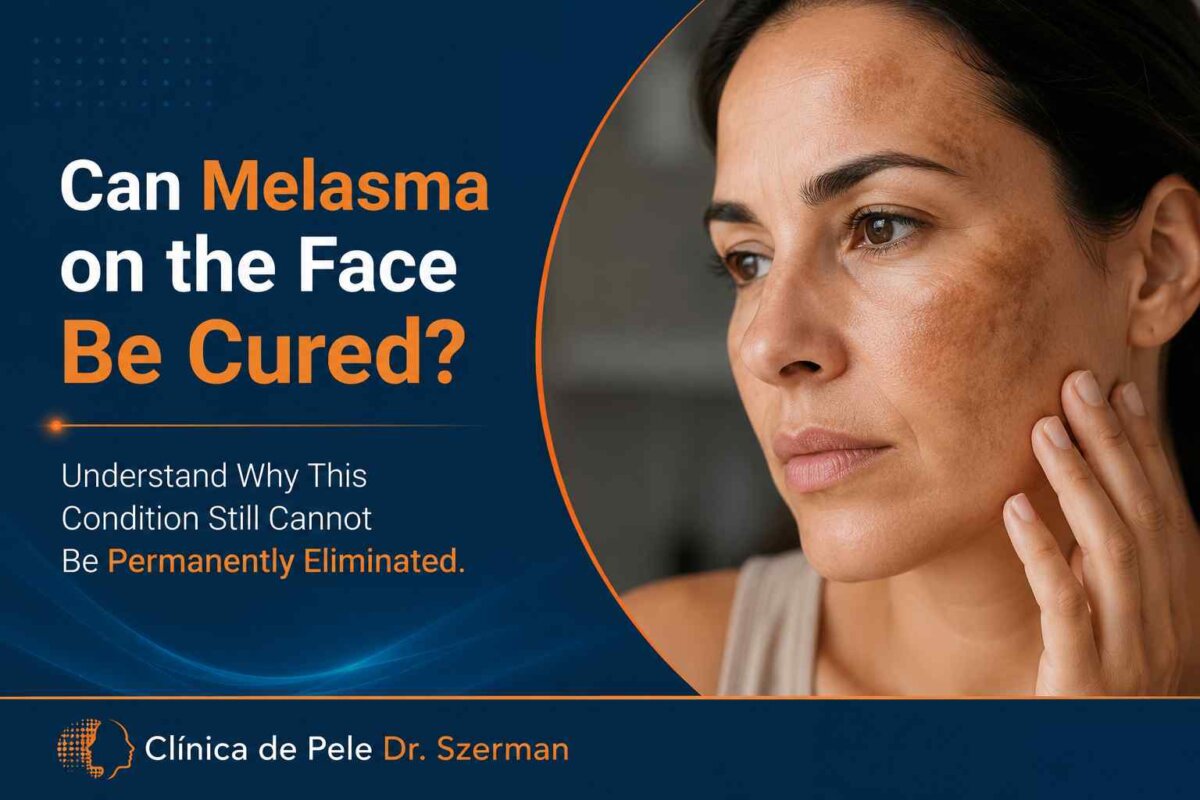

Hyperpigmentation is one of the most common dermatological concerns among people with darker skin tones, requiring specialized treatment protocols that prioritize both effectiveness and safety. A 2024 systematic review analyzing 48 studies involving 1,356 patients with dark skin and other higher Fitzpatrick phototypes found that 89% of post-inflammatory hyperpigmentation (PIH) cases resulted from inflammatory skin conditions such as acne, folliculitis, and dermatitis, while 83% of the lesions were located on the face.
Não perca a dica do Dr. Szerman ao final do artigo!
These findings highlight the importance of early diagnosis and the use of advanced treatments—including lasers designed for darker skin tones, customized chemical peels, depigmenting skincare products, and individualized treatment plans—to safely improve hyperpigmentation without increasing the risk of additional pigmentary changes.
Why Does Dark Skin Require Specialized Care?
Growing up, I often heard that dark skin ages more slowly. While there is truth to that, I soon realized that it doesn’t mean darker skin is free from dermatological challenges—especially when it comes to hyperpigmentation. Throughout my clinical experience and research, I learned that the higher melanin content that naturally protects darker skin is also one of the main reasons persistent discoloration develops, particularly post-inflammatory hyperpigmentation (PIH).
Hyperpigmentation in darker skin may develop after relatively minor inflammatory events such as acne breakouts, insect bites, cuts, or eczema. It may also be triggered by excessive sun exposure, allergic reactions, or even inappropriate cosmetic procedures.
Contrary to popular belief, increased melanin serves as a double-edged sword. While it provides greater natural protection against ultraviolet radiation, it also reacts more intensely to inflammation, making pigment changes more likely and often longer-lasting.
Hyperpigmentation often affects much more than the skin—it changes daily routines and can significantly impact self-confidence.
As a dermatologist practicing at a clinic recognized for excellence in modern dermatologic treatments, I have learned that properly evaluating hyperpigmentation in dark skin requires experience, scientific knowledge, and carefully validated treatment protocols.
Understanding the Most Common Types of Hyperpigmentation
One lesson my career has consistently reinforced is that identifying the exact type of pigmentation is essential for successful treatment. At Clínica de Pele | Dr. Szerman, we dedicate considerable attention to both the initial consultation and diagnostic evaluation.
The most common forms of hyperpigmentation include:
- Post-inflammatory hyperpigmentation (PIH): Frequently develops after acne, eczema, injuries, or other inflammatory conditions, leaving brown discoloration behind.
- Melasma: More common in women, typically appears on sun-exposed areas of the face and may be aggravated by pregnancy or hormonal fluctuations.
- Sunspots (solar lentigines): Result from cumulative ultraviolet exposure and inadequate sun protection.
- Cosmetic-induced hyperpigmentation: Certain skincare products or excessive skin manipulation may trigger persistent discoloration.
In many patients, multiple forms of pigmentation coexist, making treatment more complex and reducing the effectiveness of over-the-counter or home remedies.








For this reason, I always recommend seeking individualized medical guidance. Every patient—and every skin tone—deserves a treatment plan tailored to its unique characteristics.
The Importance of Sun Protection
Dark skin provides a natural level of sun protection roughly equivalent to SPF 15, as dermatologist Katleen Conceição recommends using an SPF 50 sunscreen or higher.
Many patients either skip sunscreen altogether or fail to reapply it throughout the day. In my experience, this is one of the most common reasons pigmentation worsens instead of improving. Visible light—including the light emitted by smartphones, tablets, and computer screens—can also contribute to hyperpigmentation, particularly in individuals with darker skin tones.
I often remind my patients that the most effective sunscreen is the one they use consistently.
Whenever possible, I recommend tinted broad-spectrum sunscreens, since the iron oxides they contain offer additional protection against visible light while providing a more cosmetically elegant finish for darker complexions.
Establishing a consistent daily routine that protects the skin from both sunlight and artificial light can dramatically improve long-term treatment outcomes.
Building an Effective Skincare Routine
Patients often ask me if there’s a secret to creating an effective skincare routine for dark skin that’s prone to hyperpigmentation. My answer is always the same: the secret lies in personalization. In my practice, I follow a few fundamental principles, tailoring each treatment plan to the patient’s individual skin type, medical history, and concerns:
- Gentle cleansing that preserves the skin barrier and minimizes unnecessary irritation.
- Targeted moisturizers enriched with soothing and antioxidant ingredients to support skin health.
- Broad-spectrum tinted sunscreen, applied daily and reapplied consistently throughout the day to protect against both UV and visible light.
- Medical-grade depigmenting agents, prescribed and monitored by a dermatologist. I never recommend generic treatments because personalized care consistently delivers the best results.
One of the most rewarding aspects of my work is seeing how these seemingly small adjustments can significantly improve a patient’s confidence and quality of life. Hyperpigmentation affects millions of people, but it should never be accepted as an unavoidable or permanent condition.

Advanced Treatments: Safe Options for Dark Skin
At Clínica de Pele | Dr. Szerman, patient safety always comes first. Certain technologies require significant expertise when treating darker skin because inappropriate use of energy-based devices may increase the risk of new pigmentation changes.
Using carefully selected technologies and evidence-based protocols, we offer advanced treatments designed to maximize results while minimizing risks.
These include:
- Fractional CO₂ Laser: Recommended for selected cases involving acne scars, deeper pigmentation, and skin resurfacing. Because darker skin requires special precautions, treatment is only performed after a comprehensive medical evaluation and proper skin preparation.
- Intense Pulsed Light (IPL): Can effectively improve sun-induced pigmentation and overall skin tone when protocols are specifically adjusted for higher Fitzpatrick skin types.
- Superficial and chemical peels: Carefully selected acids can safely reduce pigmentation when administered by experienced physicians using individualized treatment plans.
- Exosomes and PDRN (Polydeoxyribonucleotide): Emerging regenerative medicine therapies that promote tissue repair and improve skin quality while minimizing excessive inflammation, representing a promising new approach for hyperpigmentation.
- Collagen biostimulators, including Sculptra® and Radiesse®, help restore overall skin quality, improve firmness, and enhance the appearance of areas affected by long-standing pigmentation or acne scars.
- Injectable facial rejuvenation protocols: Selected injectable treatments may improve facial harmony while addressing contour irregularities associated with pigmentary changes.
When treating darker skin, every recommendation is individualized. Our primary goal is always to prevent adverse reactions while respecting the unique physiology of highly pigmented skin.
If I had to summarize the five golden rules that consistently deliver the best results, they would be these:
- Never pick at pimples or wounds. This is one of the fastest ways to develop persistent post-inflammatory hyperpigmentation.
- Wear sunscreen every day, even indoors, especially if you spend long hours in front of computers, tablets, or smartphones.
- Choose gentle skincare products that are free of fragrances and harsh alcohols to minimize irritation and inflammation.
- Keep your skin well hydrated, as dryness weakens the skin barrier and increases the likelihood of inflammation that can lead to discoloration.
- Seek professional dermatologic care for a personalized treatment plan that addresses your skin’s unique needs.
Individualization is essential. There is no miracle product or one-size-fits-all solution—only carefully designed treatment protocols tailored to each patient.
We also provide educational resources covering the most common causes of hyperpigmentation and available treatment options through our clinic’s educational channels, helping patients better understand their condition before beginning treatment.
The Importance of Professional Follow-Up
Throughout my career, I have seen many patients become frustrated after attempting to treat hyperpigmentation on their own, only to make the condition worse.
Regular dermatologic follow-up appointments allow us to:
- Adjust treatments when necessary.
- Modify active ingredients according to skin response.
- Prevent recurrence.
- Monitor progress objectively.
At Clínica de Pele | Dr. Szerman, every treatment plan is reviewed periodically. We routinely document progress with standardized clinical photographs, allowing patients to see measurable improvements while maintaining realistic expectations.

One lesson has remained constant throughout my career:
Hyperpigmentation is a signal. Understanding its cause is the first step toward successful treatment.
The Role of Innovation in Treating Hyperpigmentation and Rejuvenating Dark Skin
One of the aspects of dermatology that fascinates me most is the continuous development of technologies capable of treating hyperpigmentation without causing additional damage.
Among the most promising innovations are exosome therapy and PDRN (polydeoxyribonucleotide). These regenerative treatments stimulate tissue repair and cellular regeneration while minimizing inflammation, making them particularly attractive for patients with darker skin tones who are more susceptible to post-inflammatory pigmentation.
Advanced technologies such as Fractional CO₂ Laser and Intense Pulsed Light (IPL), combined with injectable regenerative therapies, have transformed the possibilities available in aesthetic dermatology.
However, innovation should never come at the expense of safety. At our clinic in Rio de Janeiro, every protocol is designed to combine cutting-edge technology with decades of clinical experience, ensuring safe and predictable outcomes.
I frequently see patients who not only experience significant improvement in pigmentation but also enjoy healthier skin quality after regenerative treatments such as collagen biostimulators or PDO thread procedures.
Preventing New Hyperpigmentation
Treating hyperpigmentation is rarely a quick process.
I always explain to my patients that meaningful improvement requires both treatment and prevention.
To reduce the risk of developing new pigmentation, I recommend:
- Avoiding excessive sun exposure, particularly during peak UV hours.
- Reapplying sunscreen throughout the day, especially for individuals working in front of digital screens.
- Cleansing the skin gently to minimize inflammation.
- Scheduling dermatologic evaluations every six months—or sooner if any new pigmentation develops.

Prevention begins long before a new dark spot appears.
When Should You Seek Professional Treatment?
I always advise patients to seek medical evaluation as soon as persistent discoloration appears and fails to improve within several weeks. Self-medication and home remedies may not only delay proper treatment but can also worsen pigmentation, making it significantly more difficult to reverse.
Our clinic provides comprehensive educational resources explaining the causes, prevention, and treatment of hyperpigmentation to help patients make informed decisions before scheduling a consultation.
Early diagnosis consistently leads to better outcomes and reduces the emotional impact associated with visible skin discoloration.
Conclusion: Where Science Meets Personalized Care
Throughout my professional journey, I have learned that technological innovation is invaluable—but nothing replaces individualized, compassionate patient care.
Hyperpigmentation in dark skin requires specialized scientific knowledge, careful attention to each patient’s unique characteristics, and a genuine commitment to restoring confidence and quality of life.
For this reason, I always encourage patients to choose healthcare professionals who combine expertise, respect for skin diversity, and continuous scientific education.
At Clínica de Pele | Dr. Szerman, we have dedicated more than 60 years to transforming dermatologic care into a legacy of excellence, combining tradition with innovation since 1969.
Our clinic specializes in advanced dermatology, laser treatments, and aesthetic medicine in Rio de Janeiro. Dr. Szerman has more than 25 years of clinical experience and actively teaches and trains physicians in modern dermatologic techniques.
If you would like to learn more about our treatments or receive personalized guidance, simply contact our team by clicking the WhatsApp button on our website. We will be delighted to assist you.
Frequently Asked Questions About Hyperpigmentation in Dark Skin
What causes hyperpigmentation in dark skin?
Dark skin contains a higher concentration of melanin, which provides greater natural protection against ultraviolet (UV) radiation according to dermatology experts. However, this same characteristic also makes the skin more prone to developing post-inflammatory hyperpigmentation (PIH) after conditions such as acne, eczema, insect bites, allergic reactions, burns, or minor skin injuries.
Other common triggers include excessive sun exposure without adequate protection, inappropriate skincare products, hormonal changes, and improperly performed cosmetic procedures. Identifying the underlying cause is essential for selecting the most effective treatment strategy.
How is hyperpigmentation in dark skin treated?
The ideal treatment begins with a comprehensive dermatological evaluation to determine the type, depth, and cause of the pigmentation.
Depending on the diagnosis, treatment may include:
- Prescription topical depigmenting agents.
- Customized chemical peels.
- Fractional CO₂ Laser.
- Intense Pulsed Light (IPL).
- Regenerative medicine therapies such as exosomes and PDRN.
- Medical-grade skincare products.
- Strict daily sun protection.
Because darker skin is more susceptible to pigmentary changes, all procedures should be performed by physicians experienced in treating higher Fitzpatrick skin types.
Which skincare products work best for hyperpigmentation?
The most effective skincare routine varies from patient to patient but generally includes:
- Prescription-strength depigmenting creams recommended by a dermatologist.
- Antioxidant-rich moisturizers that help strengthen the skin barrier.
- Broad-spectrum tinted sunscreen to protect against both ultraviolet and visible light.
- Gentle cleansers that preserve the skin’s natural protective barrier.
Home remedies and unverified internet treatments should be avoided, as they may worsen inflammation and increase pigmentation.
Are laser treatments safe for dark skin?
Yes. Modern laser technologies can be safely used on darker skin when appropriate devices and treatment protocols are selected.
Technologies such as the Fractional CO₂ Laser can provide excellent results for carefully selected patients. However, because darker skin has a higher risk of developing post-inflammatory hyperpigmentation, laser treatments should always be performed by experienced dermatologists using protocols specifically designed for higher Fitzpatrick skin types.
Proper skin preparation and post-treatment care are equally important to minimize complications and optimize outcomes.
Where can I find a dermatologist experienced in treating dark skin?
Patients seeking treatment for hyperpigmentation should choose a dermatologist with extensive experience in caring for darker skin tones and in using advanced laser and regenerative technologies.
For more than 60 years, Clínica de Pele | Dr. Szerman, located in Rio de Janeiro, Brazil, has specialized in personalized dermatologic care, combining scientific innovation, advanced technology, and individualized treatment plans to achieve safe, natural-looking results.
To schedule a consultation or learn more about our treatments, simply visit our website or contact our team via WhatsApp.