
Check out the 9 most frequently asked questions about melasma and take the opportunity to clear up your doubts about this skin condition.
Melasma is an increasingly common skin condition that affects the quality of life of both men and women. It is estimated that its prevalence is between 10% and 30% of the population.
These brownish spots can appear on the face as well as on other parts of the body. In most cases, they not only affect skin health but also impact the self-esteem of those dealing with this condition.
FREQUENTLY ASKED QUESTIONS ABOUT MELASMA
1. What causes melasma?
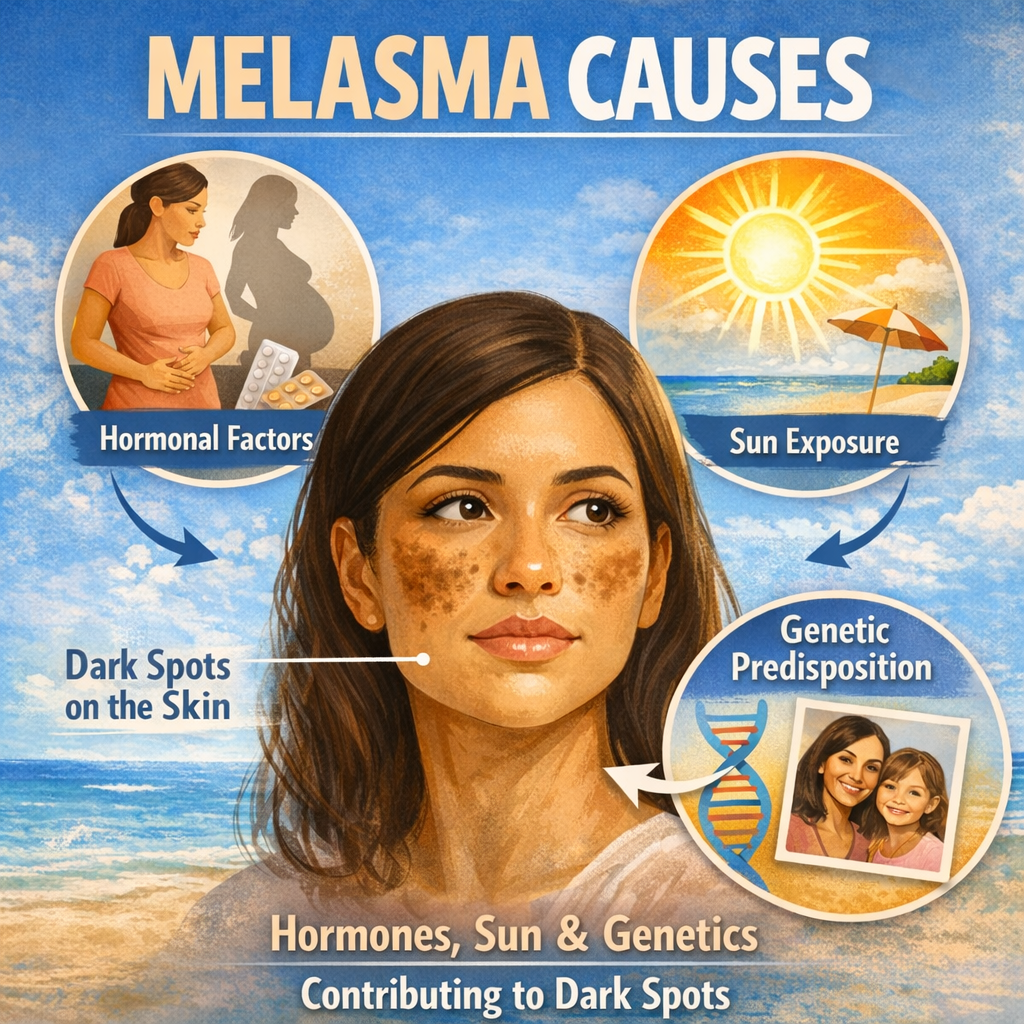
According to the Brazilian Society of Dermatology, melasma does not have a well-defined cause. However, certain factors are associated with its development.
In addition to genetic predisposition, sun exposure, visible light, and heat can trigger skin darkening. Hormonal factors, birth control pills, and pregnancy are also strongly linked to the condition.

2. Frequently Asked Questions About Melasma – How Does Melasma Start on the Face?
In general, melasma appears when there is an increase in melanocyte activity in the skin, which leads to excessive melanin production, causing hyperpigmentation. In other words, facial darkening is caused by the overproduction of melanin (the skin’s pigment).
Several factors can act as triggers for the appearance of melasma spots. These triggers vary from person to person and can include excessive sun exposure, excessive heat, hormonal changes, among others.
The spots typically have irregular but well-defined shapes and are usually symmetrical. Over time, they tend to grow larger and become darker. The progression of melasma is highly individual and depends on multiple factors.
It is also important to note that melasma can affect other areas of the body, such as the neck, chest, and arms.
3. Why Is There No Cure for Melasma?

This is another common question about melasma. While we do not yet fully understand this condition, we do know that it is linked to a predisposition in certain individuals. This predisposition is unique to each person, and unfortunately, it cannot be eliminated—only managed.








Many factors contribute to the worsening of melasma and the darkening of the skin. Because of this, various medical treatments are available to help lighten and control melasma spots.
4. Frequently Asked Questions About Melasma – What Are the Types of Melasma?
Melasma can be classified into three types: dermal, epidermal, or mixed.
- Epidermal Melasma occurs when excess melanin is deposited only in the epidermis (the skin’s outermost layer). This type is easier to treat.
- Dermal Melasma affects a deeper layer of the skin, below the epidermis, making treatment more challenging.
- Mixed Melasma occurs when melanin is deposited in both the epidermis and the dermis, affecting both superficial and deep layers of the skin.
5. What Is the Best Treatment for Melasma?
The first step is consulting a dermatologist for an in-depth analysis of the condition. The treatment is personalized, as results vary for each patient. It’s important to remember that melasma is a chronic condition influenced by various individual factors.
There are several treatment approaches. Dermatological treatment plays a role at every stage, defining the best strategies and necessary skincare products—such as sunscreen—to help manage the condition.
Additionally, medical procedures can further improve results. In our clinic, we offer various types of peels as well as cold laser therapy for melasma.
6. How Do Peels Work?
Our clinic provides several peeling treatments, with Cosmelan, Melanesse, and Cimel being among the most effective options.
These chemical peels work from the inside out, promoting cell renewal and regulating melanin production and transfer within the skin. As a result, they help control hyperpigmentation and lighten dark spots.
7. Frequently Asked Questions About Melasma – How Does the CO2 Deca Toucht Laser Work?
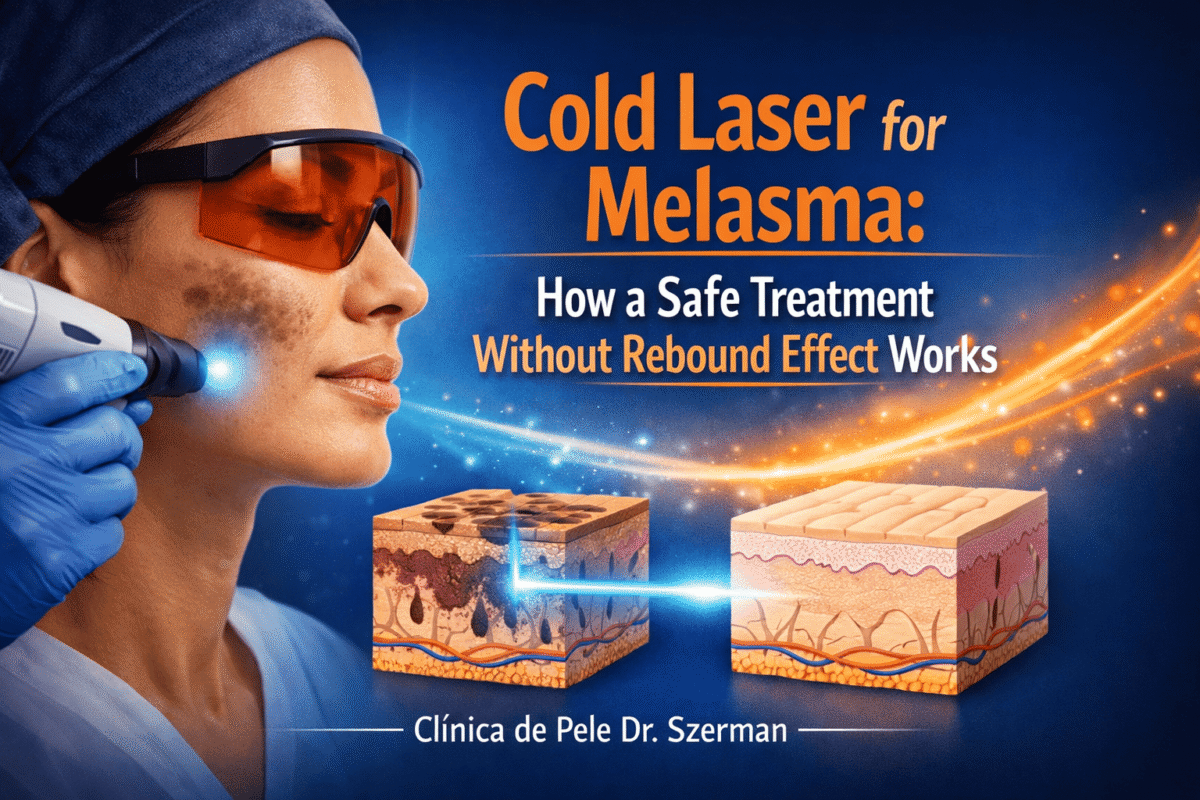
The cold laser is a highly advanced and safe procedure for controlling and treating melasma. It works by applying low levels of light to the affected area, breaking down pigmentation and promoting skin regeneration—without generating heat.
As a deep-penetrating laser, it targets all layers of melasma to break up pigmentation. Because it does not produce heat, it significantly reduces the risk of rebound hyperpigmentation, making it suitable for all types of melasma.
Recovery takes around five days, during which the patient must follow post-procedure care instructions. However, no downtime is required.
See Also: Myths and Facts About Melasma
8. How Does Treatment Progress?
Peels are highly effective for superficial melasma and play a crucial role in melanin regulation for all melasma types.
- Laser therapy is ideal for deep and resistant melasma, requiring fewer sessions and providing faster results.
Most lasers generate heat, which can lead to rebound pigmentation. However, CO2 Deca Toucht Laser is a cold laser technology that avoids this issue, making it a safer and more effective option.
9. Frequently Asked Questions About Melasma – What Results Should I Expect?
Results vary from person to person, and it is important to have realistic expectations. While achieving perfect skin is unlikely, significant lightening of dark spots and improved pigmentation control can be expected.
Since melasma is a chronic condition, patients with a tendency for hyperpigmentation must follow continuous treatment and prevention strategies to manage flare-ups.
With years of experience and thousands of treated patients, our clinic offers specialized peels and laser therapy to help you achieve the best possible improvement in your skin condition.
Contact:
Clínica de Pele is a traditional and specialized dermatological clinic in Rio de Janeiro for over 60 years, since 1969.
Dr. Szerman has over 20 years of experience and teaches other doctors.