
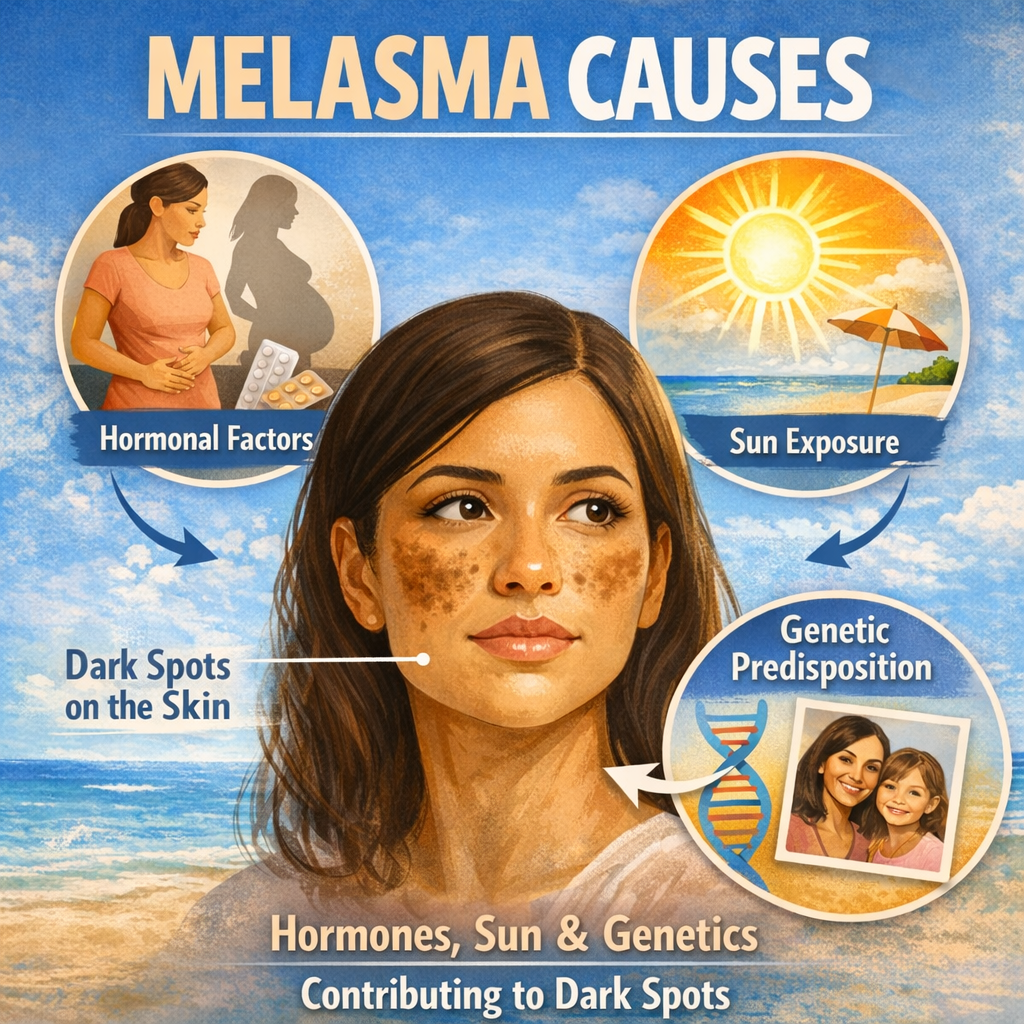
Melasma is a very common skin condition characterized by the appearance of dark patches, especially on the face. Although many people live with this issue, there are still questions about melasma causes and why it appears in some individuals but not in others.
Não perca a dica do Dr. Szerman ao final do artigo!
According to the Brazilian Society of Dermatology, melasma does not have a single, fully defined cause. However, specialists point to several factors that may contribute to the development or worsening of these spots.
In this article, you will learn about the main causes of melasma, the factors that increase the risk, and what can trigger skin darkening.
What Is Melasma?
Melasma is a skin pigmentation disorder that causes brown or dark patches, usually located on the face—especially on the cheeks, forehead, nose, and upper lip.
This condition occurs due to an increase in the production of melanin, the pigment responsible for skin color. When melanocytes (the cells that produce melanin) are excessively stimulated, the characteristic melasma patches appear.
Although melasma does not pose a health risk, it can have aesthetic and emotional impacts, since it usually appears on highly visible areas of the face.
Main Causes of Melasma
According to the Brazilian Society of Dermatology, melasma does not have a single defined cause. In practice, it usually develops from a combination of several factors that stimulate melanin production.
Among the main factors associated with melasma causes are:
- genetic predisposition
- sun exposure
- visible light
- heat
- hormonal changes
These elements can act together or separately, contributing to the appearance or worsening of skin discoloration.
Melasma causes: Genetic Predisposition
Family History May Increase the Risk
Genetic predisposition is one of the most relevant factors in the development of melasma.








This means that people with a family history of the condition are more likely to develop skin discoloration throughout their lives. In these cases, melanocytes may naturally be more sensitive to external stimuli such as sun exposure and heat.
For this reason, individuals with relatives who have melasma should take extra care with their skin, especially regarding sun protection.
Sun Exposure, Visible Light, and Heat
Main Triggers of Skin Darkening
Sun exposure is considered one of the main factors that trigger or worsen melasma.
Ultraviolet rays stimulate melanin production, which can lead to the appearance or darkening of spots. In addition, studies show that visible light—such as that emitted by screens and lamps—may also contribute to this process.
Another important factor is heat, which can stimulate melanocytes and intensify skin pigmentation.
For this reason, dermatologists recommend:
- daily use of sunscreen
- reapplication throughout the day
- protection against visible light
- avoiding prolonged sun exposure
These precautions are essential to prevent the appearance of new spots and to avoid worsening melasma.
Melasma Causes – Hormonal Factors
Hormonal Changes Can Trigger Melasma
Hormonal changes are also strongly related to the development of melasma.
Situations that alter hormone levels can stimulate melanocytes and favor the appearance of skin spots.
Among the main examples are:
- use of hormonal contraceptives
- pregnancy
During pregnancy, for example, it is common for pregnancy melasma—also known as the “pregnancy mask”—to appear due to increased hormonal activity.
In many cases, the spots may fade after pregnancy, but they can also persist and require dermatological follow-up.
Why Does Melasma Appear More on the Face?
The face is the region most affected by melasma because it is constantly exposed to sunlight, visible light, and temperature changes.
In addition, facial skin has a higher concentration of active melanocytes, which favors pigmentation when these stimulating factors are present.
For this reason, spots usually appear mainly in areas such as:
- cheeks
- forehead
- nose
- upper lip
- chin
Conclusion
Although melasma does not have a single defined cause, several factors can contribute to its development, including genetic predisposition, sun exposure, visible light, heat, and hormonal changes.
Understanding these triggers is essential for preventing the appearance of new spots and avoiding worsening of the condition. The use of sunscreen, combined with dermatological follow-up, is one of the main strategies to control melasma and maintain skin health.
If you notice the appearance of dark spots on your face, the ideal step is to seek guidance from a dermatologist for proper evaluation and the most appropriate treatment.
Contact
Clínica de Pele has specialized in dermatological treatments in Rio de Janeiro for more than 60 years, since 1969.
Dr. Szerman has over 20 years of experience and also teaches other physicians.