Laser hair removal is often marketed as a simple cosmetic procedure, but the reality is far more complex. Behind the promise of smooth skin lies advanced technology that requires technical expertise, clinical evaluation, and millimetric precision. Understanding how laser hair removal works is essential to ensure safety and good results.
Não perca a dica do Dr. Szerman ao final do artigo!
In this article, you will learn everything about how laser hair removal works in the body, the main risks involved, and why this procedure should be treated as a medical act — not merely an aesthetic one.
How does laser hair removal work?
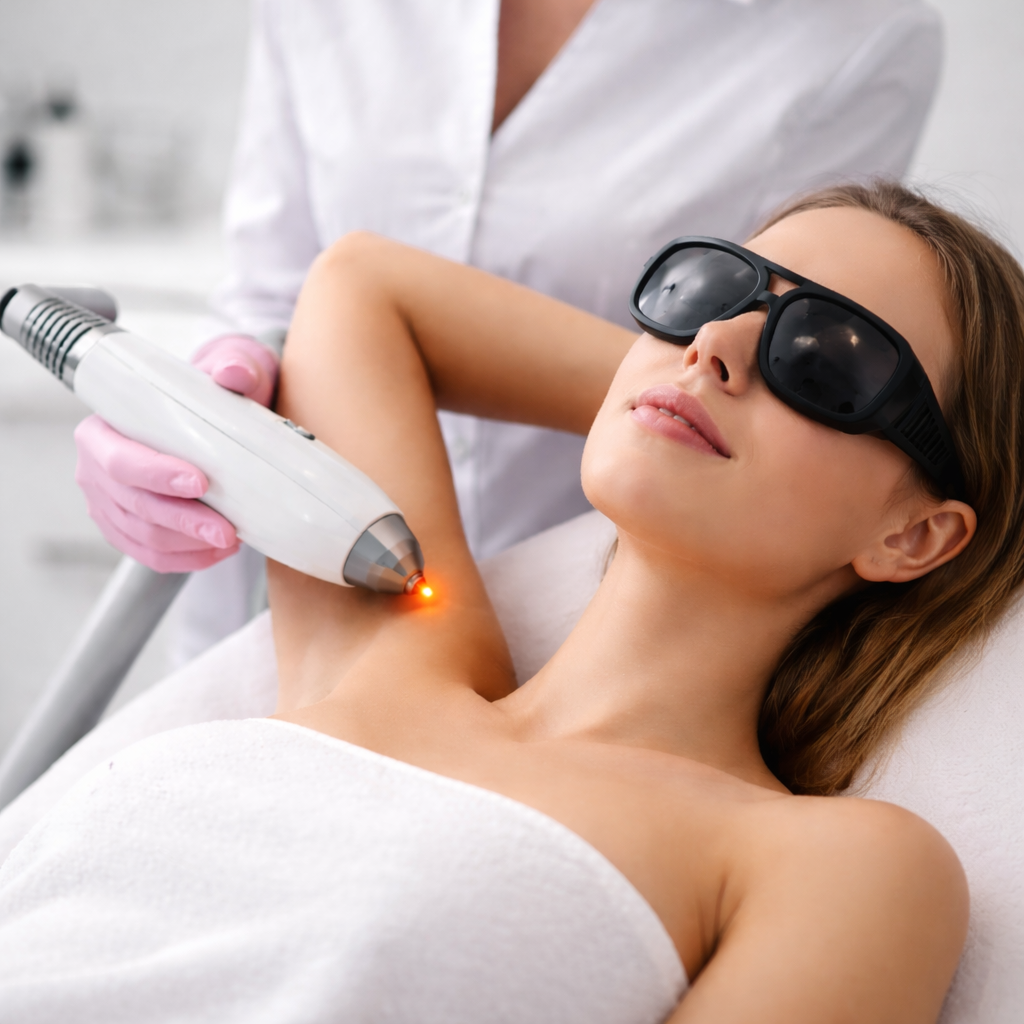
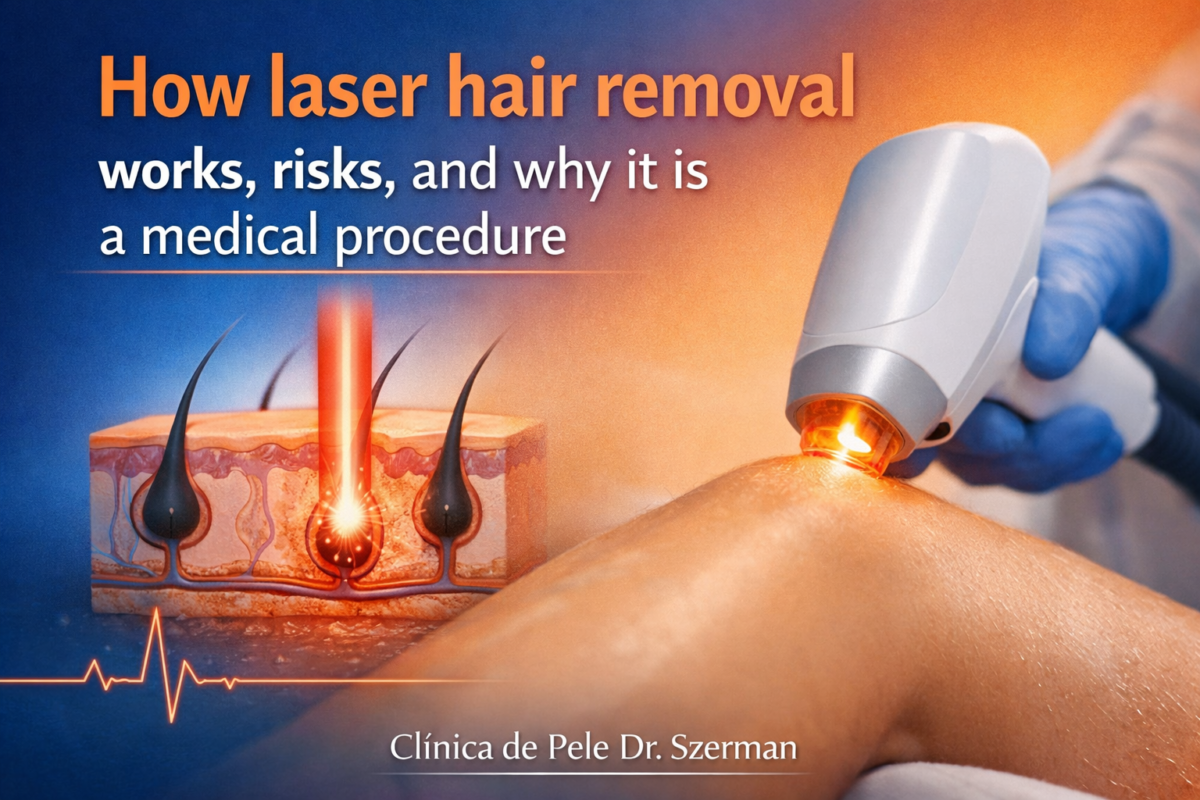
If you want to understand how laser hair removal works, think of it as a “smart target.” Unlike superficial methods, it directly reaches the hair root through concentrated heat.
Selective photothermolysis: the foundation of the technology
The scientific principle behind laser hair removal is called selective photothermolysis. In this process, the laser emits a light that is absorbed by melanin — the pigment responsible for hair color.
Once it reaches the melanin, this light energy is converted into intense heat, which cauterizes the germinative center of the hair follicle, preventing future hair growth.
The role of melanin in the treatment
Melanin is the main target of the laser, but it also presents a challenge. Since the skin also contains melanin — especially in darker or tanned skin tones — there is competition for absorbing this energy.
This phenomenon is known as competitive absorption, and it is one of the factors that make the procedure more delicate than it may seem.
Why laser hair removal requires personalized evaluation
Each skin type reacts differently to laser treatment, making personalization essential.
Fitzpatrick scale: skin tone classification
To reduce risks, professionals use the Fitzpatrick scale, which classifies different skin tones. This analysis allows proper adjustment of device parameters, ensuring greater safety and effectiveness.
Without this evaluation, the laser may not correctly differentiate between hair and skin, increasing the risk of damage.






Technical adjustments that make all the difference
One of the key parameters is the pulse duration, meaning how long the laser energy is delivered.
This detail is crucial:
- Pulses that are too fast can concentrate excessive heat in the epidermis
- Properly adjusted pulses allow the skin to safely dissipate heat
This dissipation time is known as thermal relaxation time, and ignoring it can cause serious damage.
Risks of poorly performed laser hair removal
When performed without proper technical criteria, laser hair removal can lead to significant complications.
Burns and skin discoloration
One of the main risks is the development of burns, blisters, and pigmentation changes. In more severe cases, these marks can be permanent.
This happens when the laser energy is absorbed by the skin instead of the hair, especially in darker or tanned skin.
Paradoxical effect: when hair grows more
One of the most concerning effects is the paradoxical effect.
This occurs when the energy applied is insufficient to destroy the follicle. Instead, it produces sublethal heat that:
- Increases blood flow to the area
- Stimulates follicular stem cells
- Encourages the growth of stronger hair
In other words, the treatment may produce the opposite of the desired result.
The importance of skin preparation before the procedure
Laser hair removal does not begin in the session — it starts beforehand with proper diagnosis.
Complete dermatological evaluation
A qualified professional should assess the skin condition, identify any pre-existing issues, and review the patient’s history.
Pre-treatment care may include:
- Treating folliculitis
- Using dermatological lightening agents
- Suspending photosensitizing medications
A treatment beyond aesthetics
Laser hair removal should be seen as a comprehensive skin treatment. The goal is not only hair removal but also preserving skin health and improving its quality.
Modern technologies and procedure safety
With technological advancements, new features have been incorporated to increase safety.
Cooling tips: protecting the skin
Modern devices include cooling tips that help protect the epidermis during laser emission.
While heat acts on the hair root, the skin surface is cooled, reducing the risk of burns.
The role of professional expertise
Even with advanced technology, the human factor remains decisive. Machines do not replace clinical evaluation and professional judgment.
The margin between an effective procedure and a complication can be measured in milliseconds — reinforcing the importance of a qualified specialist.
The future of laser hair removal: can artificial intelligence replace doctors?
Technology continues to evolve, and some systems already use artificial intelligence to identify skin tones and automatically adjust parameters.
However, an important question arises:
can technology accurately predict all human biological responses?
Biological unpredictability remains a major challenge, suggesting that the clinical judgment of a dermatologist is still essential.
Conclusion
Laser hair removal goes far beyond a simple cosmetic procedure. It is an intervention involving physics, biology, and medicine, requiring technical expertise and individualized evaluation.
Risks do exist — but they can be minimized when the procedure is performed responsibly, with proper technology and professional supervision.
Before starting treatment, seek information, choose qualified professionals, and remember: when it comes to your skin, safety should always come first.
Contact
Clínica de Pele has specialized in dermatological treatments in Rio de Janeiro for over 60 years, since 1969. Dr. Szerman has more than 20 years of experience and also teaches other physicians.