
Hello, I’m Dr. Guilherme Szerman, and today we’re going to talk a bit about laser treatment for varicose veins.
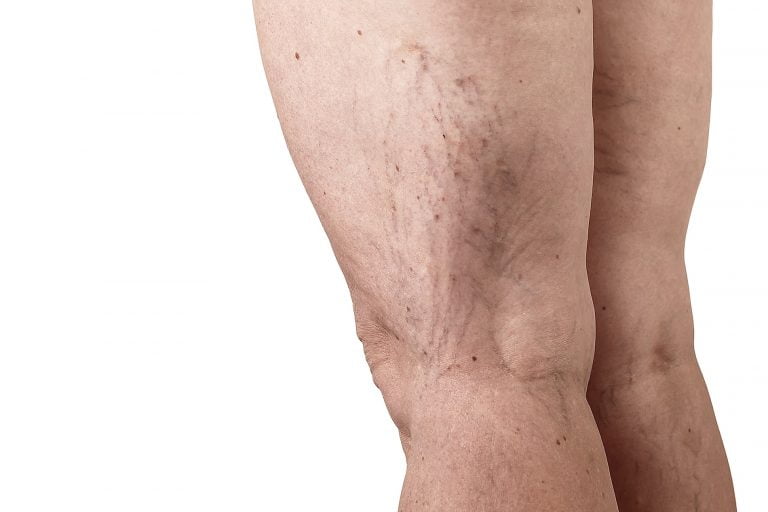
Varicose veins are dilated, twisted veins that appear mainly on the legs and affect the well-being and self-esteem of many people.
Não perca a dica do Dr. Szerman ao final do artigo!
In addition to the aesthetic issue, they can cause pain, swelling, a feeling of heaviness, and even tiredness in the legs. Causes include genetic factors, sedentary lifestyle, obesity, use of contraceptives, pregnancy, and long periods of standing or sitting.
Fortunately, there are effective treatments to combat this problem, and one of the most recommended is laser treatment for varicose veins.
How Laser Varicose Vein Treatment Works

Laser treatment for varicose veins is a modern, minimally invasive, safe procedure with quick recovery. Basically, the laser acts directly on the affected vessels, causing them to close and improving the skin’s appearance. It’s ideal for treating both varicose veins and spider veins, offering excellent aesthetic results and symptom relief.
This is one of the treatments we’ve offered at our clinic in Rio de Janeiro for over 20 years. We use a laser called Harmony, which has a wavelength known as Nd-YAG. This specific wavelength is attracted to the vessel—whether purple, bluish, or reddish.
During treatment, we build up heat in the vessel until it becomes hot enough to destroy it. Some vessels disappear immediately during the session, which is exciting because patients can see instant results.
However, that’s not always the case. Some vessels die and change color, appearing dull, and are reabsorbed by the body over two to four weeks. Once destroyed, the vessel is gone—similar to a melted straw.
That said, patients who have a tendency to develop new vessels will continue to do so over time. Therefore, it’s important to maintain treatments whenever new vessels appear.
Does Laser Varicose Vein Treatment Work?
Laser treatment can be done on both the body and the face. It usually offers good results, although we never promise 100% elimination, as it doesn’t remove all vessels completely.
It is often more effective than sclerotherapy (injections) for very fine vessels. With sclerotherapy, it’s difficult to get the solution into the tiny vessel’s lumen to destroy it. For “spider web” type vessels, laser is usually a better option.



However, results vary from patient to patient. Fairer skin tends to respond better, as higher energy levels can be used. Darker skin absorbs more of the laser before it reaches the deeper layers, which increases the risk of side effects.
Post-Treatment Care
We advise patients to avoid excessive sun exposure during treatment and prescribe a skin-lightening cream, usually hydroquinone-based, to use throughout the process. This is an international protocol both to enhance effectiveness and to minimize possible scabbing reactions from the laser.
Patients can still walk and be outdoors but should use sunscreen.
Does It Hurt?
The treatment is generally well tolerated. We prescribe a topical anesthetic to apply an hour before the session. Most patients find it less uncomfortable than sclerotherapy.
The laser cannot cause allergic reactions because it’s just light and heat—though mild scabbing may occur, resolving within one or two months.
How Many Sessions Are Needed?
We usually recommend about eight sessions, spaced one to two months apart. There’s no need for compression bandages afterward, and patients can return to normal physical activity, avoiding only heat and sun exposure right after the procedure.
Who Is It For?
Laser treatment is suitable for most people, but it cannot be performed on medium to dark brown or black skin due to the high energy required, which could cause blisters and reactions. It can be performed on light skin and light brown skin.
This laser is indicated for fine vessels (telangiectasias), and can be used on the face, body, and legs. It is not suitable for large-caliber vessels, which should be treated by a vascular specialist.
A medical evaluation is always necessary to determine if the procedure is appropriate.
Contact:
The Clínica de Pele has specialized in dermatological treatments in Rio de Janeiro for over 60 years, since 1969. Dr. Szerman has over 20 years of experience and also teaches other physicians.