
Hello, I’m Dr. Guilherme Szerman, and today I’d like to talk to you about laser varicose vein treatment.
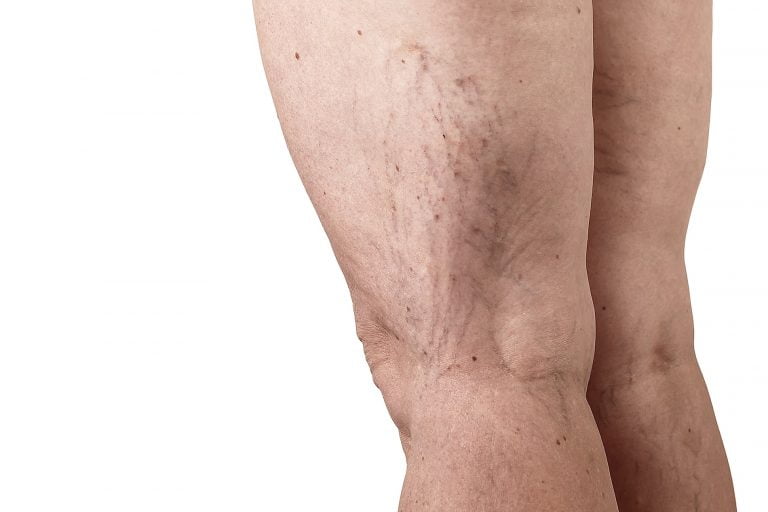
Varicose veins are dilated and twisted veins that appear mostly on the legs and affect the well-being and self-esteem of many people.
Não perca a dica do Dr. Szerman ao final do artigo!
Besides the cosmetic aspect, they can also cause pain, swelling, a heavy feeling, and even fatigue in the legs. Their causes include genetic factors, a sedentary lifestyle, obesity, use of contraceptives, pregnancy, and long periods of standing or sitting.
Fortunately, there are effective treatments to address this problem — and one of the most recommended is laser treatment for varicose veins.
How Does Laser Varicose Vein Treatment Work?

Laser treatment is a modern, minimally invasive, safe technique with a quick recovery. The laser works by targeting the affected veins, heating and closing them, which improves both appearance and symptoms.
It’s suitable for both varicose veins and spider veins, offering excellent aesthetic results and symptom relief.
We’ve offered this treatment at our clinic in Rio de Janeiro for over 20 years, using a device called Harmony, which features a Nd:YAG wavelength. This specific type of laser is attracted to blood vessels — whether purple, blue, or reddish in color.
During treatment, heat is gradually applied to the vessel until it gets hot enough to destroy it. Some spider veins disappear immediately during the session, which is great because patients can already see results on the spot.
However, that’s not always the case. Some vessels change color and become pale, and are then reabsorbed by the body over two to four weeks.
When a vein is destroyed by the laser, it disappears — like a melted straw, it dissolves.
That said, new veins may appear over time, especially in patients genetically predisposed to them. So it’s important to continue laser treatments whenever new spider veins appear.
Does Laser Treatment for Varicose Veins Really Work?
Laser treatment can be performed on both the body and face, and it typically offers very good results.
That said, we never promise patients that their veins will disappear 100%, as the procedure does not remove all vessels completely.
It is often more effective than sclerotherapy with needles, especially for very fine spider veins. Why? Because in such tiny vessels, it’s difficult for the sclerotherapy needle to reach the center of the vein to destroy it effectively.



For these delicate, web-like spider veins (also called telangiectasias), laser tends to be a better and more efficient option. But that doesn’t mean the patient will be completely vein-free. Most report high satisfaction with their results — but there is individual variability.
Patients with lighter skin tend to see better results, as the laser can penetrate deeper with more energy. In darker skin tones, the laser energy is more readily absorbed by the surface layer, increasing the risk of side effects.
Post-Treatment Care for Laser Varicose Vein Removal
In general, we advise patients to avoid sun exposure during the treatment period.
We also prescribe a skin-lightening cream, usually based on hydroquinone, to be used throughout the process.
This is an internationally recognized protocol, for two reasons:
- To enhance laser effectiveness — lighter skin allows deeper laser penetration.
- To minimize post-laser skin reactions, such as scabbing or dark spots.
Patients don’t need to completely avoid the sun — they can go for walks, for example — but sunscreen is mandatory.
Is Laser Vein Treatment Painful?
The procedure is generally well tolerated. We prescribe a topical anesthetic to be applied about one hour before the session.
Most patients report that laser treatment is less uncomfortable than sclerotherapy, which is one reason many prefer this option.
Some patients also have needle phobia, or prefer to avoid injections altogether. It’s also worth mentioning that sclerotherapy can sometimes cause skin discoloration or irritation, while laser has no risk of allergic reactions, since it uses only light and heat.
At most, the laser may cause a temporary scab, which typically heals within one to two months.
How Many Laser Sessions Are Needed?
We generally recommend an average of 8 sessions, spaced 1 to 2 months apart.
A common question is whether patients can go to the gym, exercise, or need to wear compression garments.
There’s no need for special bandages or restrictions. After a session, we only advise avoiding sun and heat exposure. Otherwise, normal physical activity is allowed.
Who Is Laser Varicose Vein Treatment For?
Laser treatment is suitable for most people, but cannot be performed on dark or black skin tones.
While some laser procedures (like laser hair removal) can be performed on darker skin, the energy required for vein treatment is much higher, which increases the risk of burns or blisters in dark skin.
That’s why laser for veins is only recommended for fair to light brown skin tones.
Patients often have doubts about this, but only a medical consultation can determine eligibility.
Also, this treatment is designed for fine spider veins (telangiectasias) — the web-like vessels that appear on the legs, face, or body.
It is not indicated for larger veins, which must be treated by a vascular specialist.
Contact:
Clínica de Pele has specialized in dermatological treatments in Rio de Janeiro for over 60 years, since 1969. Dr. Szerman has more than 20 years of experience and also teaches fellow physicians.