
Acne, Blackheads, and Pimples Are Among the Most Common Skin Issues, Affecting the Vast Majority of Teenagers and a Portion of the Adult Population, Especially Women.
Não perca a dica do Dr. Szerman ao final do artigo!
Acne is a serious condition that not only affects skin health but also significantly impacts the well-being and self-esteem of both men and women of all ages—especially teenagers. When it leaves marks, it can compromise quality of life in the long term.
For those dealing with active acne, having the means to prevent or treat the condition is essential. Treatments for active acne, blackheads, and pimples typically involve methods and technologies designed to:
- Prevent the appearance of new acne breakouts
- Improve the patient’s facial aesthetics
- Prevent the formation of acne scars
- Restore the patient’s self-esteem and confidence
These procedures can be performed on individuals of different ages, always respecting their natural development to ensure results that meet expectations without compromising natural features.
Through dermatological procedures, it’s possible to prevent and treat acne in various stages. No wonder these treatments are among the most sought after in clinics and dermatology offices worldwide.
To help you better understand the issue—as well as ways to prevent and treat it—we’ve prepared this complete guide on acne, blackheads, and pimples. Keep reading to learn everything you need to know.
What Is Active Acne?

According to the Brazilian Society of Dermatology (SBD), acne is “the result of an inflammatory process in the sebaceous glands and the pilosebaceous follicles.” Alongside this, there’s also increased bacterial colonization.
In simpler terms, acne is a skin inflammation caused by excessive sebum (oil) production by the sebaceous glands. This leads to clogged hair follicles due to oil buildup, dead skin cells, and increased keratin on the skin’s surface—resulting in pimples.
What Causes Active Acne?
The development of acne is closely linked to hormonal changes, particularly during adolescence. During this period, sebaceous gland receptors are more strongly activated, leading to increased sebum production.
Simultaneously, there’s also a rise in keratin production—a protein found in the skin—resulting in clogged follicles. This environment promotes the proliferation of bacteria (Cutibacterium acnes), further fueling the inflammatory and infectious process.








The intensity and presentation of this condition vary from person to person and often lead to oily skin and the appearance of blackheads and pimples at different severity levels. Some people experience mild and superficial cases, while others may develop severe acne with deeper skin involvement and even scarring.
Types of Active Acne
Acne can present itself in different forms:
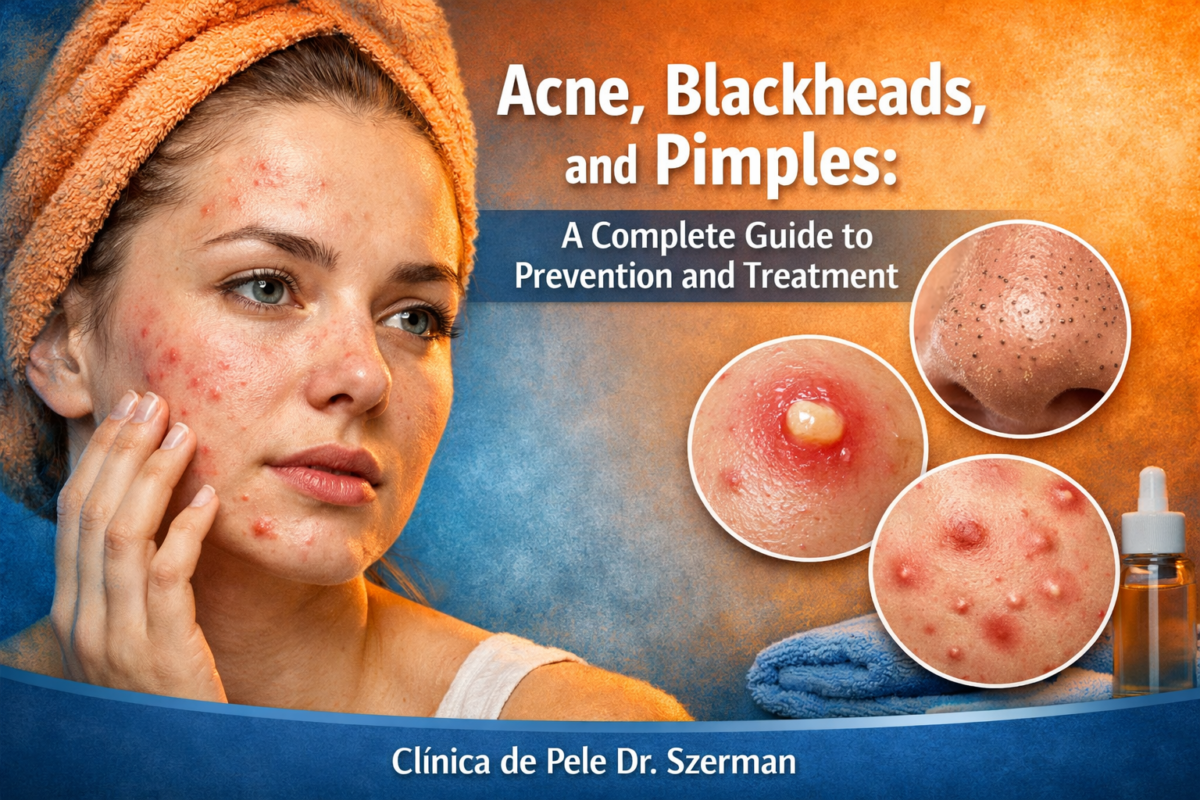
- Mild Acne: These are the typical blackheads or whiteheads that most people have experienced at some point.
- Moderate Acne: This type includes red, inflamed pimples (called papules) and pimples with white centers (called pustules).
- Severe Acne: This type causes painful cysts or lumps filled with pus (called nodules) under the skin.
The best approach is to begin treatment as soon as acne appears to prevent the progression to more severe forms and reduce the risk of scarring. If you notice nodules forming, consult your doctor or dermatologist for proper treatment.

Risk Factors for Active Acne
Acne is a multifactorial condition, meaning it develops due to a combination of various factors.
We know that genetic predisposition plays an important role in the development of this condition. It’s very common to observe some specific triggers that worsen acne, including:
- Menstrual periods
- Hormonal imbalances
- Stress
- Excessive sun exposure
- Diets high in fat and sugar
- Use of certain medications and supplements, among others
One important factor that should not be overlooked is the habit of touching the face or squeezing pimples.
Are Acne, Blackheads, and Pimples the Same Thing?

Acne is the term used for blackheads and pimples that develop due to an inflammatory process in the sebaceous glands and pilosebaceous follicles.
In other words, blackheads and pimples are acne lesions that typically appear on the face—especially the forehead, nose, and chin. They present as small black or white spots on the skin. While they’re common during adolescence, blackheads can appear at any stage of life.
In general, blackheads and pimples are asymptomatic and mainly bothersome due to their appearance. However, depending on the type and if left untreated, they can develop into more severe acne and lead to pain and skin sensitivity.
What Are Whiteheads and Blackheads?
Just as it’s important to know what blackheads are, it’s also essential to understand that there are different types:
- Whiteheads: These are closed comedones that form inside the skin in clogged pores covered by keratin. Because they’re not exposed to air, they don’t oxidize and maintain their whitish color.
- Blackheads: These are open comedones that form in pores not covered by skin, only by sebum. Their dark appearance is due to oxidation when the buildup inside the pores (dead cells, keratin, and sebum) is exposed to air. It’s worth noting that substances like leftover makeup can also contribute to discoloration and worsen the condition.
What’s the Difference Between Blackheads and Comedones?
Many people wonder whether blackheads and comedones are different. In fact, comedones are the medical term for both blackheads and whiteheads—the small dark or white spots that appear on the face. They form due to excess oil production that clogs the pores.
Why Do Blackheads Form?
Generally, blackheads form when a pore becomes clogged. Oil and other substances trapped inside oxidize when exposed to air, creating the black spots we recognize as blackheads.
When that oil builds up and bacteria begin to feed on it, whiteheads may develop, which can later become pimples.
In this way, we can say that blackheads often result from excess sebum on the skin. This issue can be prevented with proper treatment guided by skincare professionals.
What Happens If You Don’t Remove Blackheads and Pimples?
Many people believe that blackheads and pimples are natural and will go away on their own. But that’s not entirely true.
Blackheads are a form of acne and, if not removed, can damage the skin around the pore. Depending on the severity, they can worsen and lead to scars, which are much harder to treat.
Important: Avoid removing blackheads with your hands, as this can actually aggravate the problem.
The best course of action is to schedule a consultation with a dermatologist. This specialist can assess your condition, determine the severity, and recommend the safest and most effective treatment.
How to Prevent Blackheads and Pimples

There are some practical steps that can help prevent the appearance of blackheads and pimples:
- Wash your face with appropriate products, but avoid over-washing to prevent irritation
- Avoid touching your face or squeezing existing blackheads
- Shave carefully and ensure your razor is clean and sharp
- Avoid excessive sun exposure to prevent dryness and irritation
- Wash your hair regularly—especially if it’s oily—to prevent oil transfer to your face
How to Prevent Active Acne
As discussed earlier, some factors can worsen acne. By managing these, it’s possible to reduce its severity.
The patient should:
- Avoid touching the face or popping pimples
- Avoid excessive sun exposure
- Avoid over-washing the face
- Avoid certain foods
- Avoid inappropriate skincare products
- Be cautious with supplements that may affect hormone levels
For active acne, it’s essential to see a dermatologist as early as possible. This helps minimize the risk of developing long-term acne scars.
How to Treat Acne, Blackheads, and Pimples

Treatment should always be personalized based on each patient’s individual skin condition.
A dermatologist will prescribe a treatment plan, often in combination with procedures such as chemical peels. These combinations usually yield faster and more effective results.
Popular peels for acne and oil control include:
- Melanesse (retinoic acid-based, Brazilian-made)
- Acnelan (imported treatment)
These can be combined with:
- Crystal peel
- Salicylic acid
- Jessner’s peel
This combination enhances outcomes and controls acne more effectively.
How Do Peels Work?
Peels are generally divided into two types:
- Crystal Peel (Microdermabrasion): A physical exfoliation that cleans the skin and removes dead cells. It prepares the skin for chemical peels and supports cell renewal.
- Chemical Peels: These act as medication applied to the skin. Peels with retinoic acid, Cimel, and salicylic acid are among the most recommended for treating acne.
These treatments help:
- Control sebum production
- Reduce oiliness and keratin buildup
- Unclog pores
- Treat acne from the inside out
When Are Dermatological Treatments for Acne, Blackheads, and Pimples Necessary?
In general, whenever you notice a change in your skin, it’s important to consult a dermatologist. This applies to acne as well.
At the first signs of acne, blackheads, or pimples, it’s best to seek professional help. A dermatologist will diagnose the issue and recommend the most suitable treatment plan to improve both skin health and appearance.
Main Benefits of Acne Treatments
Dermatological treatments offer many benefits. Depending on the severity of the condition, some treatments can reduce acne by up to 80%.
Additionally, when treated early, acne, blackheads, and pimples are much more likely to disappear within just a few sessions. Patients who begin treatment during the early stages of active acne can eliminate the issue and prevent further breakouts, scarring, or long-term damage.
Investing in dermatological care early on not only enhances facial aesthetics but also brings balance, health, and harmony to the skin.
What Results Can I Expect from Acne Treatment?
Because acne has a complex origin—linked to hormonal, genetic, and environmental factors—it’s important to understand that the goal of treatment is control, not a permanent cure.


Myths and Facts About Acne, Blackheads, and Pimples
Check out below some of the main myths and truths about active acne and take the opportunity to clear up your doubts on the subject.
1. Acne only affects teenagers
Myth. Although acne mainly affects teenagers, around 15% of adults also suffer from this condition.
According to an article published by the Brazilian Society of Dermatology (SBD), acne occurs primarily during adolescence, affecting about 85% of young people, with a peak incidence between the ages of 12 and 24. Epidemiological studies show a prevalence of around 41% among adult women.
2. Squeezing pimples is part of the treatment
Myth. This is actually very harmful for acne, as it worsens inflammation and introduces more bacteria and dirt into the skin.
This habit is one of the main causes of acne scarring.
3. Foods like chocolate and dairy can worsen acne
Fact. Some patients are sensitive to certain types of food, such as greasy or dairy-based products. These individuals often notice a strong connection between their diet and acne flare-ups.
4. The more you wash your face, the better
Myth. Excessive washing can lead to a rebound effect, worsening the condition. Patients should always follow their doctor’s instructions.
5. Since acne improves over time, there’s no need for treatment
Myth. This is a big mistake. It’s important to start acne treatment as early as possible. Acne can last for years and significantly affect self-esteem. It may also leave lasting scars on the face.
6. Sun exposure helps improve acne
Myth. Contrary to popular belief, sun exposure can increase sebum production and worsen acne. It also contributes to the appearance of post-inflammatory dark spots.
7. Any acne treatment is effective
Myth. Acne treatment should be prescribed by a doctor and tailored to each patient. Every individual has different types and degrees of acne.
A dermatologist will create a personalized treatment strategy, which may include procedures like chemical peels—great allies in the fight against acne.
8. Oily hair can worsen acne
Fact. Patients with oily skin often also have an oily scalp, which leads to oily hair.
This creates a vicious cycle: oily hair in contact with the face or hands transfers more oil and impurities to the skin, aggravating acne.
9. Acne is the leading cause of facial scarring
Fact. Acne is a major cause of scars and blemishes on the face. The inflammation and infection damage the skin tissue, resulting in permanent marks.
These aftereffects of acne often lower self-esteem and interfere with social life, seriously impacting quality of life.
10. Acne scars can be treated
Fact. Although it’s not easy, there are effective treatments to significantly reduce acne scars.
CO2 laser is the most effective treatment for acne scars. It can also be combined with other techniques such as subcision.